
Blog by Sanwariya Packaging

Your Trusted Partner in Packaging

Learn About Our Vision for the Future And Grow with Us.

Your Trusted Partner in Pharma Packaging

Learn about our vision for the future and grow with us.

Your Trusted Partner
in Pharma Packaging

Learn about our vision for the future and grow with us.

Know More

Tag: cold forming foil

Designing foil text for multi-language markets

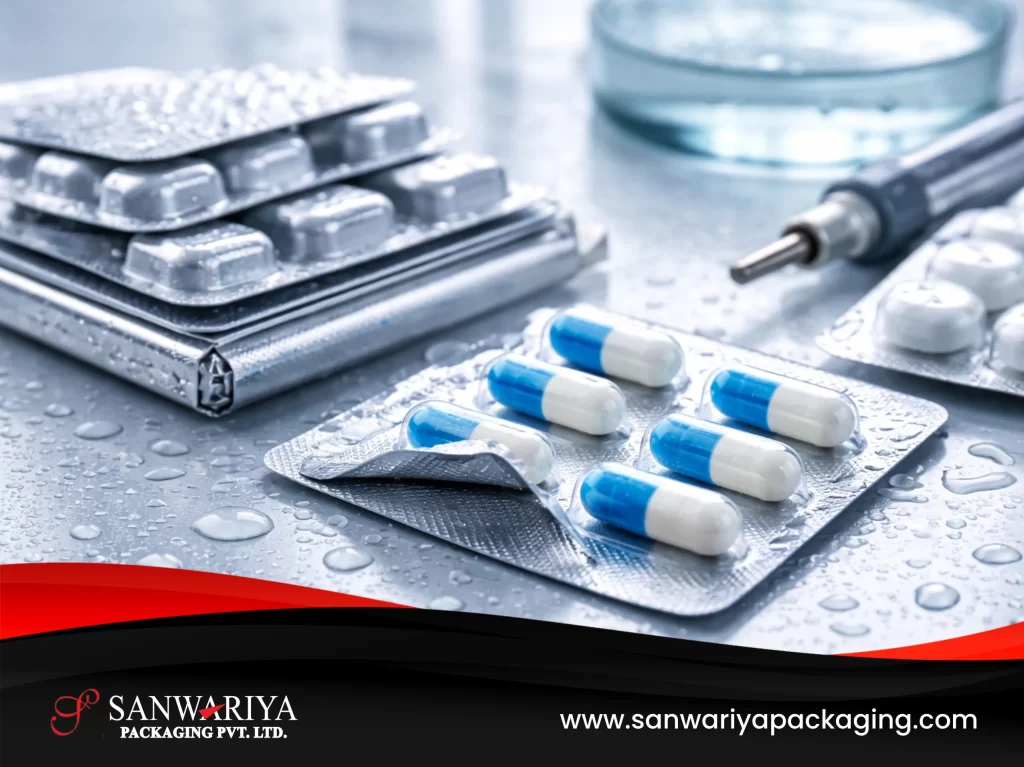
Pharmaceutical aluminum foil is a critical packaging material used in blister packaging to protect medicines from moisture, oxygen, light, and external contamination. While foil structures are designed to provide strong barrier performance, their protective properties must be preserved throughout the supply chain. 

Improper handling, storage, or transportation can damage the foil surface, affect sealing performance, or compromise print quality. Because of this, pharmaceutical companies follow strict procedures when storing and transporting foil reels. 

Controlled environmental conditions, careful reel handling, and systematic inspection help ensure that packaging materials remain in optimal condition before entering the packaging line. 

This blog explains recommended pharma foil storage guidelines, including temperature and humidity control, proper reel handling practices, transportation considerations, and inspection procedures for incoming materials.

Why Proper Handling of Pharma Foil Matters

Pharmaceutical foil is manufactured under controlled conditions to meet strict quality and barrier performance requirements. However, the material can still be affected by environmental exposure or physical damage during storage and transportation.

Improper foil handling may lead to several issues:

  • Dents or deformation of foil reels
  • Damage to printed surfaces
  • Contamination of the foil surface
  • Reduced sealing performance during blister packaging

Even minor physical damage can affect packaging line performance. For example, uneven reels may cause feeding problems during high-speed blister packaging operations.

Maintaining proper handling procedures helps preserve the structural integrity and print quality of the foil.

Temperature and Humidity Control for Foil

Environmental conditions play an important role in maintaining the quality of pharmaceutical packaging materials. Excessive humidity or temperature fluctuations may affect coatings, adhesives, or printing layers applied to the foil.

Warehouses storing pharmaceutical foils typically maintain controlled environmental conditions.

Important environmental controls for foil include:

  • Stable temperature conditions within recommended storage ranges
  • Relative humidity control to prevent moisture exposure
  • Avoidance of direct sunlight or heat sources
  • Protection from sudden environmental fluctuations

Maintaining stable environmental conditions helps prevent condensation or surface degradation that could affect packaging performance.

Controlled storage environments also support compliance with pharmaceutical quality management systems.

Best Practices for Reel Handling

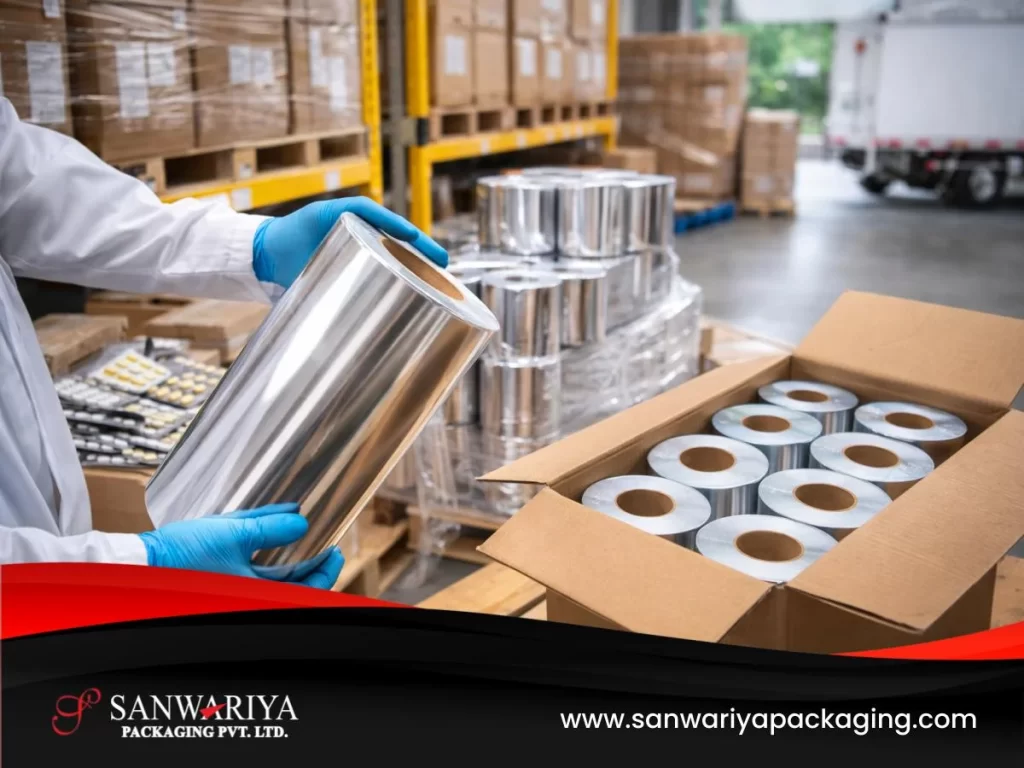
Pharmaceutical foil is usually supplied in large reels that must be handled carefully during transportation, storage, and transfer to packaging lines.

Improper handling may cause physical damage such as edge dents, crushed cores, or surface scratches.

Recommended reel handling practices include:

  • Using appropriate lifting equipment designed for reel handling
  • Avoiding rolling reels directly on warehouse floors
  • Protecting reel edges from impact damage
  • Keeping reels in their original protective packaging until use
Handling procedures should also ensure that the reels remain properly aligned to prevent deformation. Careful reel handling helps maintain smooth operation during blister packaging production.

Preventing Mechanical Damage During Storage

Mechanical damage is one of the most common causes of foil rejection during incoming material inspections.

Damage may occur when reels are stacked improperly or when heavy objects are placed on top of packaging materials.

Warehouses storing pharmaceutical foil typically follow several protective practices.

  • Storing reels vertically on stable pallets
  • Maintaining sufficient spacing between stacked materials
  • Preventing contact with sharp edges or heavy equipment
  • Ensuring stable stacking to avoid reel movement

Proper storage arrangements help protect both the foil surface and the structural integrity of the reel.

Maintaining clean and organized warehouse environments also reduces the risk of contamination.

Transportation and Logistics Considerations

Pharmaceutical foil often travels long distances before reaching the packaging facility. During transportation, packaging materials may be exposed to vibrations, environmental changes, or handling by multiple logistics providers.

To reduce these risks, foil reels are usually transported using protective packaging and secure palletization.

Key transportation considerations include:

  • Stable pallet stacking to prevent movement during transit
  • Protective wrapping to shield reels from dust and moisture
  • Shock protection to reduce vibration-related damage
  • Climate-aware transportation for sensitive materials

Export shipments may also require additional precautions, particularly when transporting materials through regions with extreme environmental conditions.

Proper logistics planning helps ensure that packaging materials arrive in usable condition.

Inspection of Foil Reels on Receipt

Quality control procedures typically require inspection of incoming packaging materials before they are released for production use.

Incoming inspection helps confirm that the materials received meet approved specifications and have not been damaged during transportation.

Common inspection checks may include:

  • Verification of reel identification and batch documentation
  • Visual inspection for dents, scratches, or surface damage
  • Confirmation of protective packaging integrity
  • Review of storage conditions during transport if required
If any issues are identified during inspection, the material may be placed on hold for further evaluation. These inspection steps help maintain quality control within pharmaceutical packaging operations.

Warehouse Inventory and Stock Rotation

Proper inventory management helps ensure that packaging materials are used within their recommended storage period.

Pharmaceutical warehouses often follow structured inventory systems that track material batches and storage durations.

Common inventory management practices include:

  • First-in, first-out (FIFO) material usage
  • Clear batch identification and labeling
  • Regular warehouse condition monitoring
  • Documentation of storage conditions and handling procedures

Following these practices ensures traceability and helps maintain packaging material performance throughout storage.

Inventory control is an important part of pharmaceutical quality management systems.

Maintaining Packaging Material Integrity Across the Supply Chain

Pharmaceutical packaging materials must maintain consistent quality from manufacturing to final use on packaging lines. Proper handling, storage, and transportation procedures help ensure that foil reels remain free from damage and environmental exposure.

Following established pharma foil storage guidelines supports reliable blister packaging performance, protects printing quality, and helps maintain regulatory compliance within pharmaceutical manufacturing environments.

Supply chain teams, warehouse managers, and quality control personnel all play an important role in protecting packaging materials throughout their lifecycle.

Sanwariya Packaging manufactures pharmaceutical aluminum foils designed for reliable barrier performance, stable printing, and compatibility with high-speed blister packaging systems. Through controlled manufacturing processes and secure packaging practices supported by its infrastructure, Sanwariya Packaging supports pharmaceutical companies in maintaining the integrity of packaging materials throughout global storage and distribution.

For further information or requirements, you can get in touch with us or directly request a quote.

Choosing optimal foil for high-sensitivity pharmaceutical products

High-sensitivity pharmaceutical formulations require more than standard packaging protection. Even very small exposure to moisture, oxygen or light can directly affect product stability, shelf life and regulatory acceptance.

In real manufacturing and distribution environments, issues such as unexpected degradation, impurity growth, stability failures or reduced shelf life are frequently traced back to one root cause: inadequate barrier performance of the pharmaceutical packaging material.

This is where high barrier pharma foil becomes a critical packaging decision.

This blog explains, in practical terms, how sensitive formulations should be matched with the right foil structure, how packaging influences stability risk, and how pharmaceutical teams can select high-barrier foils with confidence for regulated and export markets.

What makes a formulation highly sensitive

A formulation is considered high-sensitivity when very small environmental exposure can trigger measurable quality changes.

Typical examples include:

1. Moisture-sensitive formulations

Hygroscopic APIs, effervescent tablets, dispersible tablets and low-dose products. Even brief humidity exposure can cause softening, dissolution failures or hydrolytic degradation, making the use of blister foils and strip laminated foils critical for moisture protection.

2. Light-sensitive formulations

Photo-unstable APIs, hormonal products and certain antibiotics, where light exposure can reduce potency before expiry, often requiring cold forming foils and specialized multi-layer foils for complete light barrier.

3. Oxygen-sensitive formulations

APIs prone to oxidation, leading to impurity growth, color changes and assay drift, where high-integrity pharmaceutical packaging becomes essential.

4. Low-dose and high-potency formulations

Minor degradation becomes critical for content uniformity and regulatory compliance, making advanced multi-layer foils an important protective option.

For these products, packaging is not passive. It directly controls the stability risk profile.

Why high barrier pharma foil becomes necessary

Standard foil structures provide general protection. However, for sensitive products, moderate barrier performance is often insufficient over long storage periods and international distribution of finished medicines packed using pharmaceutical products.

High barrier pharma foil is designed to provide:

  • very low moisture transmission
  • complete light protection
  • very low oxygen permeation
  • consistent barrier performance throughout shelf life

In practical terms, the aluminium layer delivers the primary barrier, while coating and seal layers protect the aluminium and maintain barrier integrity during forming, sealing and handling in modern pharmaceutical packaging operations.

Stability risks that packaging must control

For sensitive formulations, the main environmental risks are:

  • moisture ingress
  • light exposure
  • oxygen permeation
  • long storage and transit cycles
These risks increase significantly in Climatic Zones III and IV, where high humidity and temperature exposure are common. In such markets, selecting high-barrier packaging formats such as cold forming foils is a preventive stability measure.

How foil structure determines real barrier performance

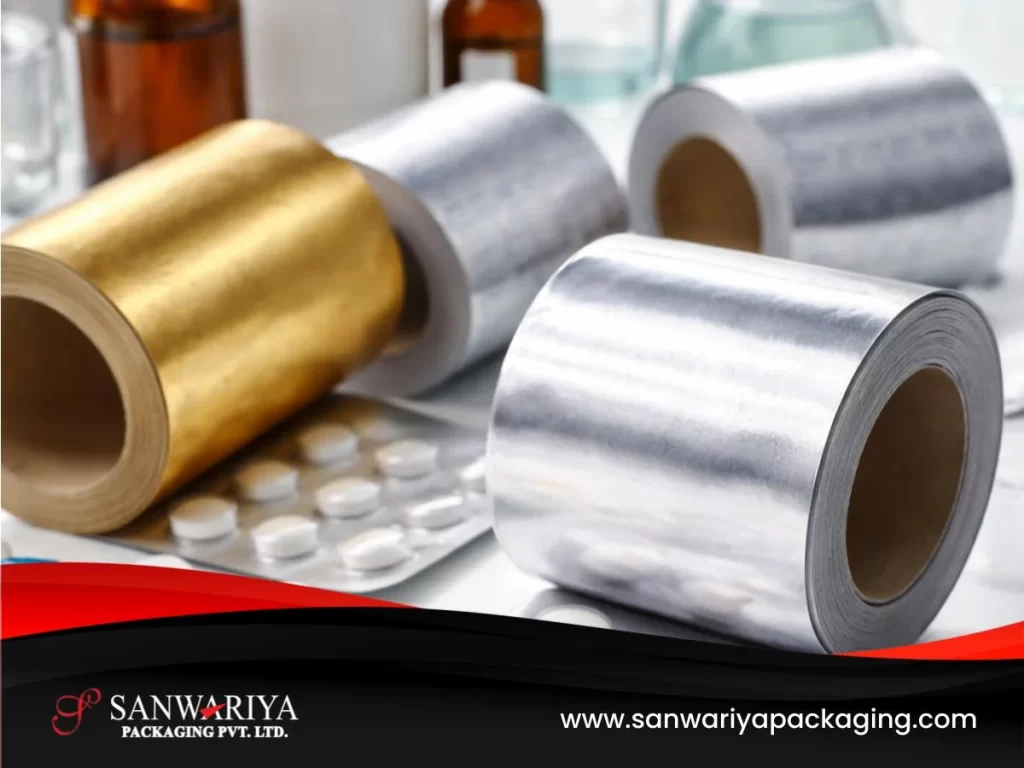
Pharmaceutical foil is a multi-layer structure. Each layer plays a defined functional role.

A typical high-barrier foil structure includes:

  • aluminium foil as the primary barrier
  • protective coatings or lacquers
  • functional sealant layers

A well-engineered structure slows moisture and gas migration at multiple interfaces. A weak or incompatible structure allows penetration pathways to form, even when aluminium thickness appears adequate, which is why engineered multi-layer foils are widely used for sensitive medicines.

Key insight:
Two foils with similar thickness can show very different barrier performance because protection depends on structural integrity, not thickness alone.

How individual foil layers support sensitive drug protection

  • Aluminium layer – the primary barrier: Provides moisture, oxygen and light protection. Pinhole control and thickness consistency are critical for long-term stability in formats such as blister foils and strip laminated foils.
  • Coatings and lacquers – barrier durability: Protect aluminium during forming and handling, reduce micro-crack formation and support durability under prolonged humidity exposure, especially in complex pharmaceutical packaging applications.
  • Sealant layers – the most frequent weak point: Create the final protective seal and directly influence moisture ingress at the seal interface. Many real-world failures originate at the seal area rather than through the aluminium itself.

Standard foil versus high-barrier foil

AspectStandard foil structureHigh-barrier foil structure
Moisture resistanceModerateVery high
Long-term stabilityLimited in humid conditionsConsistent across climates
Suitability for exportsShort or controlled routesLong and high-risk distribution routes
Regulatory confidenceConditionalStrong and data-driven

High-barrier structures are designed to perform reliably under sustained environmental stress, not only during short laboratory testing periods.

When high-barrier foil becomes essential

High-barrier pharmaceutical foils become necessary when:

  • the formulation is moisture- or light-sensitive
  • shelf life exceeds 24 months
  • distribution includes Climatic Zones III and IV
  • long transit, port storage or uncontrolled warehousing is expected
In many export markets across Asia, Africa and Latin America, standard foil structures may pass early stability studies but fail under real storage conditions when using conventional PVC foils without enhanced barrier layers.

What quality and regulatory teams expect

Barrier performance must be demonstrated and documented.

For sensitive formulations, packaging qualification typically includes:

  • validated moisture and oxygen transmission testing
  • stability studies aligned with the intended climatic zones
  • seal integrity and ageing evaluations
This data supports packaging approval during registration, export readiness and shelf-life commitments.

Common real-world failures linked to incorrect foil selection

Across domestic and export markets, similar patterns are repeatedly observed:

  • stability passes initially but fails after prolonged humid storage
  • tablets soften, stick or discolour before expiry
  • market complaints occur despite compliant formulations
  • costly revalidation follows post-approval packaging changes
In most cases, the root cause is not formulation design, but barrier performance that was underestimated during foil selection of inappropriate pharmaceutical products.

A practical selection checklist for sensitive formulations

Before finalizing a foil grade, confirm:

  • the formulation’s sensitivity to moisture, light and oxygen
  • the climatic zones the product will encounter
  • the full storage and transit duration
  • seal layer compatibility with the forming material
  • availability of validated barrier and stability data

Selecting high barrier pharma foil should be treated as a preventive quality decision, not a corrective action.

For high-sensitivity medicines, packaging performance directly defines product stability.

High-barrier pharmaceutical foil plays a decisive role in:

  • moisture and light protection
  • shelf-life reliability
  • export success
  • regulatory confidence

At Sanwariya Packaging, high-barrier pharmaceutical aluminium foils are developed as stability-driven and compliance-ready solutions for moisture- and light-sensitive medicines—supporting pharmaceutical manufacturers in protecting product quality throughout the entire lifecycle.

Importance of foil coatings in hot and humid climates

Moisture is invisible, but in pharmaceutical packaging, it is one of the most frequent root causes of product instability, shelf-life reduction, and post-approval failures. Issues such as tablets softening, capsules losing potency, coating degradation, or unexpected stability failures are often traced back to one critical factor: inadequate moisture protection from the packaging system.

This is where the Moisture Transmission Rate (MTVR) becomes decisive. Understanding how foil structure directly influences MTVR enables pharmaceutical companies to make informed, preventive pharmaceutical packaging decisions—particularly for moisture-sensitive formulations and products distributed across high-humidity or long-transit markets.

This article explains MTVR in clear, practical terms, connects barrier science to real-world pharmaceutical risk, and shows how selecting the right foil structure protects product quality, regulatory compliance, and patient safety.

What Is the Moisture Transmission Rate (MTVR)?

Moisture Transmission Rate (MTVR) measures the amount of water vapor that can pass through a packaging material over a defined area and time under controlled conditions.

In practical pharmaceutical terms:

  • Low MTVR = strong moisture barrier and higher product protection
  • High MTVR = increased risk of moisture ingress and product degradation

Even minimal moisture exposure can:

  • Reduce shelf life
  • Alter drug performance
  • Trigger stability failures during storage or transport
For moisture-sensitive products, MTVR is not a secondary specification—it is a critical quality attribute influencing approval, performance, and market reliability.

Why Foil Structure Directly Determines MTVR Performance

Pharmaceutical foil is not a single material layer. Its structure—how multiple layers work together—defines overall moisture resistance.

A typical pharmaceutical foil structure—such as blister foils,cold forming foils, or strip laminated foils—may include:

  • Aluminum foil (primary moisture barrier)
  • Protective coatings or lacquers
  • Heat-seal layers
  • Optional polymer films in multi-layer foil or specialty structures

Each layer performs a distinct function. A well-engineered structure slows moisture migration at multiple points, while a weak or incompatible structure allows vapor to penetrate—even when aluminum thickness appears adequate.

Key insight:
Two foils with similar thickness can show vastly different MTVR values because barrier performance depends on structure integrity, not thickness alone.

How Individual Foil Layers Influence Moisture Protection

1. Aluminum Layer — The Primary Barrier

  • Acts as the main moisture and oxygen barrier
  • Defect-free aluminum significantly reduces vapor transmission
  • Thickness consistency and pinhole control are critical
While aluminum provides the core barrier, it cannot perform alone.

2. Coatings & Lacquers — Barrier Stability and Durability

  • Protect aluminum from mechanical and chemical stress
  • Reduce micro-crack formation during forming and handling
  • Improve resistance to long-term humidity exposure
Poor or incompatible coatings can compromise barrier performance even when aluminum quality is high.

3. Sealant Layers — The Most Common Failure Point

Enable airtight sealing between foil and blister material

  • Directly affect moisture ingress at seal areas
  • Must be compatible with forming films and sealing parameters
Fact:
Many moisture-related failures occur not because the aluminum layer failed, but because the seal layer allowed moisture pathways to form.

Standard Foil vs High-Barrier Foil: Why Structure Matters

AspectStandard Foil StructureHigh-Barrier Foil Structure
Moisture ResistanceModerateVery high
Long-Term StabilityLimited in humid zonesConsistent across climates
Suitability for ExportsShort or controlled routesLong-distance, high-risk markets
Regulatory ConfidenceConditionalStrong, data-backed

High-barrier structures are engineered to perform reliably under sustained humidity stress—not just initial testing conditions.

When High-Barrier Foil Structures Become Mandatory

High-barrier pharmaceutical foils—such as cold forming foils and advanced multi-layer foils—are essential when:

  • The formulation is moisture-sensitive
  • Shelf life exceeds 24 months
  • Distribution includes Climatic Zones III & IV
  • Products face long transit, port storage, or uncontrolled warehousing

Markets across Asia, Africa, Latin America, and coastal regions routinely expose pharmaceutical products to prolonged high humidity. In these environments, standard foil structures may pass early stability studies yet fail during real-world storage.

MTVR Testing and Evaluation: What Regulators Expect

MTVR performance cannot be assumed—it must be measured, validated, and documented.

Key evaluation approaches include:

  • Moisture transmission testing under controlled laboratory conditions
  • Stability studies aligned with climatic zone requirements
  • Seal integrity and aging assessments

Regulatory and quality teams rely on this data to:

  • Approve packaging during product registration
  • Justify export-readiness claims
  • Support long-term stability commitments
Without validated MTVR performance, packaging approval and lifecycle management become uncertain.

Common Real-World Failures Linked to Poor MTVR Selection

Across domestic and export markets—supported by advanced manufacturing and quality controls at our infrastructure facilities—the same patterns repeatedly emerge:

  • Stability passes initially but fails after months in humid storage
  • Tablets stick, soften, or discolor before expiry
  • Market complaints arise despite compliant formulations
  • Costly revalidation triggered by post-approval packaging changes
In most cases, the root cause is not formulation weakness—but foil structure mismatched to environmental exposure.

Choosing the Right Foil Structure

Instead of asking “Is this foil thick enough?”, pharmaceutical teams should ask:

  • How moisture-sensitive is the formulation?
  • Which climatic zones will the product encounter?
  • What is the total storage and transit duration?
  • Is the seal layer compatible with the blister material?
  • Does the supplier provide validated MTVR and stability data?

Selecting the correct foil structure is a preventive quality decision, not a corrective one.

Business and Compliance Impact of Correct MTVR Selection

Choosing the right foil structure delivers measurable value:

  • Fewer stability failures and deviations
  • Faster regulatory approvals
  • Reduced recall and rejection risk
  • Lower long-term costs compared to revalidation
  • Stronger patient trust and brand credibility
Underestimating MTVR often results in hidden costs that far exceed the initial savings from lower-grade packaging.

Key Takeaway

MTVR is not merely a laboratory value—it reflects how effectively a pharmaceutical product is protected throughout its entire lifecycle.

Foil structure directly influences:

  • Moisture resistance
  • Shelf-life reliability
  • Export success
  • Regulatory confidence

Understanding and selecting the right barrier structure ensures medicines remain safe, effective, and compliant—regardless of where they are manufactured, stored, or distributed.

At Sanwariya Packaging, barrier performance is approached as a stability and compliance solution, not just a material specification. Because in pharmaceutical packaging, what cannot be seen—like moisture—often matters the most. For technical discussions or project requirements, teams may get in touch or request a quote.