
Blog by Sanwariya Packaging

Your Trusted Partner in Packaging

Learn About Our Vision for the Future And Grow with Us.

Your Trusted Partner in Pharma Packaging

Learn about our vision for the future and grow with us.

Your Trusted Partner
in Pharma Packaging

Learn about our vision for the future and grow with us.

Know More

Category: Printing Technologies

Importance of accurate foil colors for compliance

Pharmaceutical packaging must communicate critical information clearly and consistently. From dosage instructions to product identification, every element printed on a medicine package plays a role in ensuring safe and effective use. 

Color is one of the most important visual tools used in pharmaceutical labeling. Specific colors may be associated with dosage strengths, product variations, warnings, or brand identity. 

Because of this, maintaining accurate and consistent color printing on pharmaceutical packaging materials is essential. In blister packaging, printed aluminum foils often carry product names, dosage details, batch information, and regulatory text. If the printed colors deviate from approved standards, it can affect readability, create labeling confusion, or lead to regulatory compliance concerns. 

This blog explains why color accuracy matters in pharmaceutical foil printing, how regulatory readability requirements influence labeling design, and how packaging teams maintain consistent color reproduction during production.

The Role of Color in Pharmaceutical Labeling

Color is widely used in pharmaceutical packaging to support quick visual identification. Healthcare professionals, pharmacists, and patients often rely on packaging colors to differentiate between similar medicines or dosage strengths.

In many cases, color schemes are intentionally standardized across product lines to reduce the risk of medication errors.

Common uses of color in pharmaceutical packaging include:

  • Distinguishing dosage strengths of the same medicine
  • Identifying different formulations or product variants
  • Highlighting warnings or safety information
  • Reinforcing brand recognition and product identity

When colors remain consistent across batches and packaging formats, they help users quickly identify the correct product.

However, if the printed color on a blister foil deviates from the approved design, it may create confusion or reduce labeling clarity.

Color Matching Standards in Pharmaceutical Printing

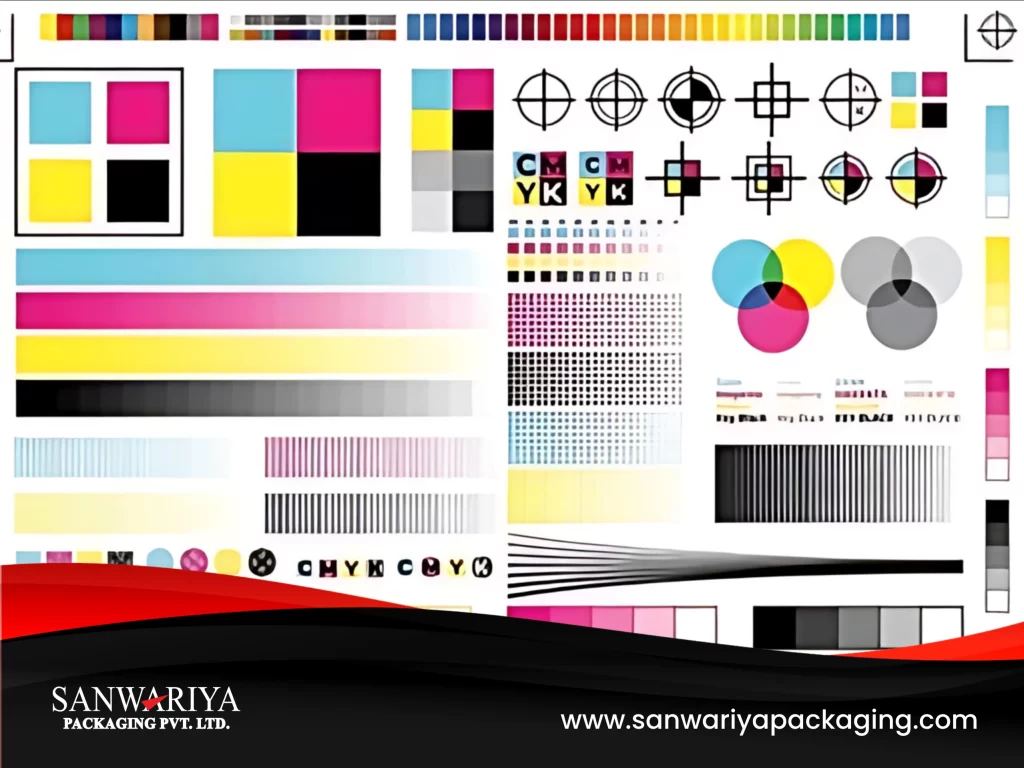
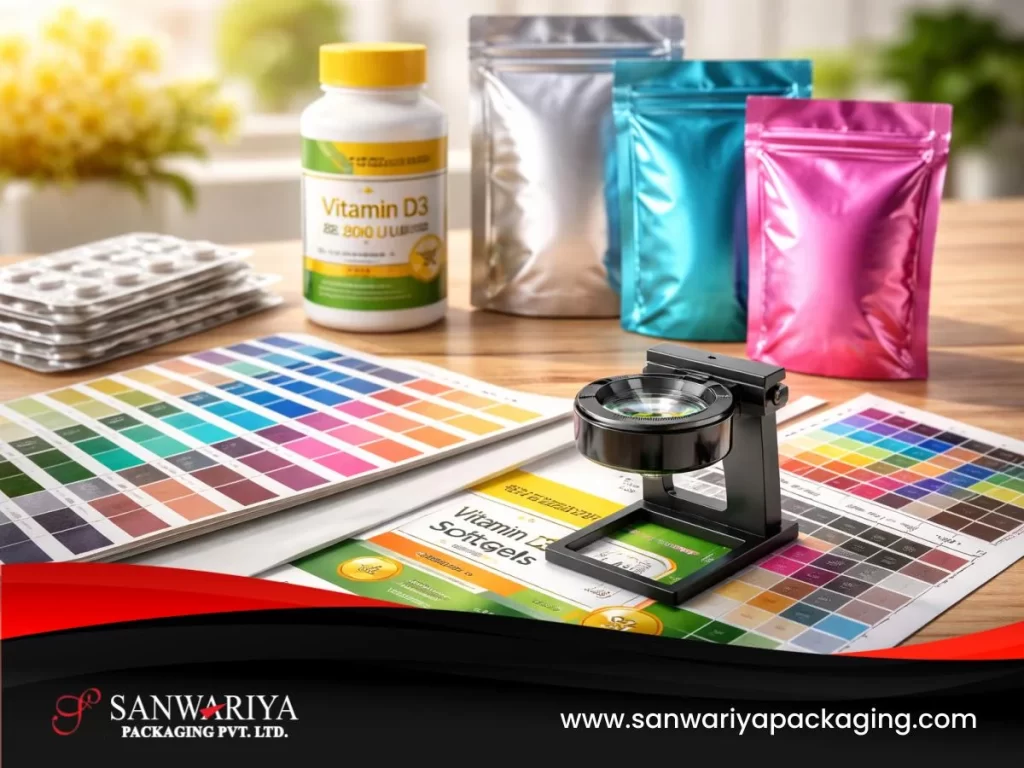
Pharmaceutical packaging artwork typically specifies precise color values that must be reproduced accurately during printing. These values may be defined using industry-standard color systems such as Pantone or CMYK references.

Packaging development and artwork teams establish these color specifications during the design stage to ensure that every production batch maintains the same visual appearance.

Maintaining accurate color reproduction requires careful control of several printing variables:

  • Ink formulation and pigment stability
  • Printing press calibration
  • Substrate surface characteristics
  • Drying and curing conditions

Even small variations in these factors can cause noticeable differences in printed color shades.

For pharmaceutical packaging, maintaining tight color tolerances helps ensure that the printed foil remains consistent with approved artwork specifications.

Regulatory Expectations for Readability

Regulatory authorities require pharmaceutical labels to be clear, legible, and easily readable. While regulations may not always specify exact color codes, they emphasize the importance of contrast and clarity in labeling.

Label text must remain easily readable against the background color of the packaging material.

Several design considerations help maintain readability:

  • Sufficient contrast between text and background colors
  • Consistent color reproduction across production batches
  • Clear differentiation between product variants
  • Avoidance of colors that reduce legibility
If printed colors appear too light, too dark, or inconsistent with the approved design, readability may be affected. Maintaining accurate color reproduction therefore supports both labeling clarity and regulatory compliance.

Risks of Shade Deviation in Pharmaceutical Foils

Shade deviation occurs when the printed color on packaging differs from the approved color standard. This can happen due to variations in ink mixing, printing conditions, or material properties.

In pharmaceutical packaging, shade deviations can lead to several operational challenges.

  • Mismatch between approved artwork and printed packaging
  • Reduced readability of critical labeling information
  • Confusion between similar dosage strengths
  • Batch rejections during quality inspection
Because packaging artwork is typically approved as part of regulatory submissions, significant color deviations may require investigation or corrective actions. For this reason, maintaining tight color control is a priority during printed foil production.

Printing Challenges on Aluminum Foil Surfaces

Printing on aluminum foil presents unique technical challenges compared with printing on paper or plastic substrates.

The reflective nature of aluminum can influence how inks appear once printed and cured. Surface coatings applied to the foil may also affect ink adhesion and color intensity.

Printing teams therefore evaluate several factors to maintain accurate color reproduction.

  • Compatibility between inks and foil coatings
  • Controlled printing pressure and registration
  • Precise ink density control during production
  • Stable drying and curing conditions

These variables must be carefully managed to ensure that the final printed color matches the approved artwork specifications.

High-quality printing processes help maintain consistency across large production volumes.

Color Calibration and Process Control

Maintaining consistent color reproduction requires systematic monitoring during the printing process.

Production teams often use calibrated color measurement tools to compare printed samples against the approved color standards.

Typical color control practices may include:

  • Calibration of printing equipment before production runs
  • Measurement of printed color values using spectrophotometers
  • Comparison of printed samples against reference standards
  • Periodic verification throughout the production process

These controls help ensure that the printed foil remains within acceptable color tolerance limits.

When deviations are detected early, adjustments can be made before large production volumes are affected.

Supporting Clear Communication for Patients and Healthcare Professionals

Clear pharmaceutical labeling is essential for patient safety. When packaging colors remain consistent and readable, healthcare professionals and patients can more easily identify medicines and follow correct usage instructions.

Accurate color reproduction also supports brand consistency and reduces the risk of confusion between similar products.

For pharmaceutical companies managing large product portfolios, maintaining color consistency across packaging formats is an important aspect of quality control.

Packaging materials and printing processes must therefore support reliable color stability throughout the product lifecycle.

Ensuring Reliable Color Consistency in Pharmaceutical Packaging

Color accuracy in pharmaceutical foil printing is more than a design consideration. It plays a direct role in maintaining labeling clarity, regulatory compliance, and product identification.

By following strict color matching standards and controlling printing conditions, pharmaceutical companies can ensure that printed foils consistently match approved artwork specifications.

Accurate color reproduction helps prevent shade deviations, supports readability requirements, and maintains the integrity of pharmaceutical labeling systems.

Sanwariya Packaging manufactures pharmaceutical aluminum foils designed to deliver high-quality color reproduction, consistent print alignment, and reliable performance during large-scale production. Through advanced printing capabilities and controlled processes supported by its infrastructure, Sanwariya Packaging supports pharmaceutical companies in maintaining precise labeling standards across global packaging operations.

For further details or project discussions, you can get in touch with us or directly request a quote.

How foil protects light-sensitive pharmaceuticals from UV exposure

Pharmaceutical supply chains are becoming increasingly complex and global. Medicines now move across multiple countries, distribution hubs, and pharmacies before reaching the patient. To ensure product authenticity and prevent counterfeit medicines from entering the market, regulators around the world have strengthened track-and-trace requirements.

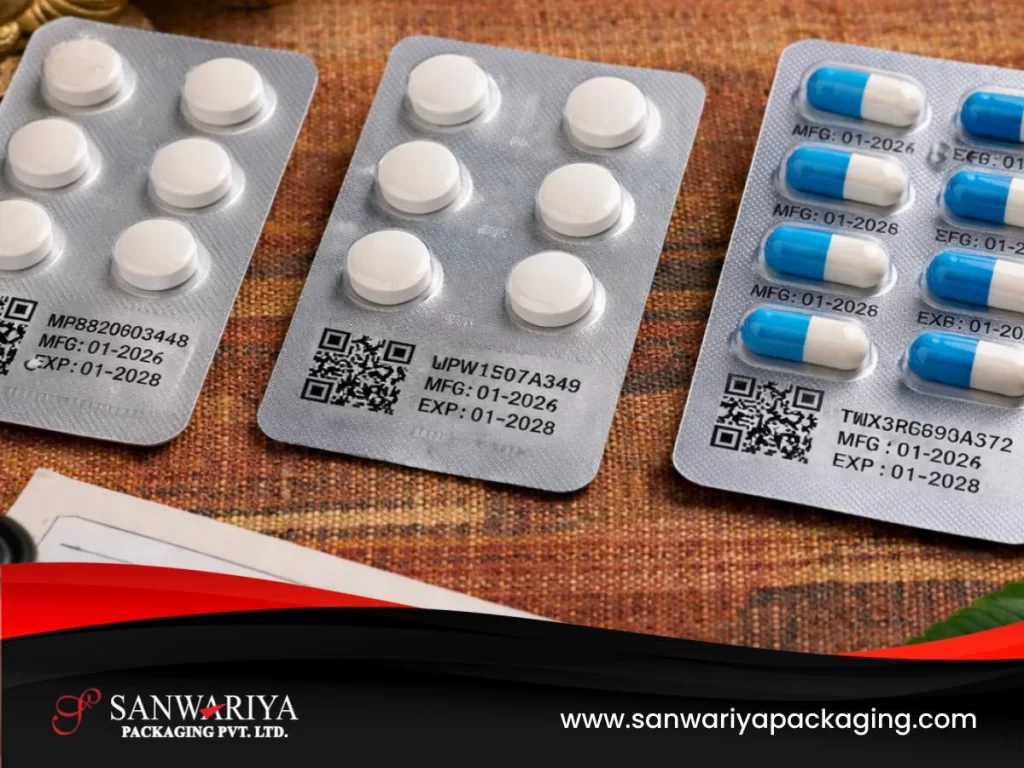
Serialization has become a central part of these regulatory frameworks. Each medicine package must carry a unique identification code that allows it to be traced throughout the supply chain. While serialization is often associated with cartons and labels, printed blister foils also play an important role in supporting traceability.

As regulatory expectations continue to evolve, pharmaceutical companies must ensure that serialization on pharma foils is compatible with modern coding systems, scanning technologies, and global standards such as those published by https://www.gs1.org/.

This blog explains how serialization applies to printed foils, the role of variable data printing, the importance of print alignment accuracy, and the verification processes required to maintain reliable track-and-trace systems in 2026.

Why Serialization Matters in Pharmaceutical Packaging

Serialization allows every medicine package to carry a unique identifier that distinguishes it from all other packages in the market. This identifier is typically encoded in a machine-readable barcode or data matrix symbol.

By scanning this code at different stages of the supply chain, companies can verify the authenticity of the medicine and confirm that it has not been diverted or tampered with.

Serialization supports several important objectives within pharmaceutical supply chains.

  • prevention of counterfeit medicines entering legitimate distribution channels
  • Improved product traceability across international markets
  • Faster identification and recall of affected batches if quality issues arise
  • Enhanced regulatory oversight of pharmaceutical distribution
Many countries now require serialized product identifiers as part of their pharmaceutical regulations. Examples include the European Union Falsified Medicines Directive and the U.S. Drug Supply Chain Security Act, which are widely referenced in global serialization frameworks.

Understanding GS1 Standards and Aggregation

Global serialization systems rely heavily on standardized identification formats. The GS1 system provides internationally recognized standards that allow pharmaceutical companies, distributors, and regulators to exchange product identification data reliably.

These standards define the structure of identifiers such as the Global Trade Item Number (GTIN), batch numbers, expiration dates, and serial numbers.

More information about these identification standards can be found at https://www.gs1.org/standards.

Aggregation is another important concept in serialization. It refers to the digital link between individual product units and the higher packaging levels that contain them.

For example:

  • A serialized blister pack may be linked to a carton
  • Multiple cartons may be linked to a shipping case
  • Several cases may be linked to a pallet
This hierarchical relationship allows supply chain participants to track product movement more efficiently while maintaining visibility at every packaging level.

Variable Data Printing on Blister Foils

Serialization requires packaging systems capable of printing variable information. Unlike static graphics printed during foil production, serialized data must change from one package to the next.

Variable data printed on blister foils may include:

  • Batch numbers
  • Expiry dates
  • Production codes
  • Machine-readable symbols or codes

These markings must remain legible throughout the product’s shelf life and must withstand handling, transportation, and environmental exposure.

Packaging development teams therefore work closely with printing specialists to ensure that the foil surface, coating, and print process support reliable variable data printing.

The available print area on the blister foil must also be carefully designed so that serialized information does not interfere with other regulatory text or branding elements.

Print Alignment and Registration Tolerance

Accurate print alignment is essential when serialization data is applied to blister packaging.

During high-speed packaging operations, even small variations in print registration can affect the placement of variable data on the foil. If the printed code shifts outside the designated area, scanning equipment may not be able to read it correctly.

Packaging engineers therefore define acceptable print alignment tolerances to ensure that variable data remains within the readable zone of the blister pack.

These tolerances are influenced by several factor:.

  • Foil material stability during printing
  • Machine speed during packaging operations
  • Precision of printing and coding systems
  • Alignment between forming cavities and printed graphics

Maintaining consistent print registration is critical to ensure that serialized codes remain both visible and scannable.

Verification and Scanning in Serialized Packaging

Printing serialized data is only part of the track-and-trace process. Pharmaceutical companies must also verify that the printed codes are accurate and readable.

Verification systems typically use automated scanners positioned along the packaging line. These scanners inspect each package to confirm that the serialized code meets required quality parameters.

Typical verification checks include:

  • Correct code structure and formatting
  • Barcode or data matrix readability
  • Correct placement of the code on the packaging surface
  • Matching of printed data with the central serialization database
If a code fails verification, the affected package is automatically rejected from the production line. This process helps ensure that only properly serialized products enter the distribution chain.

Designing Serialization-Ready Printed Foils

As serialization requirements expand globally, packaging development teams increasingly consider serialization during the design stage of printed foils.

Several design factors help support reliable serialization, like:

  • Sufficient blank space reserved for variable data
  • High-contrast background areas that improve code readability
  • Print coatings compatible with inkjet or laser coding technologies
  • Stable foil structures that maintain print alignment during packaging
For high-barrier or compackaging material consistency and printing compatibility play an important role in maintaining reliable serialization performance during production, supported by robust manufacturing capabilities such as those outlined in the infrastructure.evaluated to ensure both protection and print stability.

When these design elements are incorporated early in the packaging development process, serialization implementation becomes significantly more efficient.

Challenges in High-Speed Serialization

Modern pharmaceutical packaging lines operate at very high speeds. Maintaining accurate variable data printing under these conditions can present several technical challenges.

Possible challenges include:

  • Misalignment between printed graphics and blister cavities
  • Inconsistent code contrast due to surface reflections
  • Ink adhesion issues on certain foil coatings
  • Scanning errors caused by distorted or incomplete codes

To overcome these challenges, companies often conduct extensive line trials before launching serialized packaging at commercial scale.

Packaging material consistency and printing compatibility play an important role in maintaining reliable serialization performance during production, supported by robust manufacturing capabilities such as those outlined in the infrastructure.

Regulatory Documentation and Compliance

Regulatory authorities expect pharmaceutical companies to maintain clear documentation demonstrating that their serialization systems are functioning correctly.

This documentation may include:

  • Validation reports for coding and scanning equipment
  • Records of serialization data generation and management
  • Verification system performance data
  • Traceability documentation linking packaging levels
Maintaining accurate records helps companies demonstrate compliance during regulatory inspections and supports transparency within global supply chains.

Strengthening Pharmaceutical Traceability

Serialization has become one of the most important tools for protecting medicine supply chains. By assigning unique identifiers to individual packages, pharmaceutical companies can maintain visibility across global distribution networks and quickly identify potential risks.

Serialization on pharma foils supports these efforts by ensuring that blister packaging remains compatible with modern coding, verification, and scanning systems.

As pharmaceutical serialization requirements continue to evolve in 2026 and beyond, packaging materials must be designed with track-and-trace compatibility in mind.

Sanwariya Packaging manufactures pharmaceutical aluminum foils designed to support high-quality printing, reliable code placement, and compatibility with modern packaging technologies. With advanced printing capabilities and controlled processes supported by its infrastructure, Sanwariya Packaging helps pharmaceutical companies implement serialization-ready blister packaging that supports regulatory compliance and secure global distribution.For further discussions or project requirements, you can get in touch with us or directly request a quote.
Special Varnish Printing: A Smart Layer of Safety for Pharma Packs

In pharma packaging, even a clear coating can carry the critical responsibility of protection, compliance, and security. Special varnish printing — a transparent, precision-engineered layer — plays a crucial role in safeguarding medicine packs from physical wear, counterfeiting, and regulatory risks.

Beyond aesthetics, varnish protects printed data, deters tampering, and supports migration-safe compliance. As regulatory scrutiny increases, this silent layer is fast becoming a standard in high-performance pharma packaging.

What Is Special Varnish Printing in Pharma?

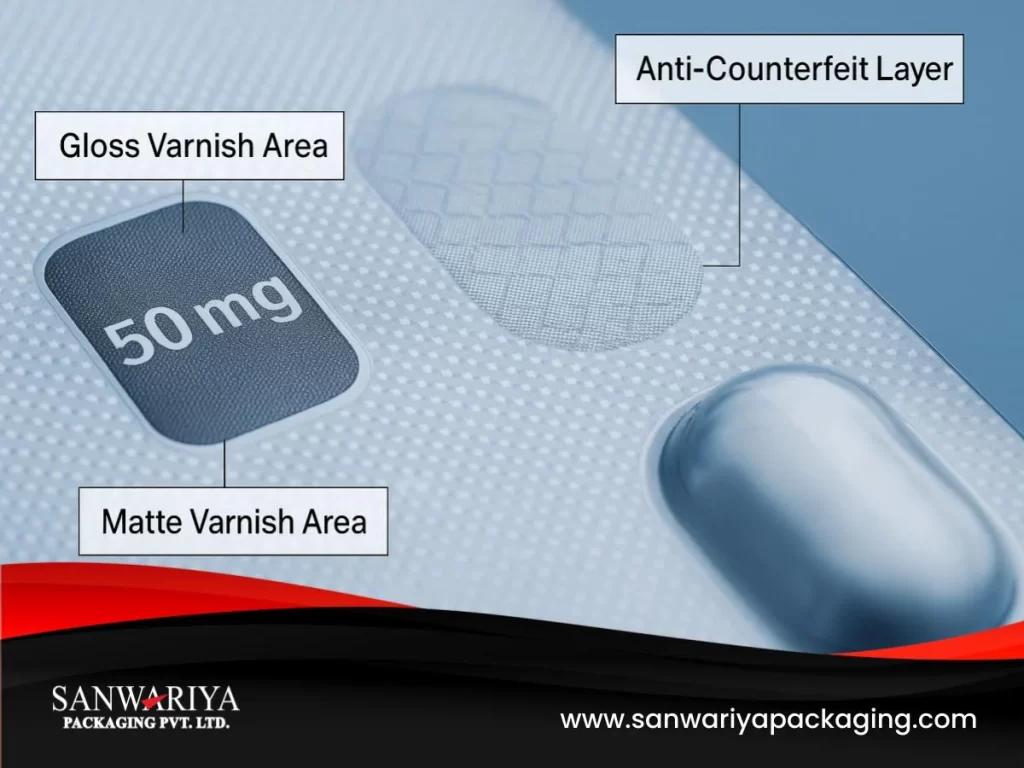
Varnish printing involves applying a thin, transparent layer over printed pharmaceutical packaging materials such as aluminum foil. In pharma, varnish serves both functional and protective purposes.

Types Commonly Used:

1. Gloss or matte finish:

Enhances visual quality and tactile experience

2. Security varnish:

Reacts under UV light for covert authentication

3. Textured varnish:

Distorts or cracks when tampered with

4. Migration-safe varnish:

Prevents leaching into drug formulations

Regulatory Standards It Supports:

  • EU 10/2011 (food-contact materials, including pharma)
  • US FDA 21 CFR (indirect food additives)
  • BfR (Germany), ANMAT (Argentina)
These global standards ensure that varnish does not compromise drug safety or chemically interact with active pharmaceutical ingredients (APIs).

1. Print Durability Under Pressure:

Blister packs and foil lids endure constant handling, high-speed filling lines, and variable temperatures. Varnish protects essential elements — batch codes, expiry dates, brand info — from smudging or abrasion.

2. Tamper Detection:

Special varnishes distort, crack, or reveal signs of interference when packaging is opened or manipulated, offering visible cues of tampering.

3. Invisible Security Features:

UV-reactive varnishes or tactile patterns create covert markers that are difficult to counterfeit yet easy to verify with proper tools.

According to WHO, over 80% of counterfeit cases begin with visible packaging anomalies. Tamper-evident varnish plays a vital first-line defense.

Pharma exporters must meet migration safety and anti-counterfeit guidelines in regions like Europe, Latin America, and Russia–CIS.

Special varnish coatings support:

  • Chemical stability throughout shelf life
  • Resistance to high heat during sealing or sterilization
  • Inert behavior near medicines
  • Compatibility with serialization and clean-room protocols

Packaging Performance That Builds Patient Trust

1. Tactile Recognition:

Textured varnishes help visually impaired patients identify dosage zones or branding by touch.

2. Secure and Elegant Branding:

Gloss, matte, or soft-touch finishes elevate shelf appeal while adding complexity for counterfeiters.

3. Print Longevity:

Varnish extends the life of essential information — from dosage details to barcodes — ensuring legibility during storage, shipment, and distribution.

Advantages of Special Varnish Printing at a Glance

FeatureImpact on Pharma Packaging
Tamper detectionVisual cues for unauthorized access
Low migration complianceSafe for contact with medicine packs
Hidden security elementsHard to replicate, easy to verify
Print and code protectionPrevents smearing, scuffing, and fading
Premium look and feelEnhances patient confidence and brand credibility

As counterfeit risks grow and compliance demands evolve, varnish printing is poised for rapid innovation:

  • AI-integrated varnish for digital scan verification
  • Smart coatings embedded in serialization workflows
  • Wider use in injectables, biologics, and cold chain packaging

Quality Tip:
Always conduct real-world simulation tests under humidity and cold chain environments to validate varnish performance globally.

Though invisible to the eye, special varnish printing offers visible, measurable benefits. From safeguarding drug information to providing a line of defense against tampering and non-compliance, it is an indispensable tool in modern pharmaceutical packaging.

At Sanwariya Packaging, we specialize in low-migration, security-grade varnish coatings designed for real-world performance and international compliance. Whether you’re upgrading your product’s safety or targeting export-ready quality, our solutions offer unmatched protection and precision.

Ready to apply this smart layer of safety to your next pharma pack?
Let’s create compliant, secure, and brand-trusted packaging — together.

NC-Free Printing- A Safer, Greener Future for Pharma

In an industry governed by safety, precision, and regulatory rigor, pharmaceutical packaging must keep pace with evolving environmental standards and worker protection mandates. One critical area of change is ink formulation—specifically, the move away from nitrocellulose (NC) inks.

NC-free (Nitrocellulose-free) printing is no longer a niche trend—it is a strategic upgrade. With global compliance requirements tightening and sustainability becoming a core brand pillar, the shift to NC-free inks offers pharmaceutical companies a safe, compliant, and environmentally responsible solution.

What Are NC-Free Inks—and Why Do They Matter?

Traditionally, NC-based inks have been favored for their fast drying and vivid visual output.

However, these inks come with significant drawbacks:

  • High VOC Emissions: Contributing to indoor air pollution and regulatory non-compliance.
  • Flammability Risks: NC-based inks are highly flammable, posing operational and storage hazards.
  • Disposal Challenges: Waste disposal from NC inks often violates environmental regulations in key export markets.
By contrast, NC-free inks are engineered to meet the same print performance standards—while drastically improving safety, environmental impact, and compliance.

Why Leading Pharma Brands Are Switching

Pharmaceutical manufacturers and CMOs using NC-free foil systems have reported measurable improvements:

  • Reduced Fire Risk — Safer working environments due to the elimination of flammable NC components.
  • Better GMP/EHS Audit Outcomes — Lower VOC output improves audit readiness and compliance ratings.
  • Waste Management Simplified — NC-free systems ease the burden of hazardous waste treatment.
  • Enhanced Brand Reputation — Demonstrates environmental responsibility to regulators, partners, and consumers.

Case Insights:
A European generics manufacturer observed a 15% reduction in packaging-related safety incidents within six months of adopting NC-free foil printing.

Compliance-Focused Printing: A Must for QA Teams

For Quality Assurance and Compliance leaders, NC-free inks align with pharmaceutical best practices. Key elements include:

1. Validation Readiness

NC-free systems support standard cGMP foil printing workflows and undergo:

  • Adhesion testing
  • Color consistency benchmarking
  • Solvent and chemical resistance checks

2. Audit Documentation

Ensure your packaging partner supplies:

  • VOC emission reports
  • Ink formulation data & batch traceability
  • REACH, RoHS, and other regulatory certifications

Supplier Qualification Checklist

RequirementWhat to Look For
Certified NC-Free Ink UsageVerified with technical data sheets
Validated WorkflowDocumented QC, ink handling, waste policies
Pharma-Specific CustomizationFonts, readability, and barcode clarity

NC-free ink systems contribute significantly to pharmaceutical sustainability initiatives:

  • Lower Emissions: Significant reduction in VOCs contributes to cleaner air.
  • Smaller Carbon Footprint: More efficient manufacturing and disposal.
  • Compliance with ESG & SDGs: Supports ISO 14001 and corporate ESG reporting mandates.

These factors are increasingly important in regulatory approvals and contract manufacturing evaluations—especially in the EU, Latin America, and emerging markets adopting green policies.

Common Concerns About NC-Free Inks

ConcernReality with NC-Free Solutions
Drying SpeedModern systems support high-speed curing
Color PerformanceRich pigments ensure brand consistency
Initial Cost of ChangeoverROI through safety, compliance & efficiency

NC-free systems are no longer experimental—they are proven, validated, and scalable for commercial pharma operations.

Time to Rethink Ink

Switching to NC-free ink systems is not just an environmental upgrade—it’s a forward-looking compliance and safety strategy. Pharmaceutical companies that make the switch benefit from improved regulatory outcomes, enhanced workplace safety, and strong ESG positioning.

At Sanwariya Packaging, we offer end-to-end NC-free foil printing solutions tailored for pharmaceutical use. Our inks are:

  • cGMP-compliant
  • VOC-tested and certified
  • Backed by stability data, regulatory documentation, and print durability reports

Let us help you build packaging that’s safer for your teams, smarter for your audits, and greener for your brand.

📞 Ready to go NC-free?

Contact Sanwariya Packaging today to explore customized foil printing solutions aligned with your compliance and sustainability goals.

How Printing Technology Impacts Pharma Packaging Efficiency

In pharmaceutical packaging, the quality of print is directly tied to patient safety and regulatory success. Whether it’s batch numbers, expiry dates, or serialized codes—accuracy, legibility, and durability are non-negotiable. As the industry prioritizes compliance, efficiency, and traceability, choosing the right printing method becomes a strategic decision.

This article compares gravure and flexo printing technologies in the context of pharmaceutical packaging, helping quality assurance teams and decision-makers understand which approach best supports regulatory alignment, operational efficiency, and packaging performance.

1. Why Printing Matters in Pharma Packaging

Printing isn’t just visual—it’s functional. In regulated markets, it ensures:

  • Traceability: Serialization codes and data matrix elements meet DSCSA, EU FMD, and other global standards.
  • Patient Safety: Clear dosage instructions, expiry dates, and warning texts help prevent medication errors.
  • Audit Preparedness: High print fidelity ensures packaging withstands scrutiny from inspectors and regulators.
Packaging errors caused by smudged ink, unreadable text, or inconsistent colors can trigger batch recalls, compliance flags, or market rejections—resulting in financial and reputational loss.

2. Gravure vs. Flexo

FeatureGravure PrintingFlexo Printing
Print PrecisionSuperior for fine details, ideal for small fonts & barcodesAdequate for bold text and graphics
Setup & SpeedLonger setup, but highly efficient for large volumesQuick setup, efficient for short runs
Color AccuracyConsistent over long print runsMay show drift over extended runs
Cost StructureHigher upfront investmentLower initial costs, flexible for smaller batches
Material CompatibilityExcellent with aluminum foil and multi-layer laminatesPerforms well on paper and flexible film
Best Use in PharmaIdeal for high-security primary packagingSuitable for labels and secondary packaging

3. Gravure: The Gold Standard in Pharma Packaging

Gravure printing is engineered for high-volume, high-precision pharmaceutical applications, especially for aluminum foil substrates used in blister and strip packaging.

Key Benefits:

  • Microtext & Serialization: Maintains sharpness even at high speeds for compliant traceability codes.
  • Security Features: Supports reverse-side printing, invisible inks, and tamper-evident designs to prevent counterfeiting.
  • Durability: Ink adhesion on foil resists heat, light, and moisture—essential for global distribution.

Advanced Gravure Capabilities at Sanwariya Packaging:

At Sanwariya, we take gravure a step further with:

  • Multicolor Specialized Printing: Delivering exceptional color depth and consistency for brand-critical pharma packs.
  • Front-Back Online Printing: Simultaneous double-sided printing enhances efficiency and counterfeit resistance.
  • Special Varnish Printing: Provides extra abrasion resistance and visual appeal with medical-grade coatings.
  • NC-Free (Nitrocellulose-Free) Inks: Sustainable, low-VOC formulations that align with stringent international regulations.
Manufacturers using Sanwariya gravure solutions have reported 30–35% fewer print-related deviations, reduced label mix-ups, and improved scanner-read rates during serialization audits.

4. When Flexo Works Best

While gravure dominates high-security pharma packaging, flexo offers advantages in specific scenarios:

  • Short Runs or Customization: Ideal for pilot batches, marketing samples, or region-specific products.
  • Secondary Packaging: Works well on carton boxes, labels, and pouches where ultra-fine detail is not critical.
  • Speed-to-Market: Quick setup supports rapid design iterations and faster go-to-market timelines.
For pharma companies balancing cost and flexibility, flexo is a practical solution for non-critical packaging layers.

Invest in the Right Print Technology for Long-Term Gains

In the race to stay compliant, efficient, and secure, printing technology is a core enabler of pharmaceutical packaging success.

  • Gravure printing, with its unmatched precision and ability to integrate multilayered security, is ideal for primary pharma packaging.
  • Flexo printing, on the other hand, supports agility and cost efficiency in secondary layers or short-run needs.

Partner with Sanwariya Packaging for Compliance-Driven Innovation

At Sanwariya Packaging, we specialize in gravure-printed aluminum foils tailored for pharmaceutical applications. Our solutions meet the highest global standards for clarity, compliance, and performance.

We help brands:

  • Enhance packaging precision
  • Strengthen serialization integrity
  • Combat counterfeiting with advanced print features
  • Improve sustainability with NC-free, eco-conscious inks

Let’s Raise Your Print Quality and Lower Your Compliance Risk

If your team is evaluating printing technologies, speak with experts who understand the regulatory, operational, and security needs of the global pharma sector.

Let’s talk about how we can future-proof your packaging with the right print solution.

How Multi-Color Printing Improves Compliance in Pharma Packaging

Compliance in pharmaceutical packaging is essential for ensuring patient safety, meeting regulatory requirements, and maintaining brand integrity. However, companies often face challenges in presenting critical information in a clear, readable, and organized manner.

Multi-color printing offers a robust solution by enhancing the visibility, accuracy, and clarity of essential information on packaging. This blog explores how multi-color printing improves compliance and transforms the pharmaceutical packaging landscape.

Understanding Multi-Color Printing in Pharmaceutical Packaging

Multi-color printing refers to the use of advanced printing technologies to incorporate multiple colors and intricate designs on pharmaceutical packaging materials. This process allows for high-quality graphics and text that enhance the packaging’s functionality and appeal.

Technologies Used:

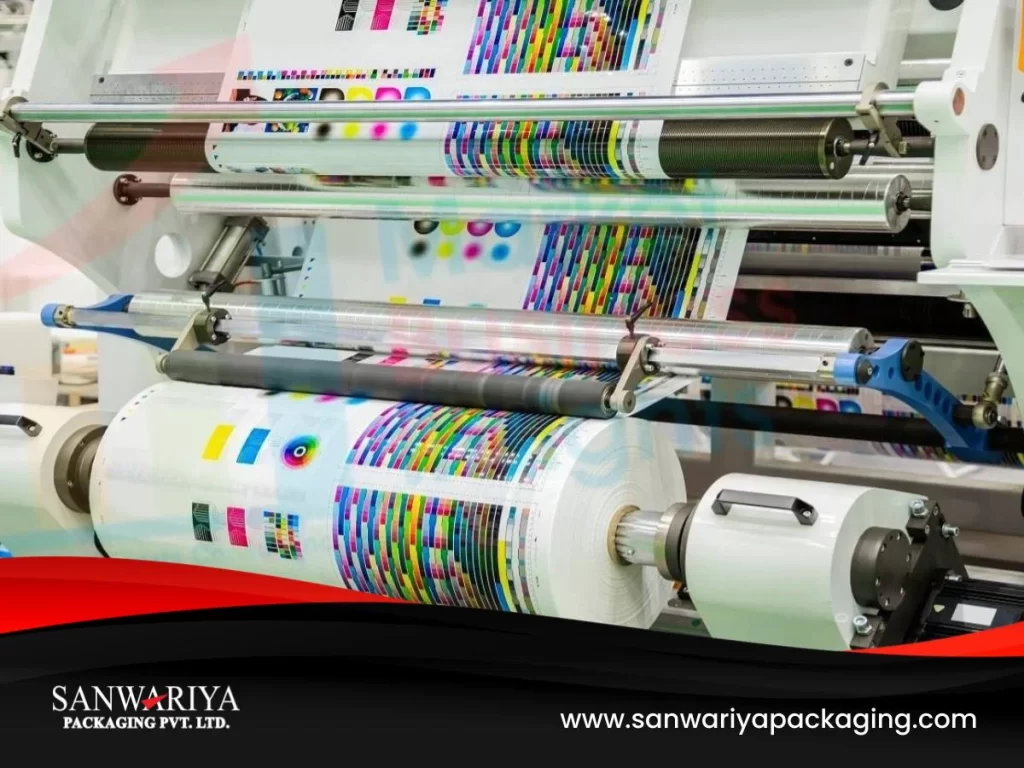
  • Rotogravure Printing: A high-precision technique ideal for producing detailed, multi-colored designs on flexible materials like aluminum foils. It ensures consistent quality, high durability, and sharp text and images.
  • Flexographic Printing: A versatile technology suitable for printing on various substrates, including flexible materials.
  • Digital Printing: Enables on-demand, high-quality printing with customizable options.

Rotogravure printing, in particular, is widely recognized for its ability to produce superior-quality prints with fine details and high durability, making it a preferred choice for pharmaceutical packaging.

Ensuring Compliance Through Multi-Color Printing

Pharmaceutical packaging must adhere to various global and regional regulations to ensure patient safety and product efficacy.

Regulatory bodies mandate the inclusion of:

  • Drug name and dosage
  • Batch number and expiration date
  • Warnings and precautions
  • Storage instructions

Agencies like the FDA (U.S.), EMA (Europe), and TGA (Australia) require clear, readable, and accurate labeling to minimize errors and ensure consistent oversight.

Key Benefits of Multi-Color Printing in Compliance

  • Improved Legibility: By using contrasting colors, critical information stands out against the background, enhancing readability for patients and healthcare professionals.
  • Clear and Accurate Information: Multi-color printing ensures structured presentation of details like dosage instructions, side effects, and ingredients.
  • Consistent Branding: While meeting compliance requirements, multi-color printing maintains brand identity through consistent color schemes and logos.
  • Tamper-Evidence and Security: Technologies like color-shifting inks and holographic elements can be integrated to protect against counterfeiting and meet anti-fraud regulations.

Business Impact: Cost Savings and Efficiency

Effective multi-color printing simplifies compliance processes, resulting in cost savings and quicker regulatory approvals.

  • Faster Approval Process: Clear and compliant packaging designs expedite the review and approval process by regulatory bodies.
  • Reduction in Errors and Rework: High-quality multi-color printing minimizes labeling mistakes, reducing the likelihood of costly recalls or penalties.

The Future of Multi-Color Printing in Pharmaceutical Packaging

  • Technology Advancements: Innovations in digital and rotogravure printing offer greater flexibility, precision, and customization for pharma packaging.
  • Sustainability in Multi-Color Printing: Eco-friendly printing methods, such as vegetable-based inks and recyclable materials, align with both compliance and environmental goals, paving the way for a sustainable future in pharmaceutical packaging.

Multi-color printing is a game-changer for pharmaceutical packaging, offering unparalleled benefits in compliance, safety, and efficiency. By ensuring clarity, enhancing branding, and meeting global standards, it empowers companies to deliver high-quality packaging solutions that prioritize patient safety and regulatory adherence.

Pharmaceutical companies can stay ahead by investing in advanced printing solutions. At Sanwariya Packaging Pvt. Ltd., we specialize in rotogravure multi-color printing, delivering innovative, compliant, and visually appealing packaging. Contact us today to learn how our solutions can elevate your pharmaceutical packaging.