Blog by Sanwariya Packaging

Your Trusted Partner in Packaging

Learn About Our Vision for the Future And Grow with Us.

Your Trusted Partner in Pharma Packaging

Learn about our vision for the future and grow with us.

Your Trusted Partner
in Pharma Packaging

Learn about our vision for the future and grow with us.

Know More

Tag: Blister Packaging

Pharmaceutical packaging updates across Latin America in 2026

As the European Union’s Packaging and Packaging Waste Regulation (PPWR) moves toward full enforcement in 2026, the pharmaceutical packaging industry stands at a defining moment. For exporters, this is not simply another regulatory update — it’s a strategic shift that will reshape how packaging materials are designed, documented, and certified for entry into one of the world’s most tightly governed markets.

Pharma-grade aluminum foil, trusted for its barrier protection and product stability, must now align with new recyclability and sustainability benchmarks — while continuing to safeguard medicine quality. This evolution marks a clear opportunity for responsible exporters to lead in a greener, compliant Europe.

Understanding PPWR: The New Standard for Pharmaceutical Packaging

The EU’s PPWR aims to create a unified framework that transitions Europe toward a circular packaging economy. In essence, every layer of packaging — from blister foils to transport cartons — must actively contribute to recyclability and waste reduction.

For pharmaceutical aluminum foils, the regulation introduces four major changes:

1. Minimum Recyclability Thresholds

By 2030, most packaging materials must meet defined recyclability levels. Pharma foils will be required to prove recoverability and reprocessing efficiency through documented testing and certification.

2. Material Composition Rules

Multi-layer or coated structures must support material separation in recycling systems. Adhesives, coatings, and laminates must therefore comply with approved recyclability standards.

3. Labeling and Digital Traceability

Packaging will need visible recyclability labeling and digital identifiers — such as QR codes or digital product passports — that link to verified compliance and recycling data.

4. Proof of Sustainability

Exporters must provide certified documentation demonstrating adherence to EU eco-design, recovery, and waste management norms.

In simple terms, pharmaceutical packaging must now protect both the medicine and the planet — equally.

How PPWR Is Transforming Pharma Foil Design

Pharma aluminum foil will remain indispensable for its light, moisture, and oxygen barrier properties, but it must now evolve into a circular, recyclable structure.

To meet PPWR requirements, manufacturers and exporters should prioritize:

  • Recyclable Foil Structures: Move toward mono-material or separable laminates that simplify recovery.
  • Eco-Safe Coatings and Inks: Adopt low-migration, EU-compliant inks and varnishes for chemical safety.
  • Digital Traceability: Integrate QR codes or blockchain IDs for end-to-end transparency.
  • Material Transparency: Certify all inputs — foil, adhesives, inks — under EU recyclability and chemical compliance frameworks.
For instance, many EU packaging partners are shifting from complex PET–foil laminates to mono-material aluminum systems achieving over 95% recyclability — setting the benchmark for PPWR-aligned design.

Compliance Roadmap: How Exporters Can Stay Ready by 2026

Pharma exporters outside the EU — including those in India, Bangladesh, and Egypt — should begin compliance alignment well before enforcement. A proactive approach includes:

  • Audit Current Materials
    Assess existing foil types, laminates, and coatings for recyclability potential.
  • Engage Sustainable Suppliers
    Collaborate with foil converters using EU-recognized sustainability frameworks and testing protocols.
  • Strengthen Documentation Systems
    Digitize Certificates of Analysis, LCAs, and traceability records for faster submissions.
  • Redesign with Eco-Intent
    Where feasible, shift toward lightweight or low-carbon aluminum grades that maintain barrier quality.
  • Build Internal Awareness
    Train packaging, QA, and export teams on PPWR standards, labeling norms, and traceability tools.
By initiating these steps now, exporters ensure smooth access to the EU market and build long-term resilience.

The Cost of Non-Compliance

Failing to meet PPWR standards will carry tangible consequences.

Non-compliant shipments may face:

  • Rejection at EU borders for missing recyclability or labeling documentation
  • Rework and relabeling costs during audits
  • Financial penalties and brand reputation damage for repeat violations

For pharmaceutical exporters, credibility is currency. A single non-compliant consignment can erode years of trust and reliability. Compliance, therefore, is not optional — it’s an essential market qualifier.

Turning Compliance into Competitive Advantage

PPWR compliance offers far more than risk avoidance. Companies that act early gain a sustainable edge in a demanding regulatory landscape. Early adopters can expect:

  • Uninterrupted market access across all EU member states
  • Enhanced brand reputation as sustainability-driven partners
  • Operational efficiency through digital traceability systems
  • Future-readiness for global packaging reforms inspired by EU standards
By aligning sustainability with profitability, exporters transform regulatory readiness into a strategic advantage.

Looking Ahead: The Future of Circular Pharma Packaging

By 2026, pharmaceutical packaging will no longer be judged only by how effectively it protects the medicine, but also by how responsibly it integrates into the circular economy.

The next generation of pharma foils will merge barrier excellence with recyclability, digital traceability, and environmental responsibility.

Exporters who invest today will lead tomorrow’s sustainable supply chains — ensuring their packaging stands not only compliant, but credible, certified, and future-proof.

The EU PPWR redefines pharmaceutical packaging for a sustainable future — demanding compliance, recyclability, and verified transparency at every stage. For exporters, early alignment ensures seamless EU access, stronger partnerships, and a resilient brand identity in a changing global marketplace.

Sanwariya Packaging continues to empower the pharmaceutical industry with recyclable, compliant, and high-performance aluminum foil solutions, enabling clients worldwide to stay ready, reliable, and ahead of regulatory change.

Pharma Foil Thickness & Gauge: What You Need to Know

In pharmaceutical packaging, even the smallest detail can decide whether a medicine reaches patients safe and effective—or fails along the way. According to WHO, packaging-related failures are among the leading causes of drug recalls in developing markets, and one of the most overlooked culprits is foil thickness.

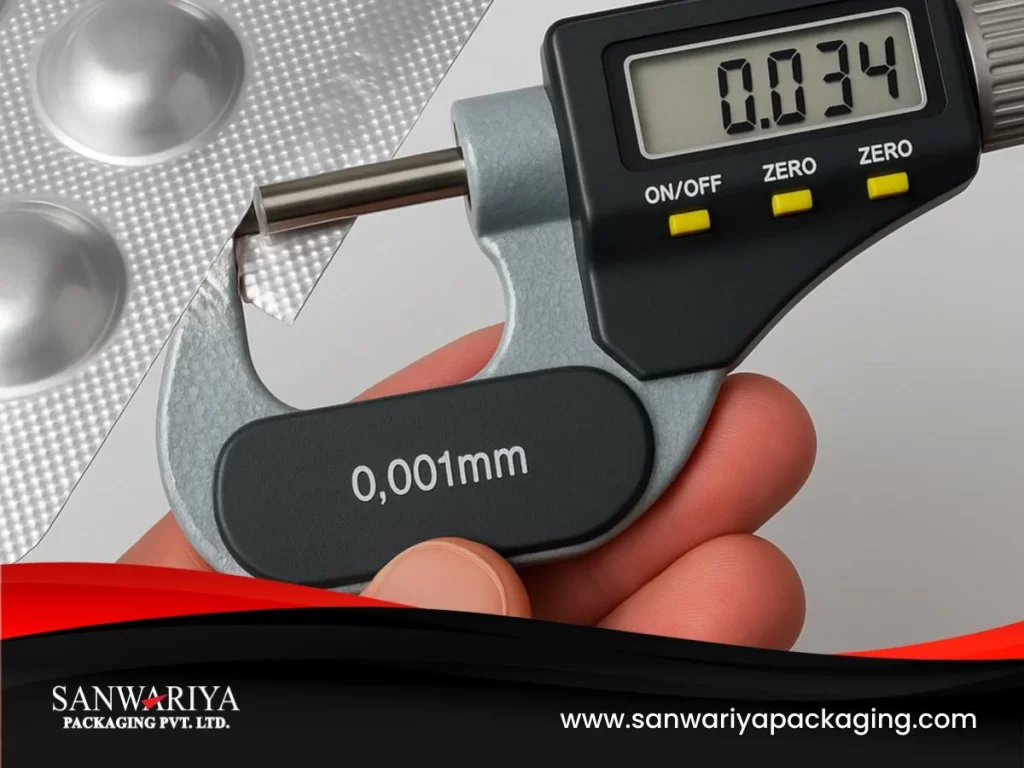
This “micron-level” parameter might seem minor, but it is the backbone of product protection, compliance, and global trust. From shielding medicines against moisture and oxygen to meeting international regulatory standards, foil thickness is a detail every pharma professional—and increasingly, every patient—should understand.

Why Foil Thickness Matters

Pharmaceutical aluminum foil isn’t just a wrapper—it’s a protective barrier. The thickness, measured in microns, directly impacts:

  • Barrier protection – Prevents moisture, light, and oxygen from degrading sensitive medicines.
  • Sealing strength – Ensures blister packs remain leak-proof and tamper-resistant.
  • Shelf life – Preserves drug stability during storage and transport.
Think of it like this: just as a weak lock leaves a door vulnerable, the wrong foil thickness leaves medicines exposed to risks.

Foil Thickness at a Glance

Foil TypeTypical Thickness (Microns)Best Suited ForKey Benefit
Blister Foil (PVC/PVDC + Lidding Foil)20–25 µmStandard tablets & capsulesStrong seal + cost-effective
Alu-Alu Foil (Cold-Form Blister)45–60 µmHighly moisture/light-sensitive drugsMaximum barrier protection
Strip Packaging Foil25–40 µmUnit-dose packaging for tablets/capsulesFlexibility + durability

Quick Tip: In tropical or high-humidity markets, regulators often recommend using the higher end of thickness ranges to ensure drug stability.

Global Standards and Compliance

International regulators such as the FDA, EMA, and WHO expect foils to meet strict performance tests, including:

  • Moisture transmission rate (MTR)
  • Light protection levels
  • Vacuum leak testing
In simple terms, regulators want proof that foil truly protects medicines against air, light, and humidity for the duration of their shelf life.

The Risks of Getting It Wrong

Choosing the wrong thickness isn’t just a technical error—it can have costly consequences:

  • Too thin: Pinholes, faster drug degradation, failed stability studies, and in tropical markets, even product recalls.
  • Too thick: Higher costs, increased shipment weight, and sustainability challenges, without extra protective benefits.
Case in Point: A leading exporter to Southeast Asia once faced regulatory rejection because blister foils couldn’t withstand humidity. The result? Costly recalls and a damaged reputation with distributors.

Myths vs. Facts

  • Myth: Thicker foil is always better.
    Fact: The right thickness balances protection, cost, and sustainability.
  • Myth: Foil standards are universal.
    Fact: Markets differ—CIS and tropical regions often demand higher-barrier foils than Europe.
  • Myth: Thickness doesn’t impact compliance.
    Fact: Regulators routinely test packaging; non-compliance can delay approvals and shipments

Choosing the Right Thickness

Selecting the correct foil requires collaboration across packaging, QA/QC, and supply chain teams. Key factors include:

  • Formulation type – Moisture- or light-sensitive drugs require stronger barriers.
  • Destination market – High-humidity regions demand higher-gauge foils.
  • Regulatory compliance – Standards differ country by country.
  • Sustainability goals – Lightweight foils can reduce cost and carbon footprint.
This decision requires collaboration between packaging development, QA/QC, and supply chain teams.

Smarter, Greener Foils

The industry is moving toward innovations that go beyond thickness:

  • Lightweight foils – Reducing material use without compromising integrity.
  • Eco-friendly designs – Enhancing recyclability and minimizing waste.
  • Digital integration – Embedding track-and-trace for anti-counterfeit protection.
These trends combine sustainability, compliance, and patient safety—the three pillars shaping the future of pharma packaging.

Foil thickness may seem like a small technical detail, but it is central to pharmaceutical safety, compliance, and global trust. The right gauge ensures protection, prevents costly recalls, and strengthens confidence among regulators, distributors, and patients worldwide.

At Sanwariya Packaging, we help pharma brands choose the right foil specifications—balancing protection, compliance, sustainability, and cost-efficiency—so that medicines remain safe, effective, and trusted across international markets.

Looking to optimize your packaging for global exports?
Our experts can guide you in selecting the right foil thickness for every market.

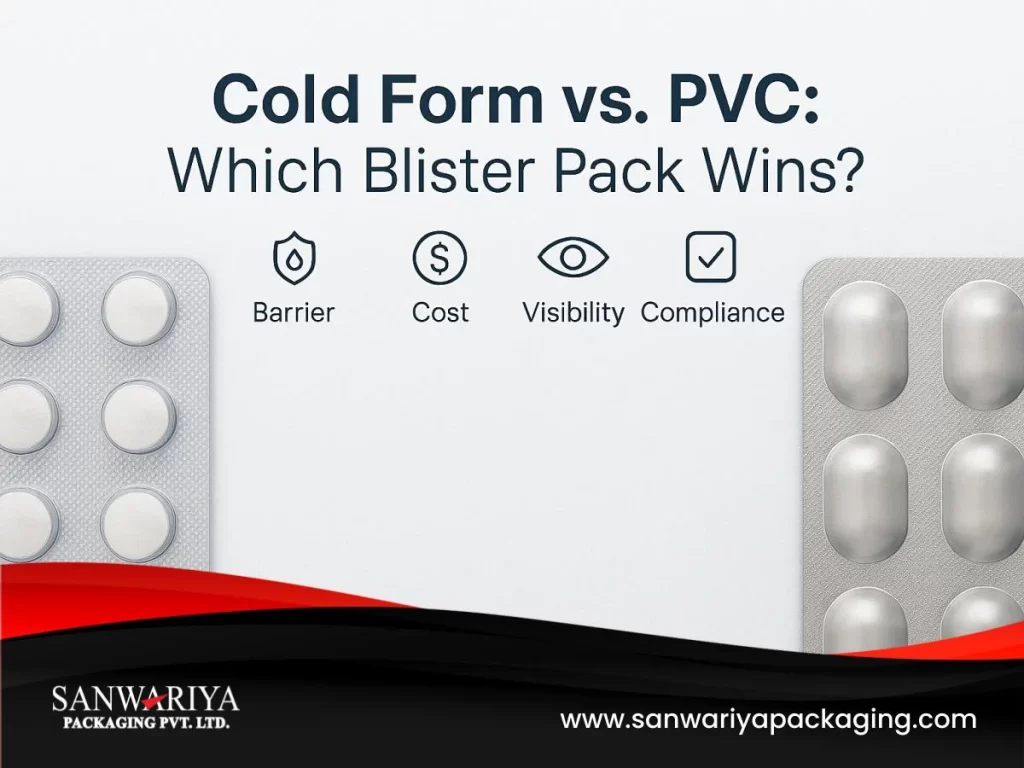
Cold Form vs. PVC: Choosing the Right Blister Packaging

In the world of pharmaceutical packaging, choosing the right blister pack isn’t just about sealing a product—it’s about safeguarding quality, ensuring compliance, and elevating patient safety. Among the most common materials used in blister packaging, Cold Form (Alu-Alu) and PVC (Polyvinyl Chloride) dominate the landscape. But which is the better fit for your formulation?

Let’s dive into the key differences, benefits, and considerations to help you make the right packaging choice for your next pharmaceutical product.

Understanding the Basics

1. PVC Blister Packaging

PVC is the most commonly used material for thermoformed blister packs. It’s a plastic film that, when heated, forms a cavity to hold tablets or capsules. It’s typically sealed with aluminum foil on the back.

2. Cold Form (Alu-Alu) Packaging

Cold-form packaging uses a laminate of aluminum, usually combined with polyamide and PVC layers. It’s formed without heat, using pressure to create cavities. This process results in an ultra-high barrier pack that’s completely opaque.

3. Cold Form vs. PVC: The Face-Off

FeaturePVCCold Form (Alu Alu)
Barrier ProtectionModerateExcellent (100% barrier)
VisibilityTransparentOpaque
CostLowerHigher
Forming ProcessThermoformingCold forming
Shelf LifeStandardExtended
SustainabilityLimitedHigher (PVC-free options available)
ApplicationsStable drugsSensitive formulations

When to Choose PVC Blister Packs

PVC is often the go-to solution for cost-sensitive projects or when the drug does not require high-barrier protection. It’s lightweight, easy to process, and offers product visibility—an important aspect for patient trust and compliance.

Ideal for:

  • Stable formulations
  • High-volume OTC drugs
  • Products requiring visual inspection

When to Choose Cold Form Blister Packs

Cold-form packaging is all about protection. Its high-barrier structure shields medications from moisture, oxygen, and light, making it perfect for sensitive APIs and international distribution where varying climates are a concern.

Ideal for:

  • Moisture-sensitive formulations
  • Light-sensitive drugs
  • High-value pharmaceuticals
  • Global distribution

Regulatory Considerations

Both materials are accepted by major health authorities, but with rising environmental demands, Alu-Alu packaging is becoming more favored—especially with PVC-free and recyclable alternatives.

At Sanwariya Packaging, we offer compliant, future-forward foil solutions that align with FDA, EMA, TGA, and WHO standards.

A Strategic Packaging Decision

The choice between Cold Form and PVC isn’t just a technical one—it’s strategic. It impacts product integrity, brand reputation, logistics, and ultimately, patient health. That’s why it’s crucial to work with a packaging partner who understands the science behind the solution.

Why Partner with Sanwariya Packaging?

We specialize in pharmaceutical-grade blister foils tailored to your specific requirements—whether you’re scaling an affordable OTC product or launching a breakthrough, high-value drug.

  • PVC-compatible lidding foils with custom print and security features
  • Cold-form Alu-Alu laminates for ultimate barrier protection
  • Fully compliant materials across regulatory zones
  • Eco-conscious options with NC-free and recyclable foil technologies

Let’s make your packaging a competitive advantage.

Contact us today to explore how Sanwariya Packaging can help you choose the right blister foil and stand out in a competitive pharmaceutical market.

Choosing the Right Aluminum Foil for Pharma Packaging

Pharmaceutical packaging is more than a protective cover—it’s a critical layer that ensures drug stability, prevents contamination, and meets rigorous global standards. Among various materials, aluminum foil stands out as the gold standard for its exceptional barrier protection, durability, and compliance.

Selecting the right pharmaceutical-grade aluminum foil is essential for maintaining product integrity, extending shelf life, and safeguarding against counterfeiting. In this blog, we’ll explore the essential considerations, industry challenges, and innovative trends driving the future of pharma foil packaging.

Why Aluminum Foil Is a Cornerstone of Pharma Packaging

Aluminum foil provides unmatched protection compared to plastic or paper-based alternatives. Here’s why it remains the material of choice:

  • Total Barrier Protection: Blocks moisture, oxygen, UV light, and contaminants to prevent drug degradation.
  • Extended Shelf Life: Preserves potency of tablets, capsules, and powders over time.
  • Anti-Counterfeit Features: Enables integration of holograms, tamper-evident layers, and serialization.
  • Regulatory Compliance: Approved by FDA, EMA, TGA, WHO, and other global bodies.

From blister packs to cold-form solutions, aluminum foil plays a vital role in maintaining the quality and security of pharmaceutical products.

Types of Pharmaceutical-Grade Aluminum Foil

Different drug formulations demand tailored packaging. The most widely used foils in the industry include:

  • Blister Foil (Push-Through): Soft foil laminated with heat-sealing lacquer for tablets and capsules.
  • Cold-Form Foil (Alu-Alu): Multi-layer, high-barrier foil ideal for moisture-sensitive formulations.
  • Strip Foil: Delivers complete seal integrity for unit-dose formats.
  • Child-Resistant Foil: Built with added safety features to prevent accidental ingestion.
  • Paper-Aluminum Laminate: Used in sachets and pouches for powders and granules.

Choosing the right type ensures efficient packaging, safety compliance, and maximum protection.

What to Look for When Choosing Aluminum Foil

Making the wrong packaging choice can result in product spoilage, regulatory issues, or consumer safety risks. Key factors to evaluate include:

  • Barrier Properties: High-barrier foils that resist moisture, oxygen, and UV exposure.
  • Drug Compatibility: Specialized coatings for APIs that may interact with packaging materials.
  • Heat-Seal Strength: Essential for leak-proof blister and strip packs.
  • Anti-Counterfeit Enhancements: Options like holographic layers, QR codes, or serialization.
  • Sustainability: Eco-conscious materials such as recyclable foils and solvent-free coatings.

Addressing Industry Challenges in Foil Packaging

Challenge 1: Cost vs. Quality

  • Issue: Premium foils raise production costs.
  • Solution: Leverage bulk sourcing, long-term supplier partnerships, and material efficiency strategies.

Challenge 2: Navigating Global Regulations

  • Issue: Differing international standards (FDA, EMA, TGA) complicate compliance.
  • Solution: Partner with GMP-certified suppliers offering pre-approved, compliant foils.

Challenge 3: Combating Counterfeits

  • Issue: Fake medications threaten patient safety.
  • Solution: Use high-security foils with tamper-evidence, serialization, and digital traceability.

Emerging Trends in Pharmaceutical Foil Packaging

The future of pharmaceutical packaging is being reshaped by innovation. Key trends include:

  • Nano-Coated Foils – Ultra-high barrier protection against moisture, gases, and chemicals.
  • Smart Packaging – Integration of NFC chips and sensors for real-time product monitoring.
  • Sustainable Foils – Eco-friendly alternatives like biodegradable or fully recyclable aluminum.

By 2030, over 70% of pharmaceutical companies are expected to adopt smart and sustainable packaging systems.

Partner with Sanwariya Packaging for Excellence

Choosing the right aluminum foil isn’t just a technical decision—it’s a strategic one. From ensuring compliance and safety to enhancing brand trust, your packaging partner plays a pivotal role.

At Sanwariya Packaging, we offer a complete range of pharmaceutical-grade aluminum foils tailored for your unique needs. Whether you’re seeking high-barrier cold-form foils, custom anti-counterfeit solutions, or eco-friendly alternatives, we’re here to help you protect your products and your reputation.

Ready to upgrade your pharma packaging?

Let’s talk. Contact us today to explore how Sanwariya Packaging can help you stay ahead in an evolving industry.

The Key Benefits of Blister Packaging for Pharmaceutical Products

Blister packaging has emerged as a cornerstone in the pharmaceutical industry, offering a reliable and efficient solution for packaging various products. Its unique design and functionality address the critical requirements of preserving drug integrity, ensuring safety, and enhancing convenience.

In this blog, we will explore the key benefits blister packaging offers for pharmaceutical products and why it has become indispensable in modern packaging.

What is Blister Packaging?

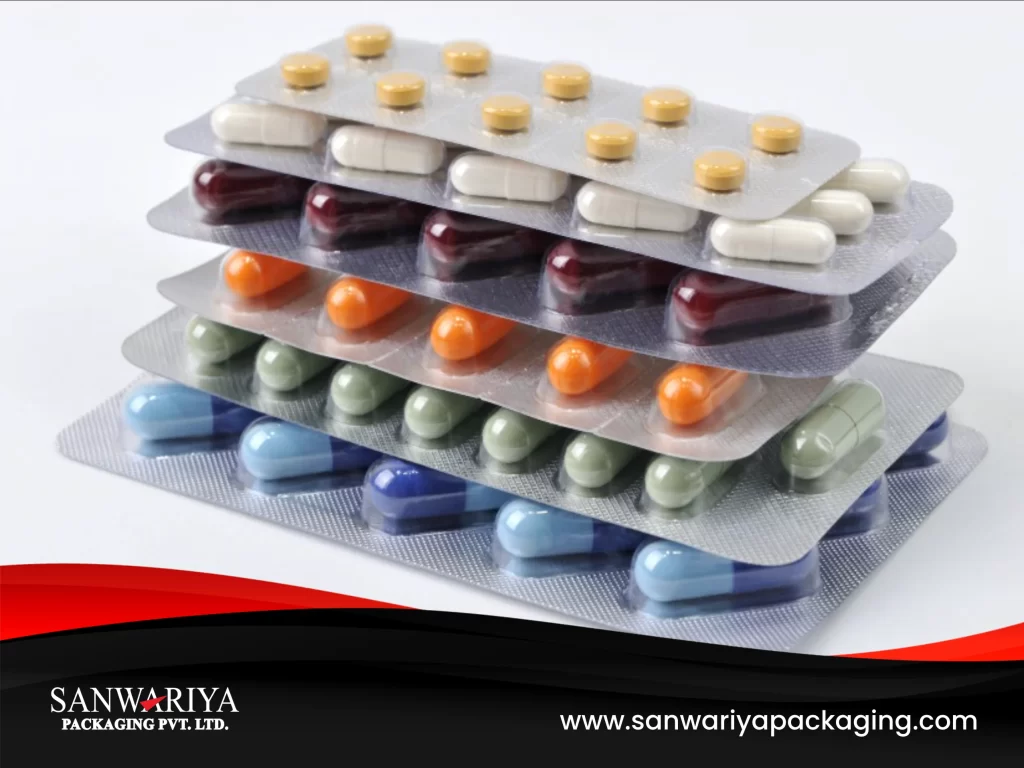
Blister packaging is a pre-formed, plastic-based packaging solution that securely encases pharmaceutical products. It typically comprises two main components:

  • Blister: A cavity or pocket made from thermoformed or cold-formed plastic that holds the product.
  • Backing: A layer of aluminum foil, paperboard, or plastic that seals the blister.

Types of Blister Packaging:

Thermoformed Blisters: Created by heating plastic sheets and moulding them into cavities. Commonly used for tablets and capsules.

Cold-Formed Blisters: Made by pressing aluminum foil into cavities, offering superior protection against moisture and light.

Products Packaged in Blister Packs:

  • Tablets and capsules
  • Syringes
  • Medical devices
  • Small liquid doses

One of the primary roles of blister packaging is to shield pharmaceutical products from environmental factors that could compromise their efficacy.

  • Moisture Protection: Blister packs create an airtight seal, preventing exposure to humidity that can degrade sensitive medications.
  • Light Protection: Many blister packs incorporate UV-blocking materials to safeguard drugs from harmful light rays.
  • Oxygen Protection: Sealed blisters minimize oxygen exposure, helping maintain the chemical stability of oxygen-sensitive drugs.
  • Temperature Control: Specialized materials and designs help maintain stable conditions for temperature-sensitive medicines during storage and transport.

Blister packaging prioritizes consumer safety by providing visible and functional safeguards.

  • Tamper Evidence: The sealed nature of blister packs makes any tampering immediately noticeable, ensuring the integrity of the product.
  • Child-Resistant Features: Many blister packs include child-resistant mechanisms, preventing accidental ingestion by children.

Blister packaging enhances the longevity and efficiency of pharmaceutical products.

  • Preserving Shelf Life: Airtight seals and protective materials ensure the medicine’s potency over time.
  • Minimizing Waste: Single-dose packaging reduces the likelihood of contamination and eliminates the need to discard unused medication.

Blister packaging is not only functional but also economical for manufacturers.

  • Low Production Costs: Its streamlined design allows for cost-efficient mass production.
  • Reduced Logistics Expenses: Lightweight and compact, blister packs lower transportation and storage costs.
  • Customizable Branding: Companies can design blister packs to reflect their brand identity without significant cost increases.

Blister packaging has revolutionized the pharmaceutical industry with its unmatched benefits: superior protection, enhanced safety, user-friendly design, and cost-effectiveness. By preserving drug integrity, ensuring safety, and improving patient compliance, blister packs play a critical role in modern healthcare.

Pharmaceutical companies looking to enhance their packaging solutions can rely on blister packaging for unparalleled quality and reliability. At Sanwariya Packaging Pvt. Ltd., we specialize in innovative blister packaging solutions tailored to your needs. Contact us today to discover how we can help safeguard your products and build consumer trust.