Blog by Sanwariya Packaging

Your Trusted Partner in Packaging

Learn About Our Vision for the Future And Grow with Us.

Your Trusted Partner in Pharma Packaging

Learn about our vision for the future and grow with us.

Your Trusted Partner
in Pharma Packaging

Learn about our vision for the future and grow with us.

Know More

Tag: Tamper-Evident Packaging

Counterfeit Drug Trends in LATAM & Africa

Counterfeit medicines remain one of the most serious challenges in global pharmaceutical supply chains. In several emerging markets, including regions across Latin America (LATAM) and Africa, authorities and industry stakeholders continue to monitor rising cases of falsified or diverted medicines entering legitimate distribution channels.

While regulatory frameworks and enforcement efforts are improving, counterfeit products still find entry points through informal markets, parallel supply chains, and weak distribution controls. Because packaging is often the first visible indicator of product authenticity, pharmaceutical companies rely heavily on secure packaging design to detect and prevent manipulation.

Understanding regional counterfeit trends and identifying packaging risk signals are therefore essential for companies supplying medicines to these markets.

Counterfeit Entry Points in Emerging Markets

LATAM and African pharmaceutical markets are expanding rapidly, with increasing demand for both generic and branded medicines. However, the growth of pharmaceutical trade has also created opportunities for counterfeiters to introduce falsified products into distribution networks.

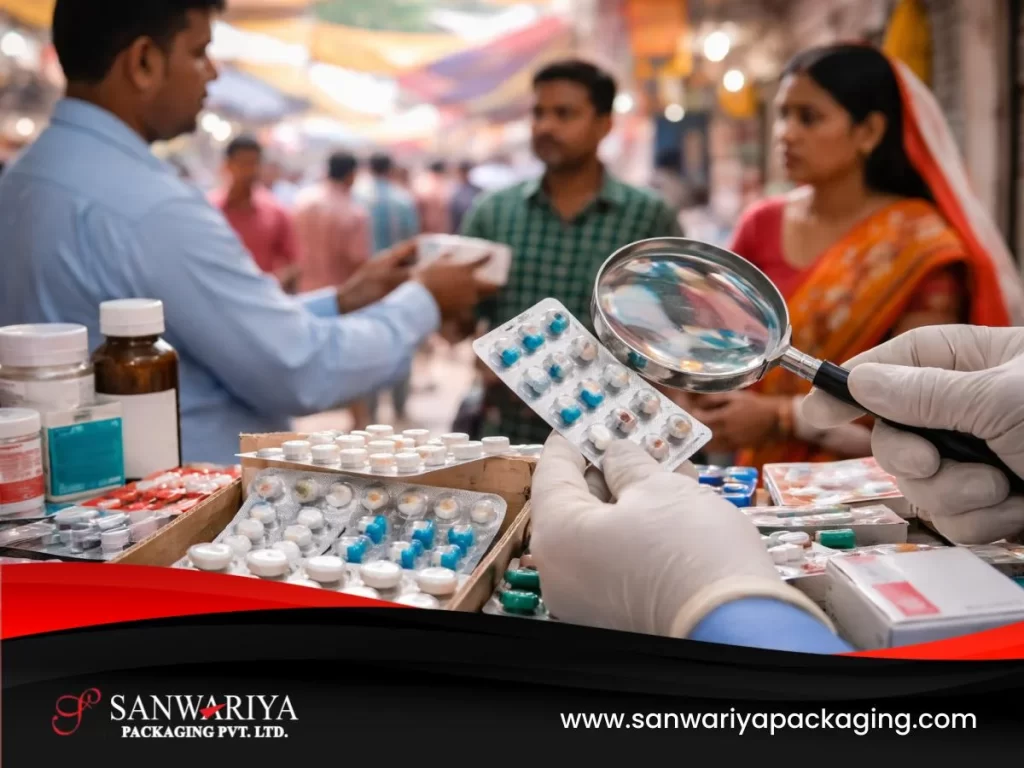
Common entry points include unauthorized wholesalers, unregulated online sales platforms, and informal pharmacy channels. In some cases, diverted products are repackaged or relabeled to mimic legitimate medicines before being reintroduced into the market.

Cross-border trade routes can also complicate monitoring efforts. Medicines may move through multiple countries before reaching the final destination, making it more difficult to trace packaging origins and verify product authenticity.

These challenges highlight the importance of packaging systems that incorporate visible and traceable security elements.

Common Signs of Packaging Manipulation

Counterfeit medicines often attempt to replicate the visual appearance of legitimate packaging. However, subtle differences in packaging quality or structure can reveal potential manipulation.

One common signal is irregular blister sealing. Counterfeit operations may use inferior sealing equipment, resulting in inconsistent seal patterns or weakened blister cavities. Packaging edges may appear uneven or slightly distorted.

Another indicator is printing inconsistency. Fonts, batch codes, and ink density may differ from authentic packaging. In some cases, printing alignment may be slightly shifted or blurred due to lower-quality printing equipment.

Blister foil surfaces may also show signs of mechanical tampering. Scratches, partial resealing marks, or unusual foil deformation may indicate that original packaging was opened and reassembled.

Recognizing these signs helps quality teams identify suspicious products during inspections.

Security Printing Features in Pharmaceutical Packaging

To combat counterfeit risks, pharmaceutical companies increasingly integrate security printing technologies into packaging materials. These features allow both regulators and supply chain partners to verify product authenticity more easily.

Security elements may include microtext printing, special inks that change color under different lighting conditions, and unique batch coding systems. Some packaging also incorporates serialized data that can be verified through digital tracking platforms.

Blister foil printing can support these security measures by maintaining consistent print quality and clear code visibility. Stable ink adhesion and precise printing help ensure that security elements remain readable throughout the product lifecycle.

When combined with proper supply chain monitoring, these features strengthen protection against counterfeit manipulation.

The Role of Tamper-Evident Packaging

Tamper-evident packaging plays a critical role in identifying potential product interference. Blister packaging naturally provides some level of tamper visibility because each cavity must be punctured to remove the medicine.

However, additional security cues can further strengthen packaging protection. For example, specialized foil coatings or structural features may reveal visible damage if someone attempts to peel or reseal blister packs.

Clear evidence of tampering allows pharmacists, distributors, and regulators to detect suspicious products before they reach patients.

By integrating tamper-evident design principles, pharmaceutical companies reduce the likelihood that counterfeit products can be successfully reintroduced into legitimate supply chains.

Monitoring Counterfeit Risk Through Packaging

Companies distributing medicines in LATAM and African markets often work closely with regulatory authorities and brand protection teams to monitor counterfeit risks. Packaging plays an important role in these monitoring strategies.

Quality teams may track packaging complaints, review returned products, and analyze suspicious packaging samples to identify patterns of counterfeit activity. These investigations help companies refine packaging specifications and improve security features over time.

In addition, supplier qualification and strict packaging material controls help ensure that authorized packaging components remain traceable and consistent across production batches.

These practices contribute to stronger product protection throughout international supply chains.

Strengthening Packaging Protection Against Counterfeits

Counterfeit medicines pose serious risks to patient safety and brand integrity. As pharmaceutical companies expand distribution across LATAM and African markets, monitoring packaging vulnerabilities and implementing effective security measures becomes increasingly important.

By incorporating secure printing techniques, tamper-evident structures, and consistent packaging quality, pharmaceutical manufacturers can significantly reduce the risk of counterfeit manipulation. Packaging systems designed with strong barrier integrity and reliable printing performance support both product protection and supply chain transparency.

Sanwariya Packaging manufactures pharmaceutical aluminum foils designed to support stable printing performance, clear batch coding visibility, and reliable sealing integrity for blister packaging applications. Through advanced manufacturing processes and strict quality controls, Sanwariya Packaging supports pharmaceutical companies in developing secure packaging solutions that help protect medicines across global markets.

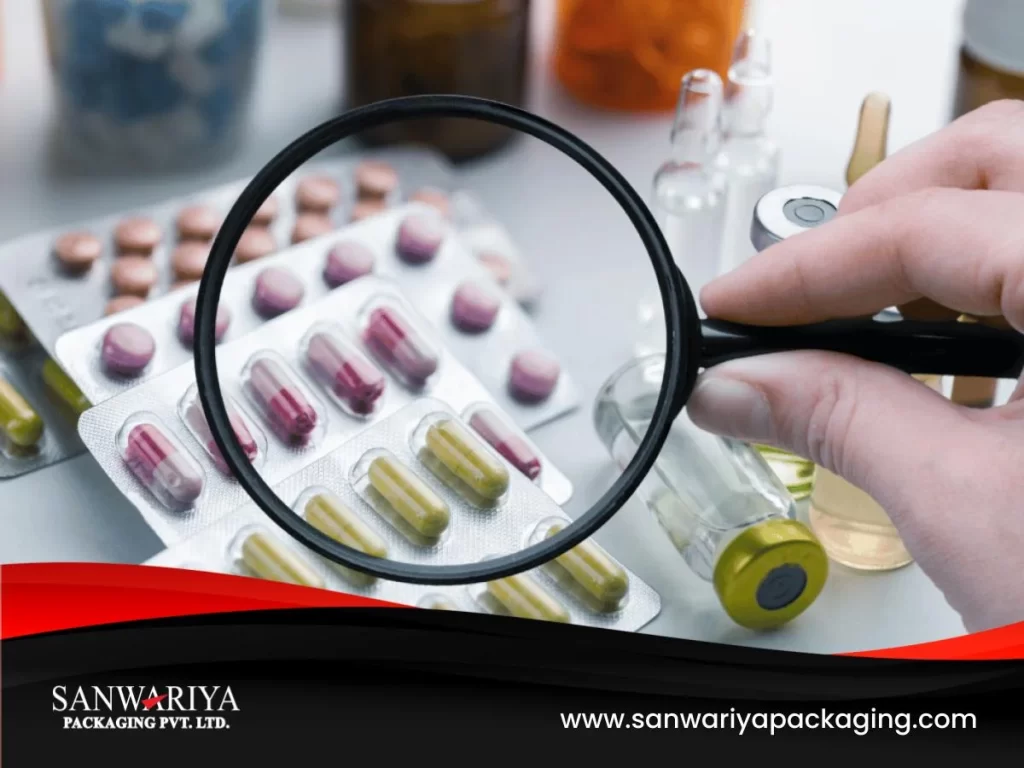
Why Security Foils Are Critical in Preventing Counterfeit Medicines

In the world of pharmaceuticals, trust is non-negotiable. When a patient takes medication, they expect it to be safe, authentic, and effective. But the harsh reality is that counterfeit drugs are on the rise globally, threatening lives and shaking consumer confidence. According to the World Health Organization (WHO), 1 in 10 medical products in low- and middle-income countries is either substandard or fake.

So, how can pharmaceutical companies ensure product integrity and protect patients?

Enter security foils—a frontline defense in the fight against counterfeit medicines.

Understanding the Threat of Counterfeit Drugs

Counterfeit medicines are more than just knock-offs; they often contain incorrect ingredients, wrong dosages, or no active ingredient at all. These products can lead to treatment failure, drug resistance, or even death. What’s more, the counterfeit drug industry is alarmingly sophisticated, with fake packaging that can mimic genuine products almost perfectly.

This makes packaging not just a protective shell—but a powerful security feature.

How Security Foils Help Safeguard Authenticity

Pharmaceutical-grade aluminum foils have evolved far beyond simple barriers to light, moisture, and oxygen. Today, they are equipped with advanced anti-counterfeit technologies that make duplication nearly impossible.

Here’s how:

1. Tamper-Evident Features

Security foils can be designed to reveal visible signs of tampering—such as void patterns or delamination—if someone tries to reseal or alter the packaging. This gives both pharmacists and patients a clear visual cue of potential interference.

2. Holographic Printing & Microtext

Holograms, microtext, and fine-line patterns are nearly impossible to replicate without specialized equipment. These high-precision elements add a visual layer of authentication and are easy to verify at the distribution or retail level.

3. Serialization and QR Codes

Every strip or blister pack can be assigned a unique serial number or QR code, allowing manufacturers to track and verify the product across the supply chain. This adds traceability and helps in real-time authentication using mobile apps or digital systems.

4. Invisible Security Inks & UV Features

Invisible UV-reactive inks or taggants embedded into foils can only be seen under specific conditions. These covert markers help inspectors and customs officials identify genuine products instantly during audits or border checks.

Why It Matters More Than Ever

As global pharma supply chains expand and digital marketplaces grow, counterfeiters have more opportunities to exploit weak packaging. Without robust security measures, even the most effective medication is vulnerable. For manufacturers, failing to protect packaging means risking:

  • Patient safety
  • Brand reputation
  • Regulatory penalties
  • Revenue loss
Security foils are a proactive investment, not just in packaging, but in consumer trust and corporate responsibility.

Choosing the Right Security Foil Partner

Not all foil solutions are created equal. The right packaging partner will offer tailored options that align with your brand, product needs, and global compliance requirements.

At Sanwariya Packaging, we specialize in pharmaceutical security foils that are engineered to protect your medicines against tampering, duplication, and misuse. From multi-layered anti-counterfeit solutions to fully traceable, serialization-ready foils, we provide a comprehensive suite of secure packaging options.

In an industry where safety and trust are paramount, security foils play a silent but powerful role in ensuring every pill, tablet, or sachet reaches the patient just as it should—genuine, effective, and untouched.

The next time you seal a blister pack, think beyond the foil. Think of the lives it protects.

Want to strengthen your pharma packaging against counterfeiting?

Let’s collaborate on building a safer future—one secure foil at a time.
Contact Sanwariya Packaging today.

The Key Benefits of Blister Packaging for Pharmaceutical Products

Blister packaging has emerged as a cornerstone in the pharmaceutical industry, offering a reliable and efficient solution for packaging various products. Its unique design and functionality address the critical requirements of preserving drug integrity, ensuring safety, and enhancing convenience.

In this blog, we will explore the key benefits blister packaging offers for pharmaceutical products and why it has become indispensable in modern packaging.

What is Blister Packaging?

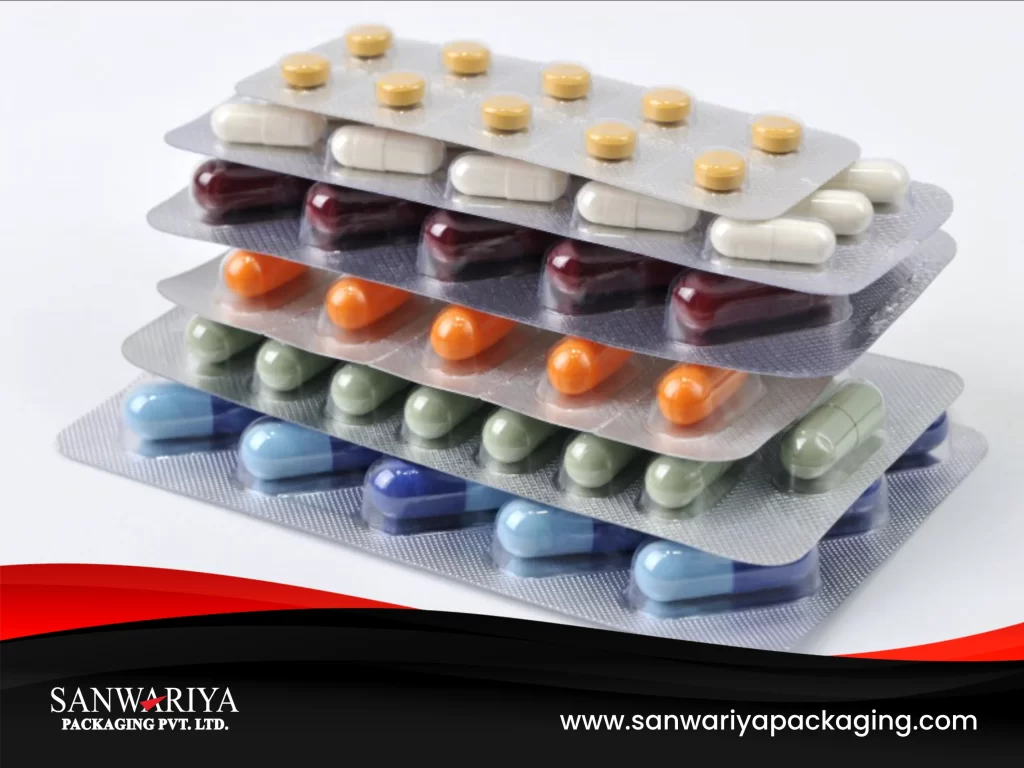
Blister packaging is a pre-formed, plastic-based packaging solution that securely encases pharmaceutical products. It typically comprises two main components:

  • Blister: A cavity or pocket made from thermoformed or cold-formed plastic that holds the product.
  • Backing: A layer of aluminum foil, paperboard, or plastic that seals the blister.

Types of Blister Packaging:

Thermoformed Blisters: Created by heating plastic sheets and moulding them into cavities. Commonly used for tablets and capsules.

Cold-Formed Blisters: Made by pressing aluminum foil into cavities, offering superior protection against moisture and light.

Products Packaged in Blister Packs:

  • Tablets and capsules
  • Syringes
  • Medical devices
  • Small liquid doses

One of the primary roles of blister packaging is to shield pharmaceutical products from environmental factors that could compromise their efficacy.

  • Moisture Protection: Blister packs create an airtight seal, preventing exposure to humidity that can degrade sensitive medications.
  • Light Protection: Many blister packs incorporate UV-blocking materials to safeguard drugs from harmful light rays.
  • Oxygen Protection: Sealed blisters minimize oxygen exposure, helping maintain the chemical stability of oxygen-sensitive drugs.
  • Temperature Control: Specialized materials and designs help maintain stable conditions for temperature-sensitive medicines during storage and transport.

Blister packaging prioritizes consumer safety by providing visible and functional safeguards.

  • Tamper Evidence: The sealed nature of blister packs makes any tampering immediately noticeable, ensuring the integrity of the product.
  • Child-Resistant Features: Many blister packs include child-resistant mechanisms, preventing accidental ingestion by children.

Blister packaging enhances the longevity and efficiency of pharmaceutical products.

  • Preserving Shelf Life: Airtight seals and protective materials ensure the medicine’s potency over time.
  • Minimizing Waste: Single-dose packaging reduces the likelihood of contamination and eliminates the need to discard unused medication.

Blister packaging is not only functional but also economical for manufacturers.

  • Low Production Costs: Its streamlined design allows for cost-efficient mass production.
  • Reduced Logistics Expenses: Lightweight and compact, blister packs lower transportation and storage costs.
  • Customizable Branding: Companies can design blister packs to reflect their brand identity without significant cost increases.

Blister packaging has revolutionized the pharmaceutical industry with its unmatched benefits: superior protection, enhanced safety, user-friendly design, and cost-effectiveness. By preserving drug integrity, ensuring safety, and improving patient compliance, blister packs play a critical role in modern healthcare.

Pharmaceutical companies looking to enhance their packaging solutions can rely on blister packaging for unparalleled quality and reliability. At Sanwariya Packaging Pvt. Ltd., we specialize in innovative blister packaging solutions tailored to your needs. Contact us today to discover how we can help safeguard your products and build consumer trust.