

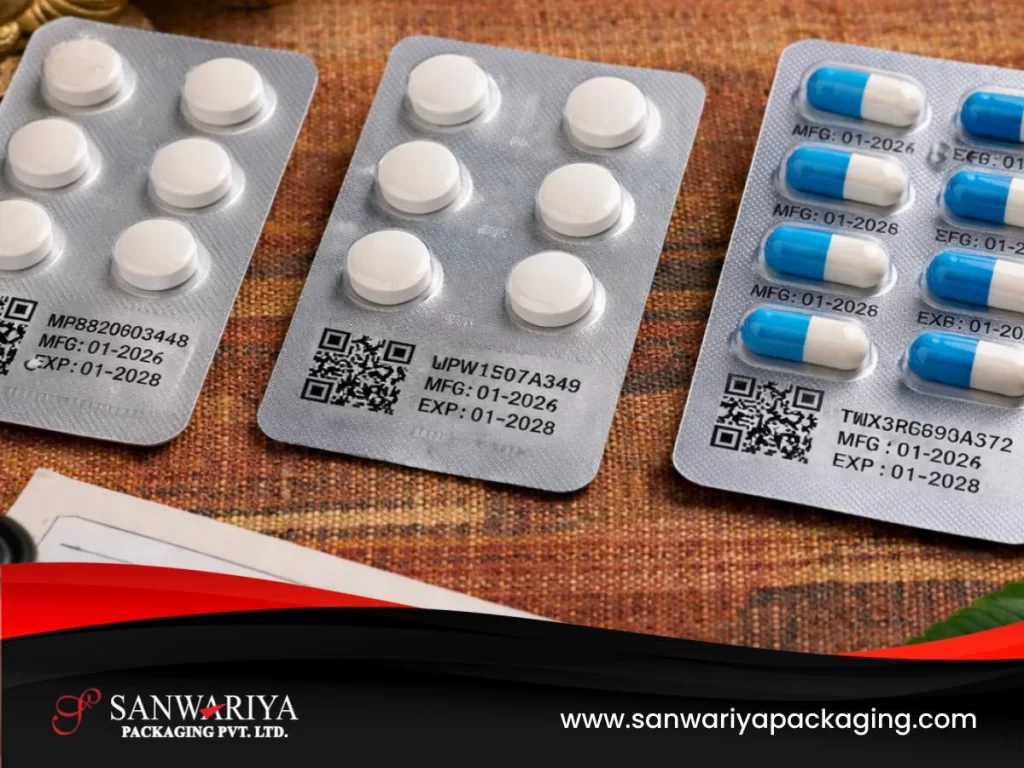
Pharmaceutical supply chains are becoming increasingly complex and global. Medicines now move across multiple countries, distribution hubs, and pharmacies before reaching the patient. To ensure product authenticity and prevent counterfeit medicines from entering the market, regulators around the world have strengthened track-and-trace requirements.
Serialization has become a central part of these regulatory frameworks. Each medicine package must carry a unique identification code that allows it to be traced throughout the supply chain. While serialization is often associated with cartons and labels, printed blister foils also play an important role in supporting traceability.
As regulatory expectations continue to evolve, pharmaceutical companies must ensure that serialization on pharma foils is compatible with modern coding systems, scanning technologies, and global standards such as those published by https://www.gs1.org/.
This blog explains how serialization applies to printed foils, the role of variable data printing, the importance of print alignment accuracy, and the verification processes required to maintain reliable track-and-trace systems in 2026.
Why Serialization Matters in Pharmaceutical Packaging
Serialization allows every medicine package to carry a unique identifier that distinguishes it from all other packages in the market. This identifier is typically encoded in a machine-readable barcode or data matrix symbol.
By scanning this code at different stages of the supply chain, companies can verify the authenticity of the medicine and confirm that it has not been diverted or tampered with.
Serialization supports several important objectives within pharmaceutical supply chains.
- prevention of counterfeit medicines entering legitimate distribution channels
- Improved product traceability across international markets
- Faster identification and recall of affected batches if quality issues arise
- Enhanced regulatory oversight of pharmaceutical distribution
Many countries now require serialized product identifiers as part of their pharmaceutical regulations. Examples include the European Union Falsified Medicines Directive and the U.S. Drug Supply Chain Security Act, which are widely referenced in global serialization frameworks.
Understanding GS1 Standards and Aggregation
Global serialization systems rely heavily on standardized identification formats. The GS1 system provides internationally recognized standards that allow pharmaceutical companies, distributors, and regulators to exchange product identification data reliably.
These standards define the structure of identifiers such as the Global Trade Item Number (GTIN), batch numbers, expiration dates, and serial numbers.
More information about these identification standards can be found at https://www.gs1.org/standards.
Aggregation is another important concept in serialization. It refers to the digital link between individual product units and the higher packaging levels that contain them.
For example:
- A serialized blister pack may be linked to a carton
- Multiple cartons may be linked to a shipping case
- Several cases may be linked to a pallet
This hierarchical relationship allows supply chain participants to track product movement more efficiently while maintaining visibility at every packaging level.
Variable Data Printing on Blister Foils
Serialization requires packaging systems capable of printing variable information. Unlike static graphics printed during foil production, serialized data must change from one package to the next.
Variable data printed on blister foils may include:
- Batch numbers
- Expiry dates
- Production codes
- Machine-readable symbols or codes
These markings must remain legible throughout the product’s shelf life and must withstand handling, transportation, and environmental exposure.
Packaging development teams therefore work closely with printing specialists to ensure that the foil surface, coating, and print process support reliable variable data printing.
The available print area on the blister foil must also be carefully designed so that serialized information does not interfere with other regulatory text or branding elements.
Print Alignment and Registration Tolerance
Accurate print alignment is essential when serialization data is applied to blister packaging.
During high-speed packaging operations, even small variations in print registration can affect the placement of variable data on the foil. If the printed code shifts outside the designated area, scanning equipment may not be able to read it correctly.
Packaging engineers therefore define acceptable print alignment tolerances to ensure that variable data remains within the readable zone of the blister pack.
These tolerances are influenced by several factor:.
- Foil material stability during printing
- Machine speed during packaging operations
- Precision of printing and coding systems
- Alignment between forming cavities and printed graphics
Maintaining consistent print registration is critical to ensure that serialized codes remain both visible and scannable.
Verification and Scanning in Serialized Packaging
Printing serialized data is only part of the track-and-trace process. Pharmaceutical companies must also verify that the printed codes are accurate and readable.
Verification systems typically use automated scanners positioned along the packaging line. These scanners inspect each package to confirm that the serialized code meets required quality parameters.
Typical verification checks include:
- Correct code structure and formatting
- Barcode or data matrix readability
- Correct placement of the code on the packaging surface
- Matching of printed data with the central serialization database
If a code fails verification, the affected package is automatically rejected from the production line. This process helps ensure that only properly serialized products enter the distribution chain.
Designing Serialization-Ready Printed Foils
As serialization requirements expand globally, packaging development teams increasingly consider serialization during the design stage of printed foils.
Several design factors help support reliable serialization, like:
- Sufficient blank space reserved for variable data
- High-contrast background areas that improve code readability
- Print coatings compatible with inkjet or laser coding technologies
- Stable foil structures that maintain print alignment during packaging
For high-barrier or compackaging material consistency and printing compatibility play an important role in maintaining reliable serialization performance during production, supported by robust manufacturing capabilities such as those outlined in the infrastructure.evaluated to ensure both protection and print stability.
When these design elements are incorporated early in the packaging development process, serialization implementation becomes significantly more efficient.
Challenges in High-Speed Serialization
Modern pharmaceutical packaging lines operate at very high speeds. Maintaining accurate variable data printing under these conditions can present several technical challenges.
Possible challenges include:
- Misalignment between printed graphics and blister cavities
- Inconsistent code contrast due to surface reflections
- Ink adhesion issues on certain foil coatings
- Scanning errors caused by distorted or incomplete codes
To overcome these challenges, companies often conduct extensive line trials before launching serialized packaging at commercial scale.
Packaging material consistency and printing compatibility play an important role in maintaining reliable serialization performance during production, supported by robust manufacturing capabilities such as those outlined in the infrastructure.
Regulatory Documentation and Compliance
Regulatory authorities expect pharmaceutical companies to maintain clear documentation demonstrating that their serialization systems are functioning correctly.
This documentation may include:
- Validation reports for coding and scanning equipment
- Records of serialization data generation and management
- Verification system performance data
- Traceability documentation linking packaging levels
Maintaining accurate records helps companies demonstrate compliance during regulatory inspections and supports transparency within global supply chains.
Strengthening Pharmaceutical Traceability
Serialization has become one of the most important tools for protecting medicine supply chains. By assigning unique identifiers to individual packages, pharmaceutical companies can maintain visibility across global distribution networks and quickly identify potential risks.
Serialization on pharma foils supports these efforts by ensuring that blister packaging remains compatible with modern coding, verification, and scanning systems.
As pharmaceutical serialization requirements continue to evolve in 2026 and beyond, packaging materials must be designed with track-and-trace compatibility in mind.
Sanwariya Packaging manufactures pharmaceutical aluminum foils designed to support high-quality printing, reliable code placement, and compatibility with modern packaging technologies. With advanced printing capabilities and controlled processes supported by its infrastructure, Sanwariya Packaging helps pharmaceutical companies implement serialization-ready blister packaging that supports regulatory compliance and secure global distribution.For further discussions or project requirements, you can get in touch with us or directly request a quote.
