

Blog by Sanwariya Packaging

Your Trusted Partner in Packaging

Learn About Our Vision for the Future And Grow with Us.

Your Trusted Partner in Pharma Packaging

Learn about our vision for the future and grow with us.

Your Trusted Partner
in Pharma Packaging

Learn about our vision for the future and grow with us.

Know More

Tag: aluminum foil packaging

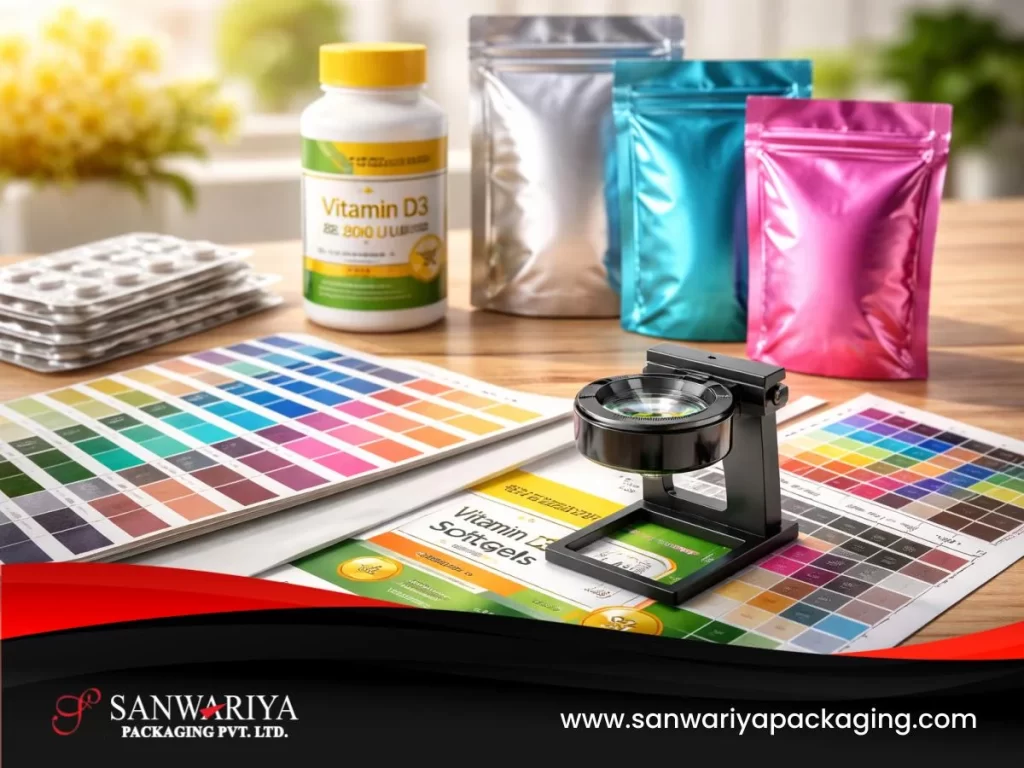
Importance of accurate foil colors for compliance

Pharmaceutical packaging must communicate critical information clearly and consistently. From dosage instructions to product identification, every element printed on a medicine package plays a role in ensuring safe and effective use. 

Color is one of the most important visual tools used in pharmaceutical labeling. Specific colors may be associated with dosage strengths, product variations, warnings, or brand identity. 

Because of this, maintaining accurate and consistent color printing on pharmaceutical packaging materials is essential. In blister packaging, printed aluminum foils often carry product names, dosage details, batch information, and regulatory text. If the printed colors deviate from approved standards, it can affect readability, create labeling confusion, or lead to regulatory compliance concerns. 

This blog explains why color accuracy matters in pharmaceutical foil printing, how regulatory readability requirements influence labeling design, and how packaging teams maintain consistent color reproduction during production.

The Role of Color in Pharmaceutical Labeling

Color is widely used in pharmaceutical packaging to support quick visual identification. Healthcare professionals, pharmacists, and patients often rely on packaging colors to differentiate between similar medicines or dosage strengths.

In many cases, color schemes are intentionally standardized across product lines to reduce the risk of medication errors.

Common uses of color in pharmaceutical packaging include:

  • Distinguishing dosage strengths of the same medicine
  • Identifying different formulations or product variants
  • Highlighting warnings or safety information
  • Reinforcing brand recognition and product identity

When colors remain consistent across batches and packaging formats, they help users quickly identify the correct product.

However, if the printed color on a blister foil deviates from the approved design, it may create confusion or reduce labeling clarity.

Color Matching Standards in Pharmaceutical Printing

Pharmaceutical packaging artwork typically specifies precise color values that must be reproduced accurately during printing. These values may be defined using industry-standard color systems such as Pantone or CMYK references.

Packaging development and artwork teams establish these color specifications during the design stage to ensure that every production batch maintains the same visual appearance.

Maintaining accurate color reproduction requires careful control of several printing variables:

  • Ink formulation and pigment stability
  • Printing press calibration
  • Substrate surface characteristics
  • Drying and curing conditions

Even small variations in these factors can cause noticeable differences in printed color shades.

For pharmaceutical packaging, maintaining tight color tolerances helps ensure that the printed foil remains consistent with approved artwork specifications.

Regulatory Expectations for Readability

Regulatory authorities require pharmaceutical labels to be clear, legible, and easily readable. While regulations may not always specify exact color codes, they emphasize the importance of contrast and clarity in labeling.

Label text must remain easily readable against the background color of the packaging material.

Several design considerations help maintain readability:

  • Sufficient contrast between text and background colors
  • Consistent color reproduction across production batches
  • Clear differentiation between product variants
  • Avoidance of colors that reduce legibility
If printed colors appear too light, too dark, or inconsistent with the approved design, readability may be affected. Maintaining accurate color reproduction therefore supports both labeling clarity and regulatory compliance.

Risks of Shade Deviation in Pharmaceutical Foils

Shade deviation occurs when the printed color on packaging differs from the approved color standard. This can happen due to variations in ink mixing, printing conditions, or material properties.

In pharmaceutical packaging, shade deviations can lead to several operational challenges.

  • Mismatch between approved artwork and printed packaging
  • Reduced readability of critical labeling information
  • Confusion between similar dosage strengths
  • Batch rejections during quality inspection
Because packaging artwork is typically approved as part of regulatory submissions, significant color deviations may require investigation or corrective actions. For this reason, maintaining tight color control is a priority during printed foil production.

Printing Challenges on Aluminum Foil Surfaces

Printing on aluminum foil presents unique technical challenges compared with printing on paper or plastic substrates.

The reflective nature of aluminum can influence how inks appear once printed and cured. Surface coatings applied to the foil may also affect ink adhesion and color intensity.

Printing teams therefore evaluate several factors to maintain accurate color reproduction.

  • Compatibility between inks and foil coatings
  • Controlled printing pressure and registration
  • Precise ink density control during production
  • Stable drying and curing conditions

These variables must be carefully managed to ensure that the final printed color matches the approved artwork specifications.

High-quality printing processes help maintain consistency across large production volumes.

Color Calibration and Process Control

Maintaining consistent color reproduction requires systematic monitoring during the printing process.

Production teams often use calibrated color measurement tools to compare printed samples against the approved color standards.

Typical color control practices may include:

  • Calibration of printing equipment before production runs
  • Measurement of printed color values using spectrophotometers
  • Comparison of printed samples against reference standards
  • Periodic verification throughout the production process

These controls help ensure that the printed foil remains within acceptable color tolerance limits.

When deviations are detected early, adjustments can be made before large production volumes are affected.

Supporting Clear Communication for Patients and Healthcare Professionals

Clear pharmaceutical labeling is essential for patient safety. When packaging colors remain consistent and readable, healthcare professionals and patients can more easily identify medicines and follow correct usage instructions.

Accurate color reproduction also supports brand consistency and reduces the risk of confusion between similar products.

For pharmaceutical companies managing large product portfolios, maintaining color consistency across packaging formats is an important aspect of quality control.

Packaging materials and printing processes must therefore support reliable color stability throughout the product lifecycle.

Ensuring Reliable Color Consistency in Pharmaceutical Packaging

Color accuracy in pharmaceutical foil printing is more than a design consideration. It plays a direct role in maintaining labeling clarity, regulatory compliance, and product identification.

By following strict color matching standards and controlling printing conditions, pharmaceutical companies can ensure that printed foils consistently match approved artwork specifications.

Accurate color reproduction helps prevent shade deviations, supports readability requirements, and maintains the integrity of pharmaceutical labeling systems.

Sanwariya Packaging manufactures pharmaceutical aluminum foils designed to deliver high-quality color reproduction, consistent print alignment, and reliable performance during large-scale production. Through advanced printing capabilities and controlled processes supported by its infrastructure, Sanwariya Packaging supports pharmaceutical companies in maintaining precise labeling standards across global packaging operations.

For further details or project discussions, you can get in touch with us or directly request a quote.


Packaging needs for new and emerging biologic drugs

Biologic medicines are becoming one of the fastest-growing segments of the pharmaceutical industry. Unlike traditional small-molecule drugs, biologics are complex molecules derived from living systems. They include therapies such as monoclonal antibodies, vaccines, recombinant proteins, and advanced cell-based treatments. 

Because of their molecular complexity, biologics are often highly sensitive to environmental conditions. Factors such as moisture, oxygen, temperature, and light can influence their stability and effectiveness. 

As a result, packaging plays a critical role in protecting biologic medicines throughout manufacturing, storage, and distribution. Selecting the right packaging materials helps maintain product integrity while ensuring compliance with strict regulatory stability requirements. 

Pharmaceutical aluminum foils used in blister and secondary packaging structures can contribute to these protective systems by providing strong barrier performance against moisture and oxygen. 

This blog explores the stability challenges associated with biologic therapies, explains the environmental sensitivities of these molecules, and discusses how foil-based packaging structures can support safe and stable biologic distribution.

Why Biologic Medicines Require Specialized Packaging

Biologics differ significantly from conventional pharmaceutical compounds. Traditional drugs are typically composed of relatively small and chemically stable molecules. In contrast, biologics consist of large, complex protein structures or biological materials that can degrade more easily when exposed to environmental stress.

Because of their structure, biologic products may be sensitive to several external factors.

  • Temperature fluctuations
  • Moisture exposure
  • Oxygen penetration
  • Light exposure
  • Mechanical stress during transportation

Even small environmental variations can alter the molecular structure of a biologic therapy. These changes may reduce therapeutic effectiveness or lead to aggregation, denaturation, or degradation of the active ingredient.

Packaging systems therefore need to maintain a stable protective environment around the product throughout its shelf life.

Stability Challenges in Biologic Formulations

Maintaining stability is one of the most significant challenges in biologic drug development. Protein-based molecules are particularly sensitive to environmental conditions that might not affect traditional pharmaceuticals.

Several stability risks are commonly evaluated during biologic product development.

  • Protein denaturation caused by temperature changes
  • Oxidation reactions triggered by oxygen exposure
  • Moisture-driven degradation in sensitive formulations
  • Structural changes caused by prolonged storage conditions
Biologic medicines are often stored in refrigerated environments and transported through controlled cold-chain systems. However, temperature control alone is not always sufficient. Packaging materials must also protect the product from environmental gases and humidity that may affect long-term stability. 

Barrier packaging therefore plays a supporting role in maintaining product quality.

Sensitivity to Moisture and Oxygen

Moisture and oxygen are two environmental factors that can significantly influence the stability of biologic therapies. Even minimal levels of water vapor or oxygen exposure may accelerate degradation reactions.

Moisture can affect biologic formulations in several ways, like:

  • Hydrolysis reactions that degrade molecular structures
  • Changes in formulation stability
  • Reduced shelf life of sensitive dosage forms

Oxygen exposure can also lead to oxidation reactions that alter protein structure and reduce therapeutic activity. Because of these risks, packaging materials for biologic medicines are often selected based on their ability to provide strong barrier protection against both moisture and oxygen ingress.

Role of Aluminum Foil in Biologic Packaging

Aluminum foil is widely recognized for its exceptional barrier properties. Unlike many plastic materials, aluminum creates a near-complete barrier against moisture, oxygen, and light.

When used in pharmaceutical packaging structures, foil can help maintain a stable environment around sensitive dosage forms.

Key protective properties of aluminum foil include:

  • Extremely low permeability to moisture
  • Strong resistance to oxygen transmission
  • Protection against light exposure
  • Compatibility with blister packaging systems

These characteristics make foil-based materials suitable for packaging certain biologic dosage forms that require enhanced environmental protection.

Foil structures are often used in blister foils or advanced formats such as multi-layer foils where maintaining barrier integrity is essential.

Foil Applications in Biologic Dosage Forms

Although many biologic therapies are packaged in vials, syringes, or cartridges, blister packaging can still play a role in protecting specific dosage formats or associated components.

Examples may include:

  • Unit-dose biologic tablets or capsules containing stabilized biologic compounds
  • Packaging for biologic combination products
  • Protective packaging for diagnostic kits and biologic reagents
  • Secondary packaging layers for sensitive delivery systems

In these applications, aluminum foil lidding materials help prevent environmental exposure while maintaining packaging integrity during storage and distribution.

Packaging development teams evaluate foil structures carefully to ensure compatibility with the product’s stability profile, including the use of cold forming foils where higher barrier protection is required.

Importance of Secondary Packaging Pairing

In many cases, biologic packaging systems rely on a combination of primary and secondary protective layers.

Primary packaging may include containers such as vials, prefilled syringes, or blister cavities that directly hold the product. Secondary packaging then provides an additional protective barrier against environmental stress.

Foil-based materials may be incorporated into these secondary packaging systems to improve overall protection.

Examples of secondary packaging functions include:

  • Providing additional moisture and oxygen barriers
  • Protecting primary containers during transportation
  • Shielding products from light exposure
  • Supporting tamper-evident packaging requirements
Combining primary containers with high-performance secondary packaging helps create a more robust stability system for biologic products.

Cold-Chain Considerations for Biologic Packaging

Many biologic medicines require temperature-controlled transportation to maintain stability. Cold-chain logistics are therefore an essential part of biologic distribution.

However, temperature management alone does not eliminate all stability risks. Environmental exposure during handling, storage, or transportation may still affect product integrity.

Packaging materials used for biologics must therefore perform reliably under cold-chain conditions.

Key considerations may include:

  • Maintaining barrier integrity at low temperatures
  • Preventing moisture ingress during condensation events
  • Maintaining structural stability during refrigerated storage
Foil-based packaging materials are often evaluated for their performance in these conditions to ensure consistent protection throughout the supply chain, supported by robust production systems such as those outlined in the infrastructure.

Regulatory Expectations for Biologic Stability

Regulatory authorities require pharmaceutical companies to demonstrate that biologic products remain stable under recommended storage conditions. Packaging materials must support these stability profiles throughout the product’s approved shelf life.

Regulatory documentation for biologic packaging may include:

  • Stability testing under controlled environmental conditions
  • Validation of packaging barrier properties
  • Documentation of packaging material specifications
  • Compatibility studies between packaging materials and the product

Regulatory agencies expect packaging systems to maintain product integrity during the full lifecycle of the medicine, including manufacturing, transportation, storage, and patient use.

Selecting appropriate barrier materials is therefore an important part of regulatory compliance.

Supporting the Protection of Advanced Therapies

Biologic medicines represent an important advancement in modern healthcare. However, their complex molecular structures require carefully designed packaging systems to maintain stability and effectiveness.

Protection against moisture, oxygen, and environmental stress is essential for maintaining the quality of biologic therapies. Aluminum foil materials can contribute to these protective systems by providing strong barrier performance and compatibility with pharmaceutical packaging technologies.

By combining appropriate primary containers with reliable secondary packaging structures, pharmaceutical companies can create packaging systems that help safeguard biologic medicines throughout global distribution.

Sanwariya Packaging manufactures pharmaceutical aluminum foils designed to provide consistent barrier protection, reliable sealing performance, and compatibility with modern pharmaceutical packaging systems. With controlled manufacturing processes and advanced capabilities supported by its infrastructure, Sanwariya Packaging supports pharmaceutical companies developing packaging solutions that help maintain the stability of sensitive medicines during storage and international distribution.

For further discussions or requirements, you can get in touch with us or directly request a quote.
Serialization updates for printed foils in 2026

Medicines are carefully formulated to remain stable and effective throughout their shelf life. However, some pharmaceutical compounds are highly sensitive to light, particularly ultraviolet (UV) radiation. When exposed to light, these medicines may undergo chemical degradation that reduces potency or alters their safety profile.

Because of this risk, protecting medicines from light exposure is an important consideration during pharmaceutical packaging design. Packaging materials must shield sensitive formulations from harmful wavelengths while maintaining stability during storage, transportation, and distribution.

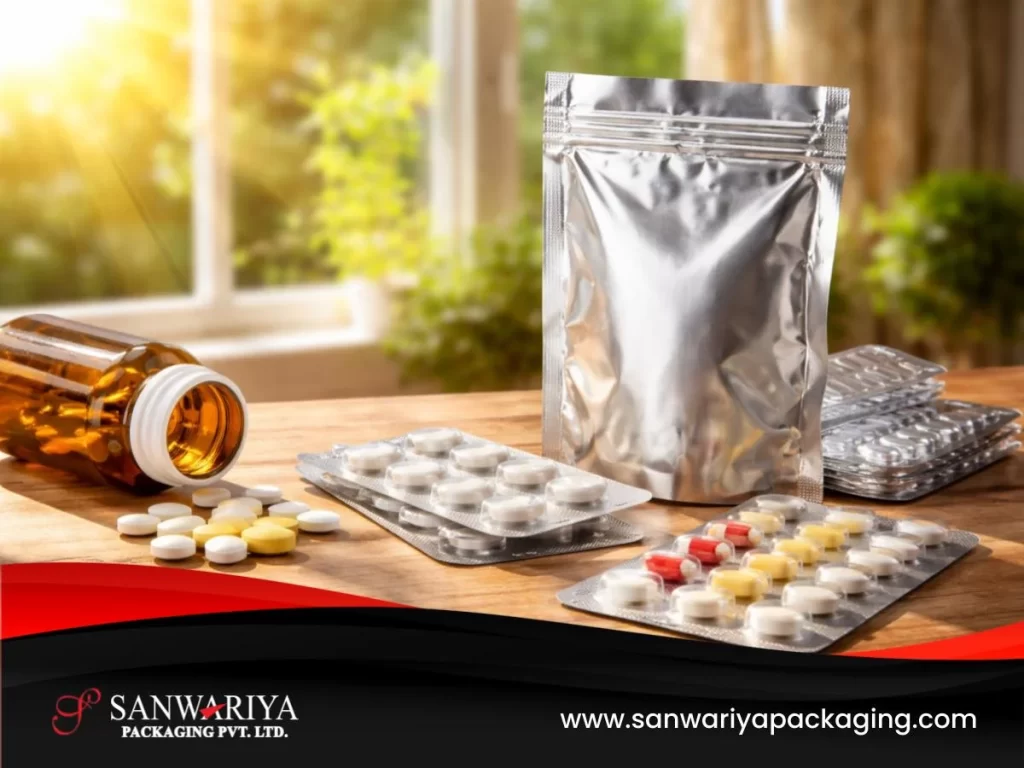
Blister packaging using aluminum-based foils plays a significant role in protecting light-sensitive medicines. The reflective properties of aluminum, combined with specialized coatings, help prevent ultraviolet radiation from reaching the drug product.

This blog explains the science of UV degradation, how aluminum foil provides light protection, the testing methods used to validate UV resistance, and how pharmaceutical companies select the most appropriate foil structures for light-sensitive medicines.

Why Light Exposure Can Damage Medicines

Many pharmaceutical ingredients are sensitive to electromagnetic radiation within the ultraviolet and visible light spectrum. When exposed to light, the energy absorbed by the molecule can trigger chemical reactions that alter the structure of the active ingredient.

These reactions may lead to several types of degradation.

  • Loss of drug potency
  • Formation of degradation by-products
  • Color changes in the formulation
  • Reduced shelf life or stability

Certain categories of medicines are particularly vulnerable to photodegradation. These may include antibiotics, vitamins, biological compounds, and formulations containing complex organic molecules.

Even limited exposure during transportation or storage can contribute to gradual degradation if packaging does not provide adequate protection.

For this reason, stability studies often include light exposure testing to determine whether protective packaging is required.

Understanding UV Degradation in Pharmaceutical Stability

Photodegradation occurs when molecules absorb photons from light energy. Ultraviolet radiation carries higher energy compared with visible light, making it especially capable of breaking chemical bonds.

In pharmaceutical stability studies, exposure to light can cause molecular reactions such as oxidation, isomerization, or structural breakdown of active ingredients.

The likelihood of degradation depends on several factors.

  • Wavelength of the incoming light
  • Duration of exposure
  • Sensitivity of the drug molecule
  • Transparency of the packaging material

Packaging materials that allow UV light to pass through may expose the product to degradation risks over time. As a result, selecting materials with strong UV-blocking properties is an important part of packaging development for light-sensitive medicines.

How Aluminum Foil Acts as a UV Barrier

Aluminum foil provides one of the most effective barriers against light exposure in pharmaceutical packaging. Unlike transparent or translucent materials, aluminum reflects and blocks a large portion of incoming radiation.

The metal surface reflects both visible and ultraviolet wavelengths, preventing light from reaching the medicine inside the blister cavity.

This reflective behavior provides several advantages.

  • Near-complete opacity to light
  • Strong UV blocking capability
  • Stable protection across different wavelengths
  • Consistent performance during storage and transport

Because of these properties, aluminum foil is widely used in blister foils for light-sensitive formulations.

When combined with appropriate coatings and printing layers, foil structures can maintain both functional protection and regulatory labeling requirements.

Reflectivity Advantage of Aluminum in Pharmaceutical Packaging

The reflective surface of aluminum plays a key role in reducing UV penetration. When ultraviolet radiation strikes the foil surface, a significant portion of the energy is reflected away instead of passing through the material.

This reflective behavior helps maintain a stable internal environment for the medicine.

The performance of the foil barrier can be influenced by factors such as:

  • Foil thickness
  • Coating layers applied to the surface
  • Printing inks and pigments
  • Surface finish of the foil

Higher-quality foil structures maintain consistent reflectivity while also supporting reliable printing and sealing performance.

This combination of mechanical strength and optical protection makes aluminum foil particularly suitable for medicines that require strict light protection, including advanced structures like cold forming foils and multi-layer foils.

Testing Light Protection in Pharmaceutical Packaging

Pharmaceutical companies must demonstrate that packaging materials adequately protect light-sensitive medicines throughout the product’s shelf life.

This evaluation is typically performed during stability testing under controlled laboratory conditions.

Common testing approaches include:

  • Exposure to defined ultraviolet and visible light levels
  • Accelerated stability testing with controlled light sources
  • Measurement of degradation products after exposure
  • Comparison of protected and unprotected samples

International stability guidelines often define the total light exposure conditions required for photostability testing.

These tests help determine whether the selected packaging structure provides sufficient UV protection for the medicine.

If degradation is observed, packaging engineers may modify the material structure or increase the protective barrier properties.

Selecting the Right Foil Coating for UV Protection

While aluminum itself provides strong light protection, coatings and printing layers applied to the foil can influence overall performance.

Coatings are often applied to support sealing, printing, or machine compatibility. However, these coatings must also maintain the protective characteristics of the foil.

Packaging development teams evaluate several coating-related factors.

  • Compatibility with blister sealing processes
  • Resistance to environmental exposure
  • Stability of printed graphics during storage
  • Maintenance of UV-blocking performance

Specialized coatings may also reduce surface reflections that could interfere with printing or scanning technologies while maintaining the underlying barrier performance.

Selecting the correct coating system ensures that the foil continues to provide effective UV protection throughout the product lifecycle.

Challenges When Shipping Light-Sensitive Medicines Globally

Medicines distributed internationally may encounter a wide range of environmental conditions during transportation. Products shipped to regions with strong sunlight or high ambient temperatures may experience greater light exposure during handling and storage.

Export-oriented pharmaceutical companies therefore evaluate packaging carefully when shipping to high-exposure markets.

Potential risks during distribution include:

  • Prolonged exposure to sunlight during logistics handling
  • Storage in brightly lit warehouse environments
  • Transportation through regions with intense solar radiation

Using packaging materials with strong light barrier properties helps reduce these risks and ensures that medicines remain stable until they reach patients.

Regulatory Expectations for Photostability Protection

Global pharmaceutical regulators expect companies to demonstrate that packaging materials adequately protect medicines from environmental factors such as light, moisture, and oxygen.

Photostability studies form part of the broader stability testing framework used to establish shelf life.

Regulatory documentation may include:

  • Photostability study reports
  • Packaging material specifications
  • Validation of protective packaging performance
  • Long-term stability data under recommended storage conditions

Maintaining thorough documentation helps ensure compliance during regulatory submissions and inspections.

Packaging materials must therefore be selected not only for functional performance but also for their ability to support documented stability outcomes.

Ensuring Stability for Light-Sensitive Medicines

Protecting medicines from ultraviolet radiation is an essential aspect of pharmaceutical packaging design. Exposure to light can cause chemical degradation that affects both product efficacy and safety.

Aluminum blister foils provide an effective solution by reflecting and blocking ultraviolet radiation before it reaches the medicine. When combined with appropriate coatings and carefully designed packaging structures, these materials help maintain stability throughout the product’s lifecycle.

For pharmaceutical companies developing light-sensitive formulations, selecting the right packaging materials is a critical step in ensuring long-term product quality and regulatory compliance.

Sanwariya Packaging manufactures pharmaceutical aluminum foils designed to provide strong barrier protection, reliable printing performance, and compatibility with modern blister packaging systems. Through controlled manufacturing processes and advanced capabilities supported by its infrastructure, Sanwariya Packaging supports pharmaceutical companies in developing packaging solutions that help protect sensitive medicines throughout global distribution.For further discussions or requirements, you can get in touch with us or directly request a quote.