

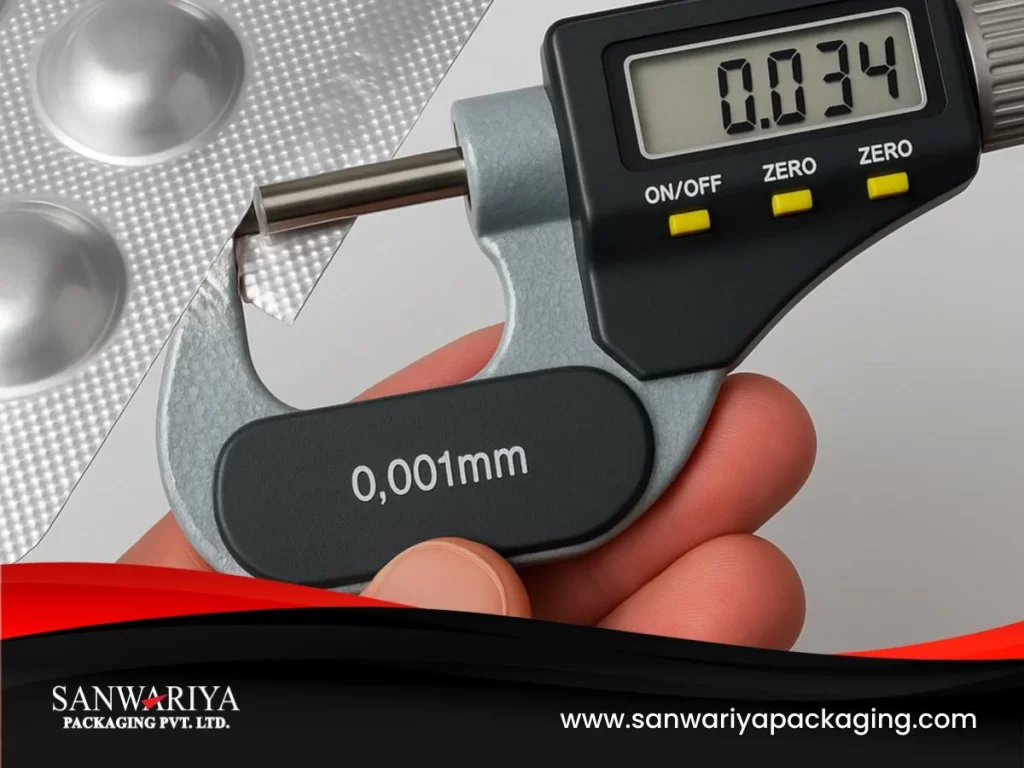
In pharmaceutical packaging, even the smallest detail can decide whether a medicine reaches patients safe and effective—or fails along the way. According to WHO, packaging-related failures are among the leading causes of drug recalls in developing markets, and one of the most overlooked culprits is foil thickness.
This “micron-level” parameter might seem minor, but it is the backbone of product protection, compliance, and global trust. From shielding medicines against moisture and oxygen to meeting international regulatory standards, foil thickness is a detail every pharma professional—and increasingly, every patient—should understand.
Why Foil Thickness Matters
Pharmaceutical aluminum foil isn’t just a wrapper—it’s a protective barrier. The thickness, measured in microns, directly impacts:
- Barrier protection – Prevents moisture, light, and oxygen from degrading sensitive medicines.
- Sealing strength – Ensures blister packs remain leak-proof and tamper-resistant.
- Shelf life – Preserves drug stability during storage and transport.
Think of it like this: just as a weak lock leaves a door vulnerable, the wrong foil thickness leaves medicines exposed to risks.
Foil Thickness at a Glance
| Foil Type | Typical Thickness (Microns) | Best Suited For | Key Benefit |
| Blister Foil (PVC/PVDC + Lidding Foil) | 20–25 µm | Standard tablets & capsules | Strong seal + cost-effective |
| Alu-Alu Foil (Cold-Form Blister) | 45–60 µm | Highly moisture/light-sensitive drugs | Maximum barrier protection |
| Strip Packaging Foil | 25–40 µm | Unit-dose packaging for tablets/capsules | Flexibility + durability |
Quick Tip: In tropical or high-humidity markets, regulators often recommend using the higher end of thickness ranges to ensure drug stability.
Global Standards and Compliance
International regulators such as the FDA, EMA, and WHO expect foils to meet strict performance tests, including:
- Moisture transmission rate (MTR)
- Light protection levels
- Vacuum leak testing
In simple terms, regulators want proof that foil truly protects medicines against air, light, and humidity for the duration of their shelf life.
The Risks of Getting It Wrong
Choosing the wrong thickness isn’t just a technical error—it can have costly consequences:
- Too thin: Pinholes, faster drug degradation, failed stability studies, and in tropical markets, even product recalls.
- Too thick: Higher costs, increased shipment weight, and sustainability challenges, without extra protective benefits.
Case in Point: A leading exporter to Southeast Asia once faced regulatory rejection because blister foils couldn’t withstand humidity. The result? Costly recalls and a damaged reputation with distributors.
Myths vs. Facts
- Myth: Thicker foil is always better.
Fact: The right thickness balances protection, cost, and sustainability. - Myth: Foil standards are universal.
Fact: Markets differ—CIS and tropical regions often demand higher-barrier foils than Europe. - Myth: Thickness doesn’t impact compliance.
Fact: Regulators routinely test packaging; non-compliance can delay approvals and shipments
Choosing the Right Thickness
Selecting the correct foil requires collaboration across packaging, QA/QC, and supply chain teams. Key factors include:
- Formulation type – Moisture- or light-sensitive drugs require stronger barriers.
- Destination market – High-humidity regions demand higher-gauge foils.
- Regulatory compliance – Standards differ country by country.
- Sustainability goals – Lightweight foils can reduce cost and carbon footprint.
This decision requires collaboration between packaging development, QA/QC, and supply chain teams.
Smarter, Greener Foils
The industry is moving toward innovations that go beyond thickness:
- Lightweight foils – Reducing material use without compromising integrity.
- Eco-friendly designs – Enhancing recyclability and minimizing waste.
- Digital integration – Embedding track-and-trace for anti-counterfeit protection.
These trends combine sustainability, compliance, and patient safety—the three pillars shaping the future of pharma packaging.
Foil thickness may seem like a small technical detail, but it is central to pharmaceutical safety, compliance, and global trust. The right gauge ensures protection, prevents costly recalls, and strengthens confidence among regulators, distributors, and patients worldwide.
At Sanwariya Packaging, we help pharma brands choose the right foil specifications—balancing protection, compliance, sustainability, and cost-efficiency—so that medicines remain safe, effective, and trusted across international markets.
Looking to optimize your packaging for global exports?
Our experts can guide you in selecting the right foil thickness for every market.
