High-sensitivity pharmaceutical formulations require more than standard packaging protection. Even very small exposure to moisture, oxygen or light can directly affect product stability, shelf life and regulatory acceptance.
In real manufacturing and distribution environments, issues such as unexpected degradation, impurity growth, stability failures or reduced shelf life are frequently traced back to one root cause: inadequate barrier performance of the pharmaceutical packaging material.
This is where high barrier pharma foil becomes a critical packaging decision.
This blog explains, in practical terms, how sensitive formulations should be matched with the right foil structure, how packaging influences stability risk, and how pharmaceutical teams can select high-barrier foils with confidence for regulated and export markets.
What makes a formulation highly sensitive
A formulation is considered high-sensitivity when very small environmental exposure can trigger measurable quality changes.
Typical examples include:
1. Moisture-sensitive formulations
Hygroscopic APIs, effervescent tablets, dispersible tablets and low-dose products. Even brief humidity exposure can cause softening, dissolution failures or hydrolytic degradation, making the use of blister foils and strip laminated foils critical for moisture protection.
2. Light-sensitive formulations
Photo-unstable APIs, hormonal products and certain antibiotics, where light exposure can reduce potency before expiry, often requiring cold forming foils and specialised multi-layer foils for complete light barrier.
3. Oxygen-sensitive formulations
APIs prone to oxidation, leading to impurity growth, colour changes and assay drift, where high-integrity pharmaceutical packaging becomes essential.
4. Low-dose and high-potency formulations
Minor degradation becomes critical for content uniformity and regulatory compliance, making advanced multi-layer foils an important protective option.
For these products, packaging is not passive. It directly controls the stability risk profile.
Why high barrier pharma foil becomes necessary
Standard foil structures provide general protection. However, for sensitive products, moderate barrier performance is often insufficient over long storage periods and international distribution of finished medicines packed using pharmaceutical products.
High barrier pharma foil is designed to provide:
- very low moisture transmission
- complete light protection
- very low oxygen permeation
- consistent barrier performance throughout shelf life
In practical terms, the aluminium layer delivers the primary barrier, while coating and seal layers protect the aluminium and maintain barrier integrity during forming, sealing and handling in modern pharmaceutical packaging operations.
Stability risks that packaging must control
For sensitive formulations, the main environmental risks are:
- moisture ingress
- light exposure
- oxygen permeation
- long storage and transit cycles
These risks increase significantly in Climatic Zones III and IV, where high humidity and temperature exposure are common. In such markets, selecting high-barrier packaging formats such as cold forming foils is a preventive stability measure.
How foil structure determines real barrier performance
Pharmaceutical foil is a multi-layer structure. Each layer plays a defined functional role.
A typical high-barrier foil structure includes:
- aluminium foil as the primary barrier
- protective coatings or lacquers
- functional sealant layers
A well-engineered structure slows moisture and gas migration at multiple interfaces. A weak or incompatible structure allows penetration pathways to form, even when aluminium thickness appears adequate, which is why engineered multi-layer foils are widely used for sensitive medicines.
Key insight:
Two foils with similar thickness can show very different barrier performance because protection depends on structural integrity, not thickness alone.
How individual foil layers support sensitive drug protection
- Aluminium layer – the primary barrier: Provides moisture, oxygen and light protection. Pinhole control and thickness consistency are critical for long-term stability in formats such as blister foils and strip laminated foils.
- Coatings and lacquers – barrier durability: Protect aluminium during forming and handling, reduce micro-crack formation and support durability under prolonged humidity exposure, especially in complex pharmaceutical packaging applications.
- Sealant layers – the most frequent weak point: Create the final protective seal and directly influence moisture ingress at the seal interface. Many real-world failures originate at the seal area rather than through the aluminium itself.
Standard foil versus high-barrier foil
| Aspect | Standard foil structure | High-barrier foil structure |
| Moisture resistance | Moderate | Very high |
| Long-term stability | Limited in humid conditions | Consistent across climates |
| Suitability for exports | Short or controlled routes | Long and high-risk distribution routes |
| Regulatory confidence | Conditional | Strong and data-driven |
High-barrier structures are designed to perform reliably under sustained environmental stress, not only during short laboratory testing periods.
When high-barrier foil becomes essential
High-barrier pharmaceutical foils become necessary when:
- the formulation is moisture- or light-sensitive
- shelf life exceeds 24 months
- distribution includes Climatic Zones III and IV
- long transit, port storage or uncontrolled warehousing is expected
In many export markets across Asia, Africa and Latin America, standard foil structures may pass early stability studies but fail under real storage conditions when using conventional PVC foils without enhanced barrier layers.
What quality and regulatory teams expect
Barrier performance must be demonstrated and documented.
For sensitive formulations, packaging qualification typically includes:
- validated moisture and oxygen transmission testing
- stability studies aligned with the intended climatic zones
- seal integrity and ageing evaluations
This data supports packaging approval during registration, export readiness and shelf-life commitments.
Common real-world failures linked to incorrect foil selection
Across domestic and export markets, similar patterns are repeatedly observed:
- stability passes initially but fails after prolonged humid storage
- tablets soften, stick or discolour before expiry
- market complaints occur despite compliant formulations
- costly revalidation follows post-approval packaging changes
In most cases, the root cause is not formulation design, but barrier performance that was underestimated during foil selection of inappropriate pharmaceutical products.
A practical selection checklist for sensitive formulations
Before finalising a foil grade, confirm:
- the formulation’s sensitivity to moisture, light and oxygen
- the climatic zones the product will encounter
- the full storage and transit duration
- seal layer compatibility with the forming material
- availability of validated barrier and stability data
Selecting high barrier pharma foil should be treated as a preventive quality decision, not a corrective action.
For high-sensitivity medicines, packaging performance directly defines product stability.
High-barrier pharmaceutical foil plays a decisive role in:
- moisture and light protection
- shelf-life reliability
- export success
- regulatory confidence
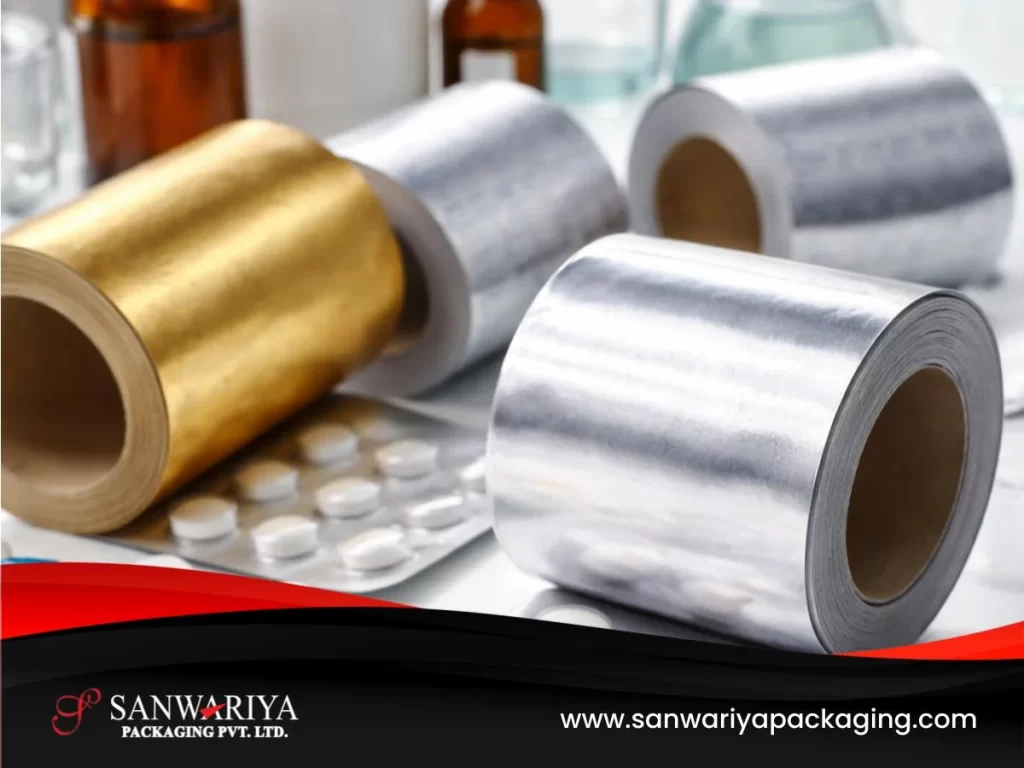
At Sanwariya Packaging, high-barrier pharmaceutical aluminium foils are developed as stability-driven and compliance-ready solutions for moisture- and light-sensitive medicines—supporting pharmaceutical manufacturers in protecting product quality throughout the entire lifecycle.
