
Blog by Sanwariya Packaging

Your Trusted Partner in Packaging

Learn About Our Vision for the Future And Grow with Us.

Your Trusted Partner in Pharma Packaging

Learn about our vision for the future and grow with us.

Your Trusted Partner
in Pharma Packaging

Learn about our vision for the future and grow with us.

Know More

Tag: Packaging Innovation

The Next Phase of Anti-Counterfeit Protection in Pharma

Counterfeit Drugs Are a Global Threat

Counterfeit medications represent one of the most significant public health threats globally. 

According to the World Health Organization (WHO), approximately 1 in 10 medical products in developing countries is either fake or substandard. This alarming statistic presents major challenges for pharmaceutical companies, including patient safety, brand integrity, and legal liabilities. The need to combat this issue has never been more critical. Advanced security foils are now leading the charge in anti-counterfeit protection.

Technologies like QR codes, microtext, UV-sensitive inks, and nano-imprinting are revolutionizing how pharmaceutical companies safeguard their packaging — and their reputation.

In this blog, we’ll explore:

  • How these foils offer multi-layered protection
  • How they integrate into existing packaging lines
  • What’s next in the future of anti-counterfeit solutions

The Counterfeit Challenge in Pharma Supply Chains

Pharma supply chains are vast and vulnerable. With products moving through multiple hands — from manufacturers to distributors and retailers — counterfeiters exploit weak points in packaging systems.

Key challenges include:

  • Low traceability in global distribution
  • Tampering during transit
  • Inadequate recall tracking

These threats demand smarter, tamper-evident, and verifiable packaging.

Want a foundational overview? Read: Why Security Foils Are Critical in Preventing Counterfeit Medicines

How Advanced Security Foils Work to Prevent Counterfeiting

Security foils today are engineered with both visible and covert features. These include:

  • Microtext Printing: Legible only under magnification, making duplication nearly impossible.
  • Multi-Layer Foils: Built to reveal tampering with delamination or color-shifting effects.
  • Serialized QR Codes: Each unit has a unique, traceable digital identity.
  • UV-Sensitive Inks: Only visible under ultraviolet light — invisible to counterfeiters.

These features combine to offer layered, intelligent defense — a must-have in modern pharma packaging.

Why Compliance and Brand Teams Must Prioritize Secure Foils

Today’s packaging does more than protect—it communicates trust. Security foils address multiple needs:

  • Regulatory Compliance: Meet DSCSA, EU FMD, and Latin American mandates with serialization-ready solutions.
  • Strengthen Consumer Trust: Allow patients and pharmacists to instantly verify authenticity via QR or holograms.
  • Legal Protection: Reduce liability and costly recalls by ensuring product traceability.
  • Supply Chain Visibility: Track every unit with blockchain or cloud-based solutions for real-time auditing.

Innovations Powering Security Foils

Sanwariya’s advanced foil solutions integrate next-gen technology, including:

  • Nano-Imprinting: Creates effects visible only at specific angles — unforgeable and elegant.
  • Digital Watermarks: Covert codes read via mobile apps for fast, secure verification.
  • Reverse-Side Printing: Hidden data embedded under the foil layer—an extra line of defense.

Together, these innovations transform packaging into a smart security system.

Future Trends in Anti-Counterfeit Packaging

Tomorrow’s pharma packaging will be smarter and even more connected:

  • Blockchain-Linked Packaging: Track the journey from factory to pharmacy.
  • AI Authentication: Instant counterfeit detection through mobile scanning and machine learning.
  • Biometric Integration: Linking packaging to patient IDs for personalized verification.

Forward-thinking companies are already testing these tools — and gaining a competitive edge.

In an era of digital threats and global distribution, anti-counterfeit packaging is not optional — it’s mission-critical. Advanced security foils give you the tools to stay ahead, meet global compliance, and earn consumer trust.

At Sanwariya Packaging, we offer cutting-edge foil solutions tailored for pharma companies. From tamper-evident designs to blockchain-compatible serialization, we make your packaging safer, smarter, and future-ready.

📩 Let’s secure your packaging together.
Contact Sanwariya Packaging to build a tamper-proof tomorrow.

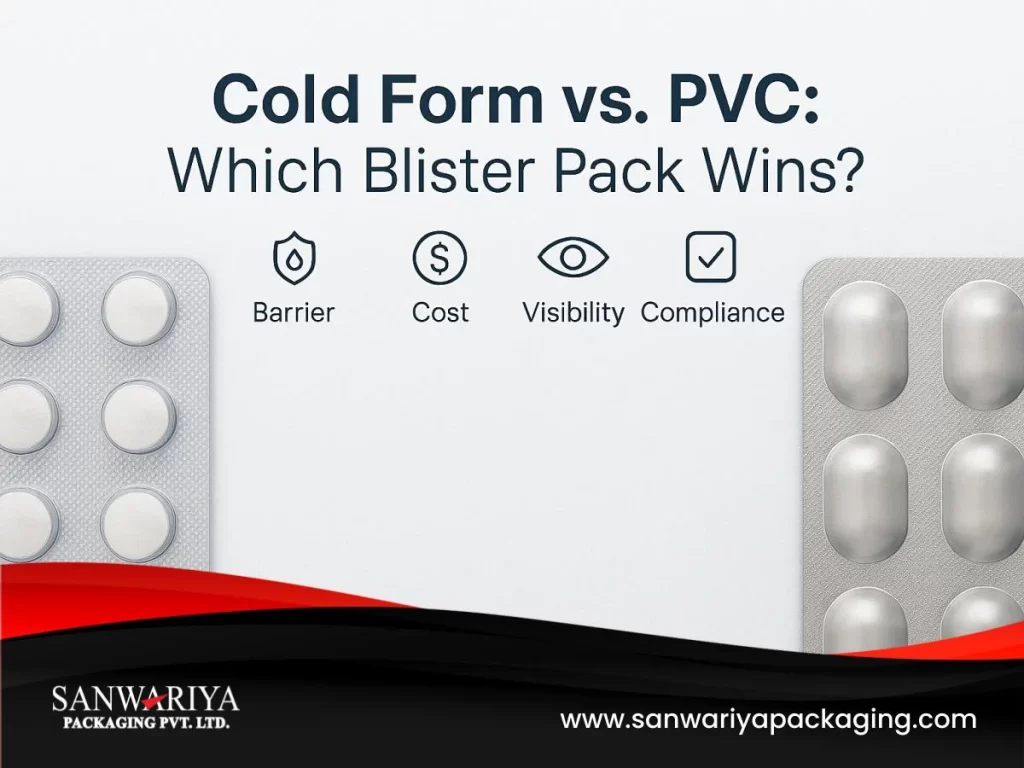
Cold Form vs. PVC: Choosing the Right Blister Packaging

In the world of pharmaceutical packaging, choosing the right blister pack isn’t just about sealing a product—it’s about safeguarding quality, ensuring compliance, and elevating patient safety. Among the most common materials used in blister packaging, Cold Form (Alu-Alu) and PVC (Polyvinyl Chloride) dominate the landscape. But which is the better fit for your formulation?

Let’s dive into the key differences, benefits, and considerations to help you make the right packaging choice for your next pharmaceutical product.

Understanding the Basics

1. PVC Blister Packaging

PVC is the most commonly used material for thermoformed blister packs. It’s a plastic film that, when heated, forms a cavity to hold tablets or capsules. It’s typically sealed with aluminum foil on the back.

2. Cold Form (Alu-Alu) Packaging

Cold-form packaging uses a laminate of aluminum, usually combined with polyamide and PVC layers. It’s formed without heat, using pressure to create cavities. This process results in an ultra-high barrier pack that’s completely opaque.

3. Cold Form vs. PVC: The Face-Off

FeaturePVCCold Form (Alu Alu)
Barrier ProtectionModerateExcellent (100% barrier)
VisibilityTransparentOpaque
CostLowerHigher
Forming ProcessThermoformingCold forming
Shelf LifeStandardExtended
SustainabilityLimitedHigher (PVC-free options available)
ApplicationsStable drugsSensitive formulations

When to Choose PVC Blister Packs

PVC is often the go-to solution for cost-sensitive projects or when the drug does not require high-barrier protection. It’s lightweight, easy to process, and offers product visibility—an important aspect for patient trust and compliance.

Ideal for:

  • Stable formulations
  • High-volume OTC drugs
  • Products requiring visual inspection

When to Choose Cold Form Blister Packs

Cold-form packaging is all about protection. Its high-barrier structure shields medications from moisture, oxygen, and light, making it perfect for sensitive APIs and international distribution where varying climates are a concern.

Ideal for:

  • Moisture-sensitive formulations
  • Light-sensitive drugs
  • High-value pharmaceuticals
  • Global distribution

Regulatory Considerations

Both materials are accepted by major health authorities, but with rising environmental demands, Alu-Alu packaging is becoming more favored—especially with PVC-free and recyclable alternatives.

At Sanwariya Packaging, we offer compliant, future-forward foil solutions that align with FDA, EMA, TGA, and WHO standards.

A Strategic Packaging Decision

The choice between Cold Form and PVC isn’t just a technical one—it’s strategic. It impacts product integrity, brand reputation, logistics, and ultimately, patient health. That’s why it’s crucial to work with a packaging partner who understands the science behind the solution.

Why Partner with Sanwariya Packaging?

We specialize in pharmaceutical-grade blister foils tailored to your specific requirements—whether you’re scaling an affordable OTC product or launching a breakthrough, high-value drug.

  • PVC-compatible lidding foils with custom print and security features
  • Cold-form Alu-Alu laminates for ultimate barrier protection
  • Fully compliant materials across regulatory zones
  • Eco-conscious options with NC-free and recyclable foil technologies

Let’s make your packaging a competitive advantage.

Contact us today to explore how Sanwariya Packaging can help you choose the right blister foil and stand out in a competitive pharmaceutical market.

Why Security Foils Are Critical in Preventing Counterfeit Medicines

In the world of pharmaceuticals, trust is non-negotiable. When a patient takes medication, they expect it to be safe, authentic, and effective. But the harsh reality is that counterfeit drugs are on the rise globally, threatening lives and shaking consumer confidence. According to the World Health Organization (WHO), 1 in 10 medical products in low- and middle-income countries is either substandard or fake.

So, how can pharmaceutical companies ensure product integrity and protect patients?

Enter security foils—a frontline defense in the fight against counterfeit medicines.

Understanding the Threat of Counterfeit Drugs

Counterfeit medicines are more than just knock-offs; they often contain incorrect ingredients, wrong dosages, or no active ingredient at all. These products can lead to treatment failure, drug resistance, or even death. What’s more, the counterfeit drug industry is alarmingly sophisticated, with fake packaging that can mimic genuine products almost perfectly.

This makes packaging not just a protective shell—but a powerful security feature.

How Security Foils Help Safeguard Authenticity

Pharmaceutical-grade aluminum foils have evolved far beyond simple barriers to light, moisture, and oxygen. Today, they are equipped with advanced anti-counterfeit technologies that make duplication nearly impossible.

Here’s how:

1. Tamper-Evident Features

Security foils can be designed to reveal visible signs of tampering—such as void patterns or delamination—if someone tries to reseal or alter the packaging. This gives both pharmacists and patients a clear visual cue of potential interference.

2. Holographic Printing & Microtext

Holograms, microtext, and fine-line patterns are nearly impossible to replicate without specialized equipment. These high-precision elements add a visual layer of authentication and are easy to verify at the distribution or retail level.

3. Serialization and QR Codes

Every strip or blister pack can be assigned a unique serial number or QR code, allowing manufacturers to track and verify the product across the supply chain. This adds traceability and helps in real-time authentication using mobile apps or digital systems.

4. Invisible Security Inks & UV Features

Invisible UV-reactive inks or taggants embedded into foils can only be seen under specific conditions. These covert markers help inspectors and customs officials identify genuine products instantly during audits or border checks.

Why It Matters More Than Ever

As global pharma supply chains expand and digital marketplaces grow, counterfeiters have more opportunities to exploit weak packaging. Without robust security measures, even the most effective medication is vulnerable. For manufacturers, failing to protect packaging means risking:

  • Patient safety
  • Brand reputation
  • Regulatory penalties
  • Revenue loss
Security foils are a proactive investment, not just in packaging, but in consumer trust and corporate responsibility.

Choosing the Right Security Foil Partner

Not all foil solutions are created equal. The right packaging partner will offer tailored options that align with your brand, product needs, and global compliance requirements.

At Sanwariya Packaging, we specialize in pharmaceutical security foils that are engineered to protect your medicines against tampering, duplication, and misuse. From multi-layered anti-counterfeit solutions to fully traceable, serialization-ready foils, we provide a comprehensive suite of secure packaging options.

In an industry where safety and trust are paramount, security foils play a silent but powerful role in ensuring every pill, tablet, or sachet reaches the patient just as it should—genuine, effective, and untouched.

The next time you seal a blister pack, think beyond the foil. Think of the lives it protects.

Want to strengthen your pharma packaging against counterfeiting?

Let’s collaborate on building a safer future—one secure foil at a time.
Contact Sanwariya Packaging today.