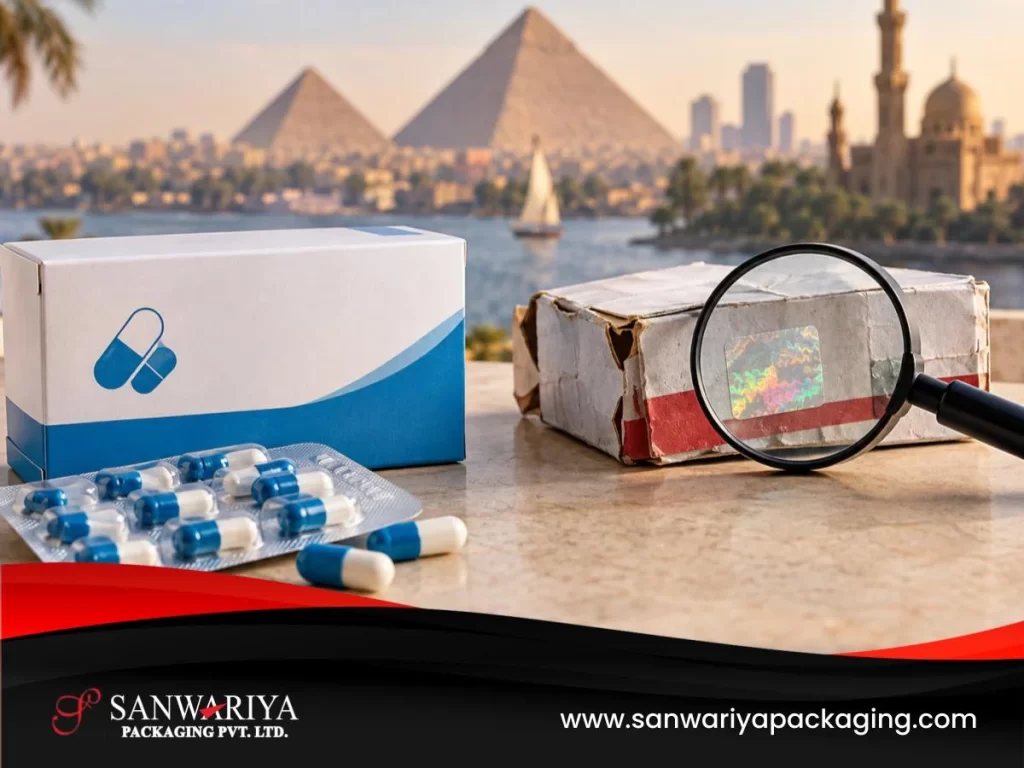
In pharmaceutical exports, packaging is far more than an afterthought — it’s a regulatory gatekeeper. A single misstep in materials, labeling, or serialization can lead to shipment rejections, compliance failures, or even patient safety risks.
Unfortunately, many exporters still repeat critical packaging mistakes that cost them valuable time, money, and brand trust. This blog outlines the six most common errors — and how to avoid them with practical, compliance-aligned solutions.
“Up to 70% of pharma export rejections involve packaging-related errors.” — WHO Compliance Brief, 2023
Common Mistakes to Avoid in Export Pharma Packaging
- Wrong foil for Zone IV climates
- Ignoring local packaging regulations
- Poor serialization or aggregation
- Incomplete patient instructions
- Missing validation/testing reports
Fix: Validate packaging, localize labeling, and document everything.
Learn more about how barrier-grade foil protects blister seal integrity in export climates.
1. Material Mismatch: The Wrong Foil for the Wrong Climate
Exporters often select standard foil laminates without considering regional climate conditions — a decision that can compromise product integrity.
For instance, destinations like Brazil or Nigeria fall under ICH Zones IVa/IVb, where high heat and humidity are the norm. If the foil lacks proper moisture vapor transmission (MVTR) or oxygen barrier properties, medicines can degrade during transit or shelf life.
Solution: Validate all packaging materials, especially blister foils, against destination-specific ICH climatic zone data. Ensure sealing parameters are optimized for those conditions.
2. Ignoring Country-Specific Regulatory Requirements
What complies in India may be non-compliant in Brazil, Russia, or the EU. Exporters often miss key packaging mandates:
- Russia (Chestny ZNAK): Requires serialization and aggregation for all medicinal products.
- Brazil (ANVISA): Mandates GS1-standard 2D barcodes and traceability submissions.
- Europe (EU FMD): Demands tamper-evidence and a unique identifier (UI) for prescription medicines.
Mistake: Relying on generic packaging templates or skipping regional compliance audits.

Solution: Work with regulatory specialists or experienced suppliers who understand localized compliance. Adapt packaging lines accordingly.
3. Underestimating Transit Stress & Environmental Conditions
Pharma packaging that performs well in warehouse conditions may fail during global transit due to:
- Repeated loading/unloading
- Exposure to heat or condensation
- Rough handling at ports and airports
Microleaks in blisters or poor laminate adhesion can cause contamination or potency loss.

Solution: Simulate real-world conditions using ICH stability studies (Zone IVb) and transport validation protocols. Test for seal integrity, barrier performance, and container closure integrity (CCI).
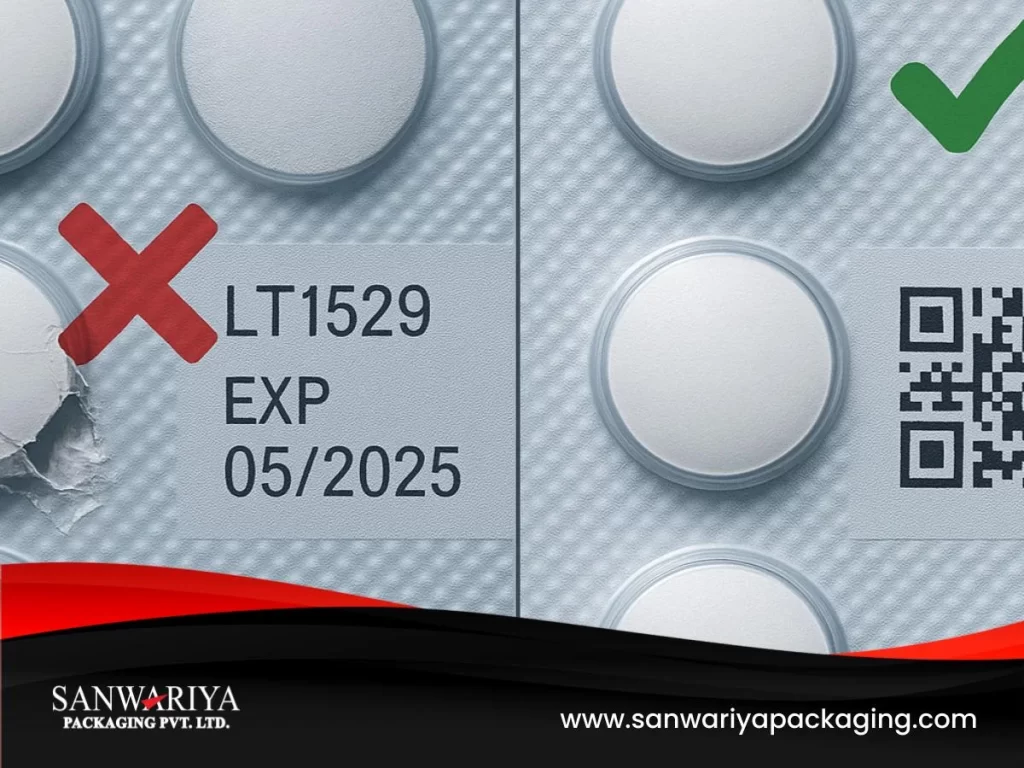
4. Serialization Errors and Traceability Gaps
Serialization is no longer optional — yet exporters still fall into traps like:
- Misaligned barcodes or unreadable QR codes
- Incomplete aggregation hierarchy (primary → secondary → tertiary)
- Serialization systems that don’t integrate with local authority databases
Result: Failed inspections, customs clearance delays, and brand credibility damage.

Solution: Use high-resolution printing systems with secure inks and contrast optimization. Collaborate with foil vendors that support serialization-friendly printing and offer tamper-evident features.
5. Poor Localization of Language, Labeling & Instructions
Even technically compliant packaging can fail due to poor localization:
- Wrong dosage unit (e.g., mg vs. mcg)
- Incomplete patient warnings
- Misinterpretation due to non-local terminology
Consequence: Patient misuse, regulatory penalties, or product recalls.

Solution: Localize all label elements, including drug names, storage conditions, and usage instructions. Review country-specific labeling regulations in detail.
6. Inadequate Documentation & Validation
A lack of robust documentation can halt shipments or fail audits:
- Missing batch records or sealing validations
- No verification of tamper-evidence
- Absence of peel strength or vacuum leak test reports
Regulatory authorities demand full traceability — from printed foil to final shipper.
Solution: Implement GMP-aligned packaging validation, including:
- Dye ingress & vacuum leak testing
- Peel strength analysis
- Tamper-evidence verification
Ensure all testing is documented and auditable.
Best Practices for Export-Ready Packaging
To avoid these pitfalls, pharma exporters should:
- Conduct climate-specific risk assessments
- Work with specialized foil suppliers for serialization & compliance support
- Standardize validation protocols and maintain complete QA documentation
- Train teams on evolving global regulations
- Audit packaging under realistic transport simulations
Your Packaging is Your Passport
In global pharma logistics, packaging does more than protect — it represents your compliance, your credibility, and your commitment to patient safety.
One overlooked regulation or mismatched foil can jeopardize months of manufacturing and market access. That’s why export packaging demands precision, foresight, and verified quality.
At Sanwariya Packaging, we support pharma exporters with:
- High-barrier aluminum foils tailored to climate zones
- Serialization-ready printing with tamper-evidence and regulatory compliance
- End-to-end documentation and validation support
- Region-specific guidance for global shipments
Partner with us to safeguard your global supply chain — from formulation to final market.