In pharmaceuticals, it’s often the smallest detail that protects the biggest investments. One such detail — too often underestimated — is blister seal integrity.
A compromised seal doesn’t just affect shelf life; it can lead to drug degradation, regulatory penalties, product recalls, and in worst cases, patient harm. In today’s climate-conscious, compliance-driven world, leak-proof packaging isn’t optional — it’s essential.
Blister packs consist of a base (typically PVC, PVDC, or Aclar) and a covering layer, usually aluminum foil. The seal between these two layers protects tablets and capsules from oxygen, moisture, light, and microbial ingress.
A faulty seal — whether due to poor sealing pressure, temperature variation, or foil delamination — risks:
- Product contamination
- Decreased drug efficacy
- Regulatory non-compliance
- Damaged brand trust
Even microscopic leaks can compromise sensitive APIs. Seal integrity isn’t just a process checkpoint — it’s a patient safety assurance.
Consider a blister-packed antibiotic exported to Southeast Asia or Latin America. These tropical climates fall under ICH Zone IV, known for high heat and humidity. In such regions, even a pinhole leak can result in:
- Softened tablets
- Discoloration
- Breakdown of active ingredients
- Complete batch failure
This isn’t hypothetical.
Regulatory databases report blister seal failure as a leading cause of product recalls — often detected only post-distribution. The cost isn’t just financial; it’s reputational.
Regulatory bodies such as WHO, FDA, and ICH place strong emphasis on validated, reproducible sealing processes. Seal integrity testing is now a GMP-mandated requirement, not just a best practice.
Blister Seal Testing at a Glance
1. Dye Ingress Test :
Detects visible leaks using colored dye
2. Vacuum Leak Test :
Captures micro-leaks invisible to the eye
3. Peel/Seal Strength Test :
Ensures consistent sealing across batches
Tip: Use a combination of these methods for ICH and GMP compliance.
Routine seal checks during and after production are not only regulatory expectations but critical quality assurance tools.
Regions in ICH Zone IVa and IVb (South Asia, Latin America, parts of Africa) present unique packaging challenges. The high ambient moisture means any sealing imperfection will lead to accelerated drug degradation.
Pharma exporters serving these markets must insist on:
- Barrier-grade aluminum foil
- Reliable multilayer laminates
- Consistently monitored sealing equipment
Learn more about the different foil structures in our blog on Choosing the Right Aluminum Foil for Pharma Packaging.
Failure to meet these criteria puts product quality, patient safety, and market licenses at risk.
Packaging innovations are addressing these risks head-on:
- Sensor-Controlled Sealing:
Ensures precise temperature and pressure control on every blister cavity. - High-Barrier Coated Foils:
Aluminum structures designed to resist delamination and micro-cracking. - Tamper-Evident Designs:
Adds visible safety cues and acts as a deterrent against counterfeiting.
These aren’t just upgrades — they are compliance enablers and brand protectors in a competitive export-driven industry.
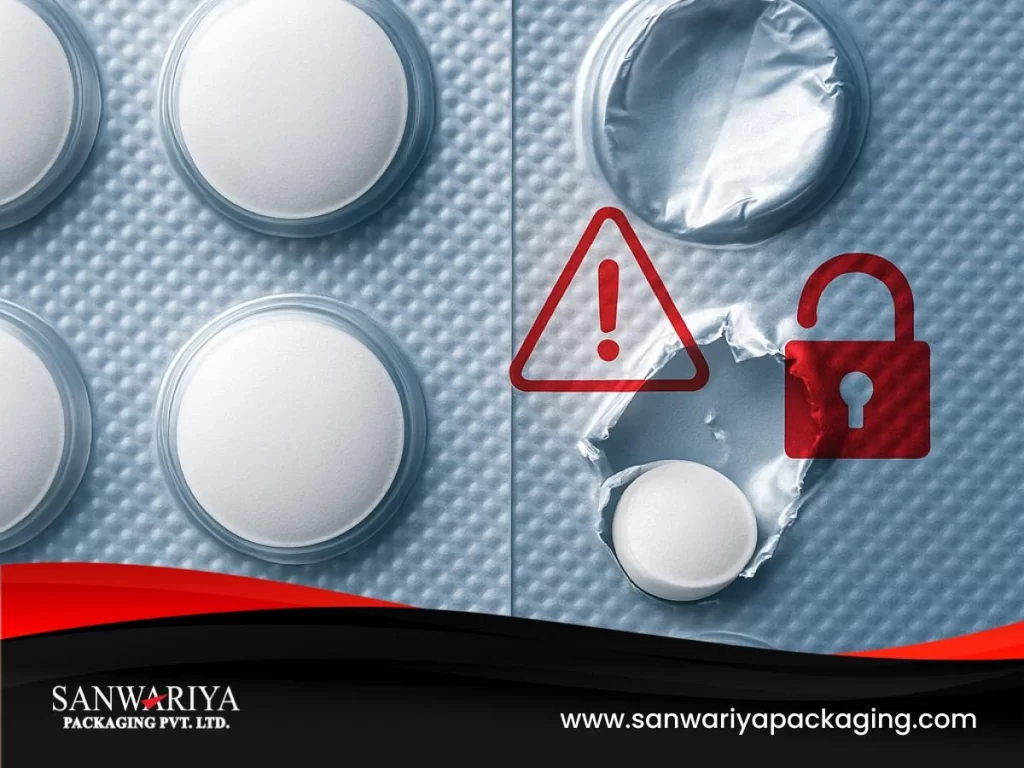
A robust seal also acts as the first layer of defense against tampering or counterfeit product substitution. Tamper-evident foils discourage malicious interference and reassure end users.
For brand owners, it’s not just about preventing product loss — it’s about maintaining patient trust, especially in emerging markets where counterfeit activity is high.
Whether you oversee quality assurance, packaging development, or regulatory compliance, blister seal performance should be one of your top monitored metrics. It helps ensure:
- Long-term drug stability
- Global regulatory compliance
- Reduced complaint rates
- Stronger brand equity
- Safer patient outcomes
Seal the Standard, Not Just the Pack
As pharmaceutical supply chains grow more complex and global, blister seal integrity becomes a brand promise — not just a technical requirement. From resisting climate threats to stopping counterfeiters, a secure seal protects your product, your market, and your reputation.
Sanwariya Packaging delivers precision-engineered aluminum foil solutions that meet the highest sealing standards — so your products remain effective, compliant, and trusted from the production line to the patient’s hands.
