Blog by Sanwariya Packaging

Your Trusted Partner in Packaging

Learn About Our Vision for the Future And Grow with Us.

Your Trusted Partner in Pharma Packaging

Learn about our vision for the future and grow with us.

Your Trusted Partner
in Pharma Packaging

Learn about our vision for the future and grow with us.

Know More

Tag: tropical zone pharma packaging

Importance of foil coatings in hot and humid climates

Moisture is invisible, but in pharmaceutical packaging, it is one of the most frequent root causes of product instability, shelf-life reduction, and post-approval failures. Issues such as tablets softening, capsules losing potency, coating degradation, or unexpected stability failures are often traced back to one critical factor: inadequate moisture protection from the packaging system.

This is where the Moisture Transmission Rate (MTVR) becomes decisive. Understanding how foil structure directly influences MTVR enables pharmaceutical companies to make informed, preventive pharmaceutical packaging decisions—particularly for moisture-sensitive formulations and products distributed across high-humidity or long-transit markets.

This article explains MTVR in clear, practical terms, connects barrier science to real-world pharmaceutical risk, and shows how selecting the right foil structure protects product quality, regulatory compliance, and patient safety.

What Is the Moisture Transmission Rate (MTVR)?

Moisture Transmission Rate (MTVR) measures the amount of water vapor that can pass through a packaging material over a defined area and time under controlled conditions.

In practical pharmaceutical terms:

  • Low MTVR = strong moisture barrier and higher product protection
  • High MTVR = increased risk of moisture ingress and product degradation

Even minimal moisture exposure can:

  • Reduce shelf life
  • Alter drug performance
  • Trigger stability failures during storage or transport
For moisture-sensitive products, MTVR is not a secondary specification—it is a critical quality attribute influencing approval, performance, and market reliability.

Why Foil Structure Directly Determines MTVR Performance

Pharmaceutical foil is not a single material layer. Its structure—how multiple layers work together—defines overall moisture resistance.

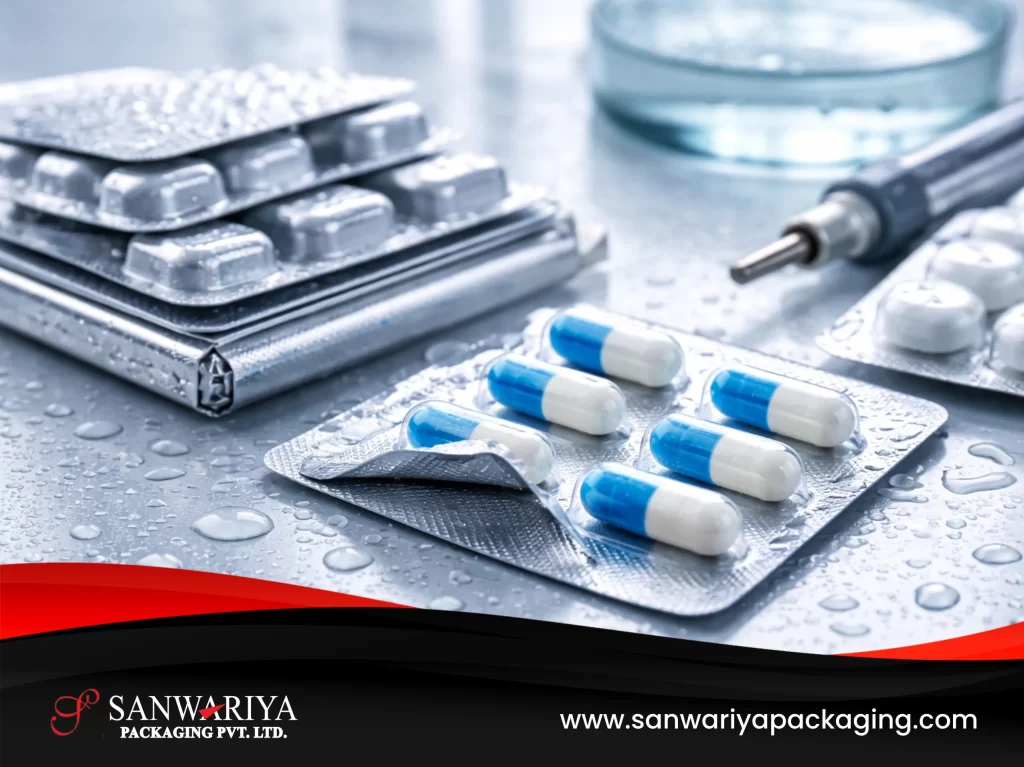
A typical pharmaceutical foil structure—such as blister foils,cold forming foils, or strip laminated foils—may include:

  • Aluminum foil (primary moisture barrier)
  • Protective coatings or lacquers
  • Heat-seal layers
  • Optional polymer films in multi-layer foil or specialty structures

Each layer performs a distinct function. A well-engineered structure slows moisture migration at multiple points, while a weak or incompatible structure allows vapor to penetrate—even when aluminum thickness appears adequate.

Key insight:
Two foils with similar thickness can show vastly different MTVR values because barrier performance depends on structure integrity, not thickness alone.

How Individual Foil Layers Influence Moisture Protection

1. Aluminum Layer — The Primary Barrier

  • Acts as the main moisture and oxygen barrier
  • Defect-free aluminum significantly reduces vapor transmission
  • Thickness consistency and pinhole control are critical
While aluminum provides the core barrier, it cannot perform alone.

2. Coatings & Lacquers — Barrier Stability and Durability

  • Protect aluminum from mechanical and chemical stress
  • Reduce micro-crack formation during forming and handling
  • Improve resistance to long-term humidity exposure
Poor or incompatible coatings can compromise barrier performance even when aluminum quality is high.

3. Sealant Layers — The Most Common Failure Point

Enable airtight sealing between foil and blister material

  • Directly affect moisture ingress at seal areas
  • Must be compatible with forming films and sealing parameters
Fact:
Many moisture-related failures occur not because the aluminum layer failed, but because the seal layer allowed moisture pathways to form.

Standard Foil vs High-Barrier Foil: Why Structure Matters

AspectStandard Foil StructureHigh-Barrier Foil Structure
Moisture ResistanceModerateVery high
Long-Term StabilityLimited in humid zonesConsistent across climates
Suitability for ExportsShort or controlled routesLong-distance, high-risk markets
Regulatory ConfidenceConditionalStrong, data-backed

High-barrier structures are engineered to perform reliably under sustained humidity stress—not just initial testing conditions.

When High-Barrier Foil Structures Become Mandatory

High-barrier pharmaceutical foils—such as cold forming foils and advanced multi-layer foils—are essential when:

  • The formulation is moisture-sensitive
  • Shelf life exceeds 24 months
  • Distribution includes Climatic Zones III & IV
  • Products face long transit, port storage, or uncontrolled warehousing

Markets across Asia, Africa, Latin America, and coastal regions routinely expose pharmaceutical products to prolonged high humidity. In these environments, standard foil structures may pass early stability studies yet fail during real-world storage.

MTVR Testing and Evaluation: What Regulators Expect

MTVR performance cannot be assumed—it must be measured, validated, and documented.

Key evaluation approaches include:

  • Moisture transmission testing under controlled laboratory conditions
  • Stability studies aligned with climatic zone requirements
  • Seal integrity and aging assessments

Regulatory and quality teams rely on this data to:

  • Approve packaging during product registration
  • Justify export-readiness claims
  • Support long-term stability commitments
Without validated MTVR performance, packaging approval and lifecycle management become uncertain.

Common Real-World Failures Linked to Poor MTVR Selection

Across domestic and export markets—supported by advanced manufacturing and quality controls at our infrastructure facilities—the same patterns repeatedly emerge:

  • Stability passes initially but fails after months in humid storage
  • Tablets stick, soften, or discolor before expiry
  • Market complaints arise despite compliant formulations
  • Costly revalidation triggered by post-approval packaging changes
In most cases, the root cause is not formulation weakness—but foil structure mismatched to environmental exposure.

Choosing the Right Foil Structure

Instead of asking “Is this foil thick enough?”, pharmaceutical teams should ask:

  • How moisture-sensitive is the formulation?
  • Which climatic zones will the product encounter?
  • What is the total storage and transit duration?
  • Is the seal layer compatible with the blister material?
  • Does the supplier provide validated MTVR and stability data?

Selecting the correct foil structure is a preventive quality decision, not a corrective one.

Business and Compliance Impact of Correct MTVR Selection

Choosing the right foil structure delivers measurable value:

  • Fewer stability failures and deviations
  • Faster regulatory approvals
  • Reduced recall and rejection risk
  • Lower long-term costs compared to revalidation
  • Stronger patient trust and brand credibility
Underestimating MTVR often results in hidden costs that far exceed the initial savings from lower-grade packaging.

Key Takeaway

MTVR is not merely a laboratory value—it reflects how effectively a pharmaceutical product is protected throughout its entire lifecycle.

Foil structure directly influences:

  • Moisture resistance
  • Shelf-life reliability
  • Export success
  • Regulatory confidence

Understanding and selecting the right barrier structure ensures medicines remain safe, effective, and compliant—regardless of where they are manufactured, stored, or distributed.

At Sanwariya Packaging, barrier performance is approached as a stability and compliance solution, not just a material specification. Because in pharmaceutical packaging, what cannot be seen—like moisture—often matters the most. For technical discussions or project requirements, teams may get in touch or request a quote.

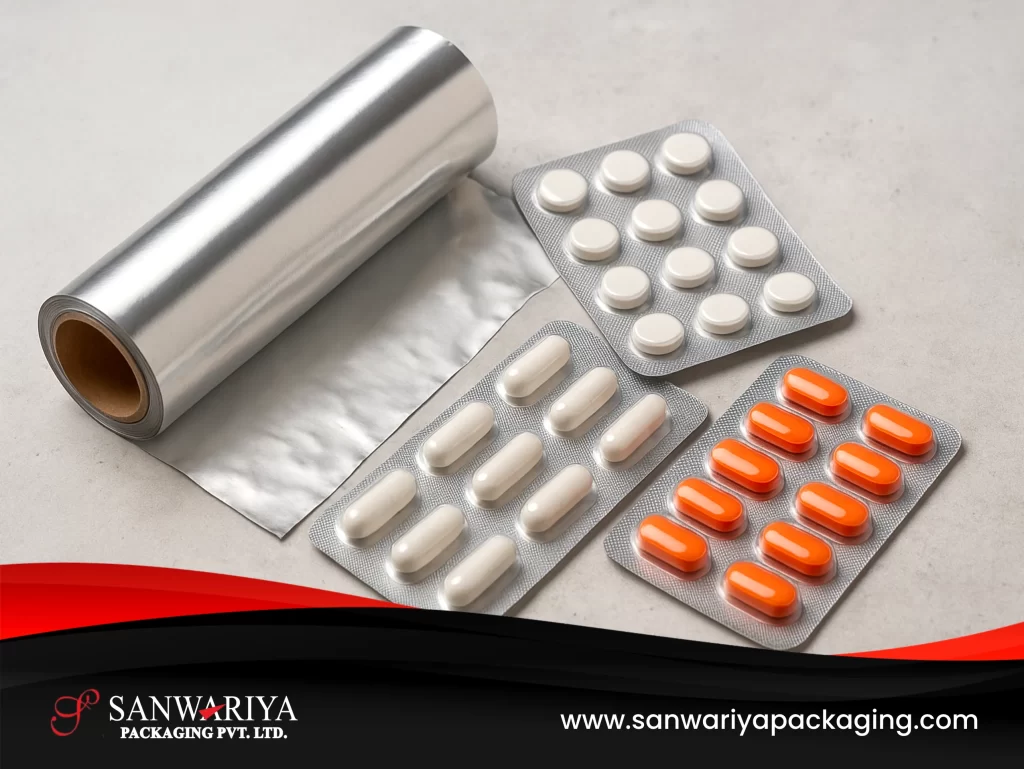
How foil structure affects moisture transmission in pharma packaging

Hot and humid climates accelerate the chemical and physical degradation of medicines, making packaging integrity a decisive factor in product stability. For exporters supplying Asia, Africa, LATAM, and the Middle East, moisture control is not optional—it is a regulatory expectation and a commercial priority.

Foil barrier coatings strengthen the protective performance of blister and strip packs by preventing moisture ingress, ensuring potency retention, and reducing the risk of supply-chain failures.

1. Understanding Tropical Zones: Why the Risk Is Higher

Climatic Zones III & IV—defined by global regulatory bodies—represent regions with extreme heat and humidity:

  • Zone III: Hot & Dry
  • Zone IVa: Hot & Humid
  • Zone IVb: Very Hot & Very Humid (e.g., India, Brazil, Indonesia, Malaysia)

These markets experience:

  • Prolonged exposure to 75–90% RH
  • Rapid temperature swings during inland transport
  • Long ocean routes with fluctuating humidity
  • Customs-related storage delays without controlled conditions
The result:
Standard packaging alone often fails to maintain product stability under real-world shipping and storage environments. This is why suppliers increasingly select barrier-coated blister and strip solutions designed for tropical-zone climates.

2. Why Barrier Coatings Are a Game-Changer in Humid Markets

While aluminum foil is inherently protective, modern barrier coatings meaningfully elevate performance. They reinforce the foil against threats that intensify in tropical zones:

  • Moisture ingress (primary cause of tablet softening and potency loss)
  • Oxygen permeation
  • Heat-induced deformation
  • Abrasion during multi-stop export routes

Studies across high-humidity markets show that barrier-enhanced foils can extend stability by 3–6 months, especially in moisture-sensitive categories such as anti-infectives, analgesics, antihistamines, and chronic therapies.

When stability zones demand higher protection, upgraded coating systems become the difference between a compliant product and a rejected batch.

3. Key Barrier Coating Types That Matter in Tropical Regions

Choosing the right coating is essential for consistent protection across varied climatic conditions.

a. Heat-Seal Coatings

These ensure durable adhesion between the foil and forming material, preventing micro-leaks—a major concern during hot-weather transit.

Exporters frequently pair these with high-performance blister foil systems to maintain seal integrity under stress.

b. Moisture-Barrier Coatings

Designed specifically to slow down moisture transmission, these coatings are vital for Zone IVb shipments. Many companies adopt multi-layer, high-barrier constructions available within advanced pharma packaging solutions to safeguard against humidity spikes. (Exploremulti-layer and high-barrier foils)

c. Primer & Protective Coatings

These stabilize printed surfaces and prevent scuffing, smudging, or ink disturbance caused by heat and handling. They are commonly used in printed aluminum foil solutions for high-clarity branding and regulatory text retention. 

d. High-Stress Export Coatings

Ideal for long-distance routes—India to Africa, Europe to LATAM, or Southeast Asia to the Gulf—where temperature and humidity vary dramatically. These coatings ensure the foil withstands mechanical stresses across multiple transit stages. (Learn about advanced infrastructure)

 4. A Practical Framework for Selecting the Correct Barrier Grade

Pharma teams can follow a structured approach while planning tropical-zone shipments:

Step 1 — Analyse the Drug Profile

  • Does it absorb moisture quickly?
  • Any known oxidation or stability issues?
  • Has the formulation shown failure trends in tropical studies?

Step 2 — Map the Destination Route

  • India → Africa: Sustained humidity, poor inland storage
  • Europe → LATAM: Mixed temperature patterns plus longer ocean exposure
  • SEA → Middle East: Continuous high heat, 35–45°C common in transit

Step 3 — Align With Regulatory Expectations

Authorities such as ANVISA, NPRA, SAHPRA, INVIMA, and GCC agencies require pharmaceutical packaging to remain stable under the target climate zone. Barrier-coated foils must therefore be validated accordingly.

Step 4 — Evaluate Logistics Realities

  • Warehouses without temperature control
  • Extended port holds
  • Multiple third-party distributors
  • Long last-mile routes in remote markets

Step 5 — Validate Early in Development

Performing stability checks with the intended barrier grade in early development helps avoid redesigns, delays, and requalification. Many pharma teams explore a supplier’s pharmaceutical products range during this stage to select fit-for-purpose foil systems.

5. When Barrier Strength Is Insufficient: What Can Go Wrong

Insufficient barrier protection in tropical markets often leads to:

  • Tablet softening, swelling, and discoloration
  • Loss of potency before labelled expiry
  • Foil delamination driven by moisture exposure
  • Regulatory non-compliance
  • Field complaints and distributor rejections
  • Shipment holdbacks or complete consignment loss
The cost of a rejected export batch—especially in LATAM or Africa—far exceeds the incremental investment in high-performance barrier foils.
(Reviewcold-form foil options)

6. ROI: Why Upgrading Barrier Coatings Strengthens Commercial Outcomes

Companies exporting into tropical markets report measurable gains when shifting from standard foil to high-barrier coated foil:

  • Lower stability failures in Zone IVb studies
  • Reduced product returns and fewer temperature-excursion complaints
  • Faster regulatory acceptance due to stronger shelf-life performance
  • Greater distributor confidence in challenging climates
  • Improved brand reliability across competitive markets

The operational ROI becomes clear when even one potential failure or rejection is avoided.  (See strip-laminated solutions)

7. The Direction Ahead: Climate-Resilient Pharmaceutical Packaging

Global exporters are moving from minimum compliance to climate-resilient packaging strategies, supported by:

  • Next-generation barrier chemistries designed for tropical-zone conditions
  • Eco-friendly, migration-safe coating technologies
  • Stronger seal-coat combinations that reduce micro-leak risk
  • Larger adoption of data-supported packaging validation
  • Collaborative development between formulation, QA, and foil suppliers
This evolution signals a long-term shift toward more reliable, humidity-resistant pharmaceutical packaging systems. (Explore hologram and security foils)

How Sanwariya Packaging Supports Pharma Companies in Tropical Markets

Pharma exporters supplying to hot, humid, and mixed-climate destinations rely on packaging that maintains stability throughout complex logistics. Sanwariya Packaging supports this need through:

  • High-barrier blister and strip foils engineered for Zone IVa and IVb conditions
  • Advanced moisture-barrier and seal-coat systems for reliable humidity protection
  • Regulatory-aligned foil structures suitable for major agencies across LATAM, Africa, and ASEAN
  • Customizable printed solutions enabling clarity and durability in high-temperature environments
Explore our full range of pharmaceutical products to identify barrier solutions. (See fullproduct portfolio)

Get in Touch With Us

If you supply products to LATAM, Africa, Southeast Asia, or the Middle East—and require packaging that performs reliably in hot and humid climates—our team can guide you with suitable barrier-coated foil options.
Whether you need technical evaluation, export-route planning, or barrier-grade recommendations, we are ready to assist.

Get in touch with us to discuss your requirements or request technical guidance for climate-zone packaging.

You can also request a quote or visit our home page.